

TL;DR:
- Proper timing of aeration, overseeding, and fertilisation between August 15 and September 15 maximizes lawn recovery in Calgary’s climate. Soil testing and appropriate tools are essential for effective rejuvenation, with proper mowing and watering practices supporting sustained health. Avoiding common errors like early fertilising or late seeding ensures a lush, resilient lawn year-round.
Annual lawn rejuvenation is the systematic process of restoring turf health through aeration, overseeding, fertilisation, mowing, and watering, timed specifically to your grass type and climate. For Calgary homeowners and property managers, this means working with cool-season grasses like Kentucky bluegrass and creeping red fescue, which respond best to care delivered in late summer and early fall. Following a structured annual lawn rejuvenation guide is the difference between a lawn that recovers from Calgary’s harsh winters and one that slowly thins, weeds, and browns. The tools you need, the timing you follow, and the mistakes you avoid all determine the outcome.
What tools and preparation does annual lawn rejuvenation require?
Preparation is the step most homeowners skip, and it is the reason their results disappoint. Before any seed touches soil or fertiliser hits turf, you need a clear picture of what your lawn actually needs. Soil testing for nutrient levels and pH is the non-negotiable starting point. Applying fertiliser without a soil test leads to poor resource use and potential long-term soil damage. A basic test kit from a local garden centre or a lab submission through the University of Alberta Extension gives you the data to spend money on what your lawn actually lacks.
Tools worth having before you start
The equipment list for a proper lawn restoration is shorter than most people expect. Here is what you need and how the options compare:
| Tool | Manual option | Powered option |
|---|---|---|
| Core aerator | Hand aerator (small areas only) | Rental walk-behind or hire a service |
| Seed spreader | Hand-crank broadcast spreader | Drop spreader for precision |
| Mower | Push reel mower | Gas or battery rotary mower |
| Watering | Rotary sprinkler on timer | In-ground irrigation system |
| Soil test | DIY test strip kit | Lab soil analysis (most accurate) |
For most Calgary properties, renting a walk-behind core aerator from a local equipment supplier is the most cost-effective choice. Buying one for a single annual use rarely makes financial sense unless you manage multiple properties.
Pro Tip: Sharpen your mower blades before the season begins and again mid-season. Dull blades tear grass rather than cut it cleanly, causing whitish, ragged tips that invite fungal disease.
Before any equipment runs, clear the lawn surface completely. Remove dead leaves, sticks, and debris left from winter. This improves seed-to-soil contact during overseeding and lets you see the true condition of the turf beneath. A spring yard clean-up is not just cosmetic. It is the foundation of every step that follows.
How to execute each step of the rejuvenation process
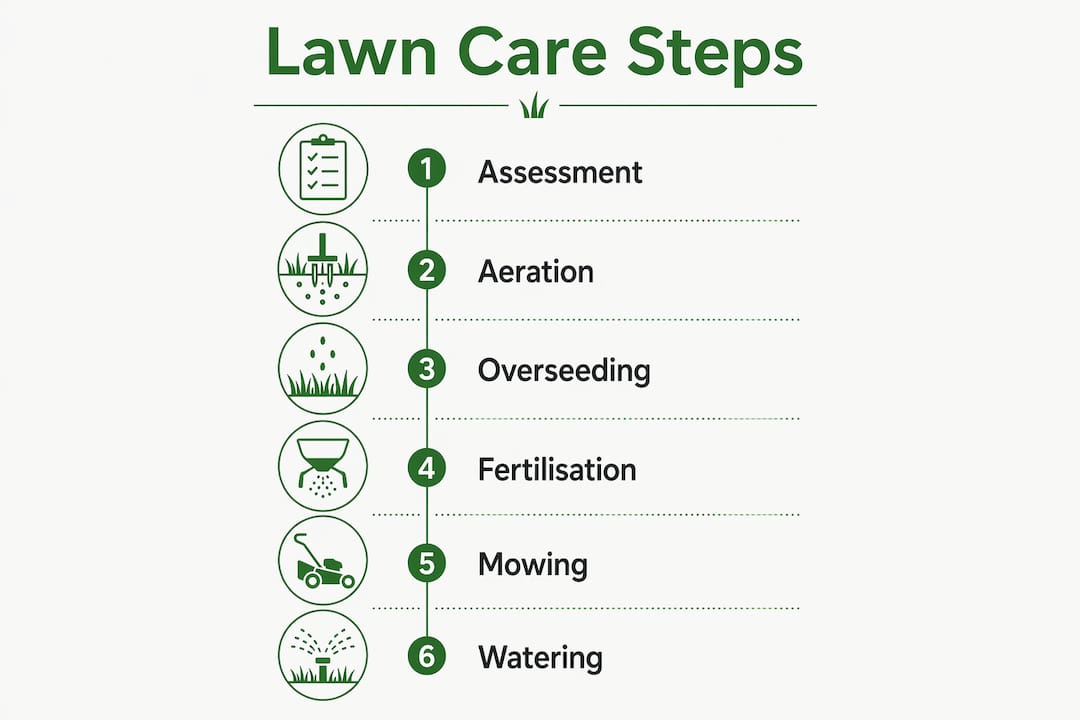
The annual grass care process follows a logical sequence. Skipping or reordering steps reduces results significantly. Below is the full process mapped to Calgary’s seasonal calendar.
Step 1: Lawn assessment and dethatching
Walk the entire lawn and note thin patches, bare spots, and areas of heavy thatch. Thatch deeper than 1.5 centimetres blocks water and seed penetration. A dethatching rake or power dethatcher removes this layer before aeration. Do this in late August when the lawn is actively growing but temperatures are cooling.
Step 2: Core aeration
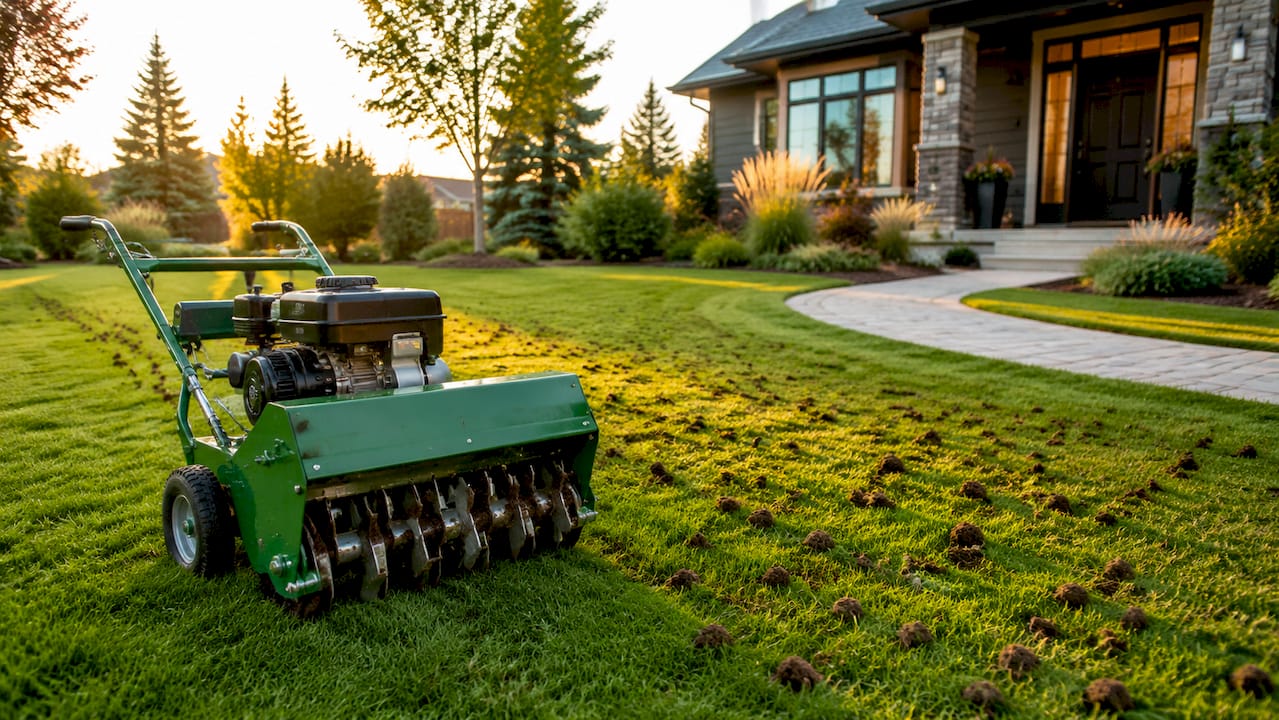
Cool-season grasses in Calgary respond best to aeration between August 15 and September 15. Core aeration pulls small plugs of soil from the turf, relieving compaction and opening channels for water, air, and nutrients to reach roots. Leave the plugs on the surface. They break down within two weeks and return organic matter to the soil.
Step 3: Overseeding
Overseeding immediately after aeration is the most effective sequence. Combining core aeration with overseeding improves germination by 40 to 60 percent over seeding alone, because seed falls directly into the aeration holes and makes firm contact with soil. Scattering seed onto thatch without prior aeration produces very low germination rates. For Calgary lawns, choose a blend of Kentucky bluegrass and creeping red fescue suited to Alberta’s climate. Spread at the rate listed on the seed bag, typically 3 to 4 kilograms per 100 square metres for overseeding.
Step 4: Fertilisation
Timing fertilisation correctly is one of the most misunderstood parts of annual lawn care. Fertilising too early in spring, before soil temperatures exceed 18°C, promotes weed growth and diminishes root development. The better approach is to delay nitrogen fertiliser until the grass is actively growing. For Calgary, the prime fertilisation window aligns with the aeration and overseeding period in late August and early September. September application of a high-nitrogen fertiliser fuels root growth and sets up strong spring green-up. Always base your fertiliser formula on your soil test results.
Step 5: Mowing practices
Do not cut more than one-third of the grass blade length in a single mowing. For fescue and bluegrass, the ideal maintained height is 7.5 to 10 centimetres (3 to 4 inches). Mow based on growth rate, not a fixed calendar schedule. After overseeding, wait until new seedlings reach at least 8 centimetres before mowing again.
Step 6: Watering strategy
Lawns need approximately 1 inch of water weekly, applied in a single deep session in the early morning between 5 and 9 AM. This schedule reduces evaporation and cuts fungal disease risk by over 50 percent compared to evening watering. Rotary sprinklers typically need 30 to 45 minutes per zone to deliver that volume. Deep, infrequent watering encourages roots to grow downward, which builds drought resistance.
| Step | Timing in Calgary | Expected result |
|---|---|---|
| Dethatching | Late August | Improved surface for aeration |
| Core aeration | Aug 15 to Sep 15 | Reduced compaction, better nutrient uptake |
| Overseeding | Immediately after aeration | 40 to 60% higher germination rate |
| Fertilisation | Late August to early September | Strong root growth, spring green-up |
| Mowing | Based on growth, not calendar | Reduced stress, weed suppression |
| Watering | Early morning, once weekly | Deep roots, reduced disease risk |
Pro Tip: After overseeding, water lightly twice daily for the first two weeks to keep the seed bed moist. Once seedlings are established, return to the deep weekly watering schedule.
What mistakes do homeowners make during lawn rejuvenation?
The most common errors in lawn restoration are timing errors and product misuse. Recognising them before you start saves you a full season of wasted effort.
- Fertilising too early. Applying nitrogen before soil temperatures are warm enough feeds weeds, not grass. Wait for active growth in late summer rather than rushing in May.
- Overseeding without aeration. Seed scattered on thatch rarely germinates. Aeration is not optional if you want results.
- Mowing too short. Scalping the lawn removes the leaf area the grass needs to photosynthesise. Short grass also exposes soil, which lets weed seeds germinate faster.
- Evening watering. Watering after 4 PM leaves moisture on the leaf surface overnight, creating ideal conditions for fungal disease. Morning watering is the only schedule that works consistently.
- Using weed-and-feed products at the wrong time. Weed-and-feed combo products create a timing conflict. Weed control requires early application, while fertilisation should come later when grass is actively growing. Using them together at one time compromises both outcomes.
- Seeding too late. Seeding after mid-October in Calgary gives new grass insufficient time to establish before freeze. Poor germination and seedling death are the predictable result.
Proactive lawn care is always cheaper than reactive lawn repair. One well-timed aeration and overseeding session in late August costs a fraction of what full lawn renovation requires after two or three years of neglect.
Pro Tip: Monitor your lawn monthly and note changes in colour, density, and weed pressure. Catching a thin patch early means overseeding a small area rather than renovating an entire zone. For a deeper look at lawn renovation techniques specific to Calgary, Yearlong’s guide covers repair strategies for cool-climate turf.
How does seasonal maintenance support year-round lawn health?
Annual rejuvenation is one concentrated effort, but the lawn’s health across the other three seasons determines how much work that effort requires each fall. Seasonal maintenance is what keeps the rejuvenation cycle manageable.
- Spring: Remove debris and dead material from winter. Begin mowing once the grass reaches 8 centimetres. Avoid heavy foot traffic on wet, thawing soil, which compacts the root zone.
- Summer: Raise the mowing height to the top of the recommended range (10 centimetres for bluegrass and fescue) during heat stress periods. Reduce mowing frequency if growth slows. Maintain the deep weekly watering schedule and adjust for rainfall.
- Fall: This is the peak of the annual lawn upgrade cycle. Aeration, overseeding, and fertilisation all happen here. The work done in this window determines the lawn’s condition for the following year.
- Winter: Avoid walking on frozen or snow-covered turf, which damages dormant crowns. Service your mower and aerator before storing them. Clean and sharpen blades so equipment is ready for spring.
Each seasonal task builds directly toward the next rejuvenation cycle. A lawn that enters fall in good condition from a well-managed summer requires less corrective work during the peak restoration window. For property managers overseeing multiple sites, a consistent year-round maintenance programme reduces both labour costs and reactive repair expenses across the portfolio.
Key takeaways
Successful annual lawn rejuvenation in Calgary depends on timing aeration, overseeding, and fertilisation to the late August to mid-September window when cool-season grasses are most receptive to recovery.
| Point | Details |
|---|---|
| Timing is the top priority | Aerate and overseed between August 15 and September 15 for best germination results. |
| Soil testing before fertilising | Test pH and nutrients first to avoid waste and prevent long-term soil damage. |
| Aeration before overseeding | Core aeration improves germination by 40 to 60 percent compared to seeding on thatch. |
| Mow at the right height | Keep fescue and bluegrass at 7.5 to 10 cm and never remove more than one-third per cut. |
| Water deeply in the morning | One inch weekly, applied between 5 and 9 AM, reduces fungal risk and builds deep roots. |
What I have learned from years of Calgary lawn care
Most homeowners come to us after two or three years of doing the right things at the wrong time. They aerated in May, fertilised in June, and wondered why their lawn still looked thin by August. The calendar matters more than the tasks themselves in Calgary’s climate. Cool-season grasses are not forgiving of spring-heavy care programmes.
The insight that changes everything is this: your lawn’s best recovery window is also the time of year when most people are winding down their outdoor routines. Late August feels like the end of the season. It is actually the most important six weeks of the entire lawn care year. The homeowners who understand this and act on it consistently are the ones with lawns that green up thick and early every spring.
I have also seen the damage that impatience causes. Applying a high-nitrogen fertiliser in early spring because the lawn looks pale is one of the most common mistakes we see. It feeds the weeds first, stresses the grass, and sets the lawn back by weeks. Keeping grass tall throughout the growing season shades out weeds naturally, improves root depth, and reduces the need for herbicides. That is not a theory. It is what we observe on every property we manage.
For busy property managers, the simplest system is a two-event calendar: a spring clean-up in late April and a rejuvenation session in late August. Everything else is maintenance. Build those two anchors into your schedule and the rest of the year becomes much easier to manage.
— Lewie
Let Yearlong handle your lawn rejuvenation this season

Yearlong has been delivering professional lawn care in Calgary since 2017, with services specifically designed around the city’s cool-season turf and short growing windows. From core aeration and overseeding to fertilisation programmes based on actual soil conditions, the team handles every step of the annual rejuvenation process so you do not have to coordinate it yourself. Scheduling is straightforward, and service packages are flexible for both single-family homeowners and property managers overseeing multiple sites. Yearlong also offers seasonal clean-up services and bed maintenance to keep the entire property looking its best year-round. Contact Yearlong for a quote and get your lawn on a programme that actually fits Calgary’s climate.
FAQ
When is the best time to rejuvenate a lawn in Calgary?
The optimal window for lawn rejuvenation in Calgary is August 15 to September 15. Cool-season grasses like Kentucky bluegrass and creeping red fescue establish roots most effectively during this period before winter dormancy sets in.
Do I need to aerate before overseeding?
Aeration before overseeding is not optional if you want reliable results. Core aeration improves germination rates by 40 to 60 percent by creating direct soil contact for seed, compared to spreading seed on compacted or thatched turf.
How often should I water after overseeding?
Water lightly twice daily for the first two weeks after overseeding to keep the seed bed consistently moist. Once seedlings are established, shift to one deep watering session per week in the early morning to build root depth and reduce disease risk.
What height should I mow my Calgary lawn?
Maintain Kentucky bluegrass and creeping red fescue at 7.5 to 10 centimetres throughout the growing season. Never remove more than one-third of the blade length in a single mowing, and raise the height during summer heat stress periods.
Should I use weed-and-feed products on my lawn?
Weed-and-feed combo products are not recommended because weed control and fertilisation require different application timing. Applying them together at one time compromises both outcomes and can harm grass health. Use separate products applied at the correct time for each purpose.