

TL;DR:
- Proper winter debris removal in Calgary prevents turf damage, fungal disease, and safety hazards on walkways.
- Beginning with hardscape cleaning and using the right tools, property owners should assess and remove matted debris carefully before spring.
Calgary winters are unforgiving. By the time the snow starts pulling back in late March, your property has usually accumulated weeks of matted leaves, storm-snapped branches, ice remnants, and debris that can silently damage your lawn long before you notice. A proper winter debris removal guide is not just about aesthetics. It protects your turf from fungal disease, prevents safety hazards on walkways, and keeps you on the right side of Calgary’s property standards. Whether you manage one yard or a portfolio of properties, here is exactly what you need to know to clean up effectively and set your outdoor spaces up for a healthy spring.
Table of Contents
- Key takeaways
- Your winter debris removal guide: tools and preparation
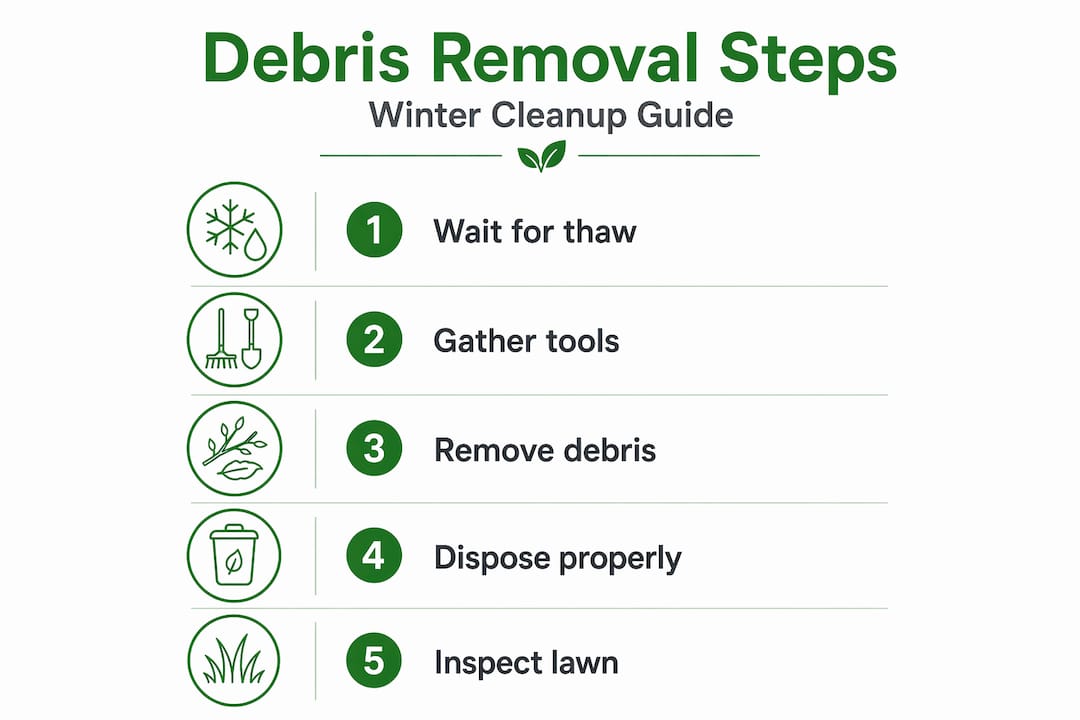
- How to clear winter debris step by step
- Common mistakes that cost you in spring
- Checking your work and preparing for spring
- My honest take on winter cleanup in Calgary
- Let Yearlong handle your winter cleanup
- FAQ
Key takeaways
| Point | Details |
|---|---|
| Match removal method to coverage | Thin leaf cover can be left; heavy matted debris must be raked and removed to prevent snow mould and turf death. |
| Never walk on frozen turf | Foot traffic on frost-covered grass permanently kills grass blades and leaves visible brown patches come spring. |
| Use the 3-cut pruning method | Remove storm-damaged limbs in three cuts to prevent bark tearing and support healthy wound healing. |
| Follow disposal rules | Calgary’s municipal guidelines prohibit pushing debris onto streets or into storm drains; disposal must be handled properly. |
| Verify success before spring | Check for snow mould, matted patches, and drainage problems after cleanup to avoid lingering turf damage. |
Your winter debris removal guide: tools and preparation
Before you pick up a single rake, a few minutes of preparation will save hours of frustration and protect your lawn from unnecessary harm. Starting with the right gear and the right timing is what separates a cleanup that works from one that causes more problems than it solves.
Here is a quick reference for the tools and safety equipment you will want on hand:
| Tool or equipment | Purpose |
|---|---|
| Leaf rake | Clearing loose or light leaf coverage from turf |
| Bow rake | Breaking up compacted debris and matted patches |
| Bypass pruners | Trimming small storm-damaged branches under 2 cm |
| Loppers | Cutting mid-sized branches with clean, controlled cuts |
| Leaf blower | Moving debris from hard surfaces and lightly covered turf |
| Snow shovel | Clearing residual ice and compacted snow from walkways |
| Waterproof gloves | Protecting hands from cold, sharp debris, and wet ground |
| Safety glasses | Shielding eyes when using a blower near debris and gravel |
Beyond the gear itself, timing matters enormously in Calgary. The city’s notorious freeze-thaw cycles mean the ground can be solid one morning and soft the next afternoon. Starting cleanup when the ground is still frozen or waterlogged risks compacting soil and damaging root systems you cannot see. The safest window is typically a dry, mild afternoon when overnight frost has had a few hours to lift.
On the disposal side, Calgary’s property standards are clear. Municipal bylaws prohibit pushing yard debris onto streets, sidewalks, or into storm drains. Green carts, compostable bags, or approved drop-off sites are your legal options. Property managers handling multiple sites especially need a disposal plan before starting. For snow removal equipment recommendations tailored to Calgary conditions, Calgary snow removal tools is a useful starting point.
Pro Tip: Wait for a dry afternoon with temperatures above 2°C before beginning your cleanup. Using a leaf blower on frozen ground breaks brittle grass blades at the roots, causing damage that looks identical to disease damage in spring.
How to clear winter debris step by step
Getting the sequence right matters as much as the effort itself. Working in the wrong order means you will rake the same area twice or blow debris back onto cleared hardscapes.
Start with hard surfaces first. Clear driveways, walkways, and patios before tackling the lawn. This keeps debris from blowing back onto surfaces you have already cleaned and gives you a clear route through the property.
Assess leaf and debris coverage on turf. Debris management starts by categorising coverage. Thin, scattered leaves can generally be left to break down. Moderate coverage should be mulched with a mower if the ground permits. Heavy layers of matted leaves and organic material need full raking and removal. Matted debris left in place blocks sunlight, traps moisture, and creates conditions where snow mould and rot can take hold quickly.
Remove matted and wet patches manually. Wet or matted patches on the turf need to come off by hand or with a bow rake. These patches can kill turf within days by cutting off airflow and promoting fungal growth. Do not rely on a blower here; physical removal is the only reliable method.
Inspect trees and shrubs for storm damage. Walk each tree and large shrub carefully, looking for split branches, hanging limbs, or dead wood from winter storms. Any damage left unaddressed becomes a liability and stresses the plant further through the growing season.
Prune damaged limbs using the 3-cut method. The 3-cut pruning technique prevents bark tearing on limbs too heavy to remove in a single cut. First, make an undercut about a third of the way through the limb from below. Second, cut through from above a few centimetres further out on the branch until it falls. Third, remove the remaining stub cleanly at the branch collar. This allows the tree to heal without exposing raw, torn bark to disease.
Bag or compost all collected debris. Keep material off the street and away from storm drains. Use your green cart or compostable bags, and check your local pickup schedule before you start so you are not leaving bags sitting on the lawn for an extended period.
Do a final walk of hardscapes. Check that debris has not shifted back onto cleared surfaces and look for any drainage blockages near downspouts or catch basins.
Pro Tip: Stay off the lawn entirely until you are confident the frost is fully out of the ground. Walking on frozen turf breaks the plant tissue inside each blade permanently, and those dead strips are impossible to fix without reseeding.
Common mistakes that cost you in spring
Even experienced property owners make avoidable errors during winter yard clean-up. Most of these mistakes are not obvious in the moment, which is exactly why they cause problems that show up months later.
Leaving heavy leaf layers on the lawn. A dense mat of wet leaves deprives turf of light and air circulation, accelerating fungal outbreaks like snow mould. Removing matted debris after winter is one of the most direct ways to protect lawn health and support renewal in spring.
Walking on frozen or saturated ground. Every footstep on frost-covered turf breaks the brittle cell walls inside grass blades. The damage appears in spring as brown footprint-shaped patches that will not green up. When you need to work on the lawn before it has fully thawed, lay down boards or use a path you are willing to reseed.
Ignoring freeze-thaw timing. Attempting a full cleanup during an unsettled week when temperatures are swinging between freezing and mild is asking for trouble. The ground softens unpredictably, making it easy to compact soil and displace roots. Dry weather cleanup is always preferred over washing debris or working in wet conditions.
Blowing debris toward streets or drains. This is not just sloppy; it is a bylaw issue. Proper debris disposal requires keeping material off public property and out of storm drainage systems. For property managers, a violation notice from the city is an expensive and easily avoidable outcome.
Skipping tree and shrub inspection. A branch that held through winter may still be structurally compromised. Large hanging limbs above high-traffic areas are a safety risk. If a damaged branch is above 3 metres or near power lines, that is the point where consulting a certified arborist is the right call rather than a DIY pruning job.
Checking your work and preparing for spring
Once the debris is cleared, the job is not quite finished. A proper post-cleanup inspection tells you whether your efforts actually worked and whether the lawn needs any early intervention before growth begins.
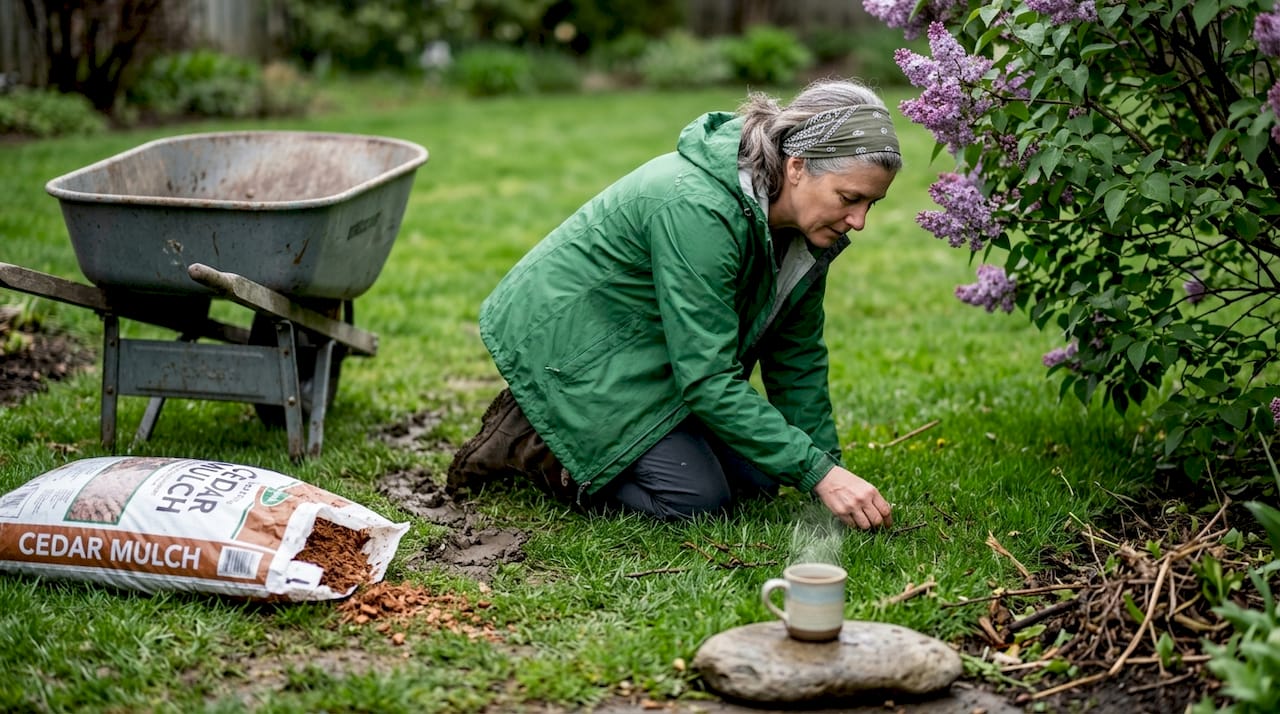
Walk the entire property and look for the following indicators:
| What you are checking | Healthy sign | Action needed |
|---|---|---|
| Grass colour and texture | Pale green or tan, standing upright | None; normal winter dormancy |
| Matted or sunken patches | Absent | Present: rake open and treat for mould |
| Bare soil or dead zones | Minimal | Reseed and top-dress in spring |
| Debris around drain outlets | Clear | Remove and check for blockages |
| Mulch depth in beds | 5 to 8 cm, away from stems | Replenish or pull back from plant bases |
Mulch application deserves a specific mention here. Many homeowners pile mulch generously around shrubs and perennials thinking it helps insulate, but mulch pushed against plant stems traps moisture and promotes crown rot through the warming weeks. Keep mulch at a comfortable depth and pulled back at least 5 cm from any stem or trunk.
Spring cleanup planning for Calgary yards works best when it starts right after the debris phase is done, not weeks later. The transition from protecting a lawn in winter to actively renewing it in spring is a narrow window, and the transition from winter to spring in yard care requires shifting your focus quickly from removal to renewal. For a full picture of how year-round debris management fits into property stewardship across all seasons, it is worth building a schedule rather than reacting to each season as it arrives.
My honest take on winter cleanup in Calgary
I have been working on Calgary properties through enough brutal winters to have strong opinions about this, and here is the one that catches most homeowners off guard: the worst damage is almost never from the snow itself. It is from what happens after the snow pulls back and property owners delay cleanup for two or three weeks because it looks fine from the street.
In my experience, the lawn under a heavy mat of leaves that has been sitting since November looks fine until it does not. Then you are dealing with a snow mould outbreak, several dead patches, and a spring that starts on the back foot. The homeowners I have seen protect their lawns year after year are the ones who treat debris removal as a non-negotiable part of the seasonal calendar rather than optional housekeeping.
Calgary’s chinooks make the timing genuinely tricky. A warm week in February can tempt you to start cleanup, but if another hard freeze follows, working disturbed soil and exposed turf makes things worse. I always tell people: wait for a stable thaw, not the first one. Patience in mid-March saves money in May.
I also think compliance with city disposal rules is underestimated as a motivator. People tend to view it as bureaucratic. But those bylaws exist because debris pushed into storm drains causes real drainage problems for the whole block. When you follow them, you are protecting your neighbour’s property as much as your own. That perspective shift tends to make the whole job feel more worthwhile.
— Lewie
Let Yearlong handle your winter cleanup
If this winter debris removal guide is giving you a clearer picture of the work involved and you would rather hand it off to someone who does this every day, Yearlong is ready to help.

Yearlong has served Calgary homeowners and property managers since 2017, handling everything from seasonal debris cleanup and lawn bed maintenance to full snow removal throughout the winter season. The team understands Calgary’s climate patterns firsthand, so cleanup timing and disposal are handled correctly every time. Yearlong’s flexible service packages mean you can book a one-time post-winter cleanup or set up a year-round maintenance programme that takes the guesswork out of seasonal property care. Get in touch for a free quote and find out how straightforward property maintenance can be when you work with a local team that knows Calgary’s conditions.
FAQ
What does a winter debris removal guide cover?
A winter debris removal guide covers tools, timing, step-by-step cleanup procedures, disposal rules, and how to assess your property after cleanup to prepare for spring growth.
When is the right time to start winter yard clean-up in Calgary?
Wait for a stable thaw with daytime temperatures consistently above 2°C and no hard freeze in the forecast. Starting too early on frozen or saturated ground causes soil compaction and turf damage.
How do I clear matted leaves without damaging the lawn?
Use a bow rake to manually lift matted patches rather than a leaf blower, which cannot shift wet compacted debris. Remove the material completely and allow sunlight and airflow to reach the turf underneath.
Can I push debris to the street for pickup?
No. Calgary’s municipal standards prohibit pushing yard debris onto streets, sidewalks, or into storm drains. Use green carts, compostable bags, or approved disposal sites to stay compliant.
How do I know if my yard has snow mould after winter?
Look for circular, greyish-pink or white patches of matted grass that do not spring back after debris removal. Light raking and improved air circulation can help mild cases recover, but severe outbreaks may need fungicide treatment or reseeding.