

TL;DR:
- Calgary homeowners are legally required to clear snow and ice from sidewalks within 24 hours of a storm, ensuring a minimum width of 1.5 metres for safe passage. Rapid removal prevents the formation of dangerous, nearly invisible ice patches caused by thaw-refreeze cycles, especially on shaded and high-traffic areas. Professional snow removal can make the process easier, safer, and more compliant by systematically targeting high-risk spots before ice bonds strongly.
Calgary winters have a habit of turning overnight snow into something far more treacherous by morning. A light dusting that falls at 8 p.m. can soften, get walked on, and then refreeze into slick ice patches that are nearly invisible under street lighting. Many homeowners assume that waiting until the weekend or letting the sun do the work is fine, but that thinking leads to falls, fines, and surfaces that are far harder to clear. This article walks through the rules, the real risks, and the practical steps that keep your property safe all season.
Table of Contents
- Calgary’s snow removal rules: What you need to know
- Snow and ice hazards: Why fast removal matters for safety
- Operational advantages: Make snow removal easier on yourself
- Snow and ice removal strategies for safer homes
- What most homeowners miss about snow removal timing
- Need reliable snow removal? Trusted Calgary experts can help
- Frequently asked questions
Key Takeaways
| Point | Details |
|---|---|
| Calgary’s 24-hour rule | Remove snow from sidewalks within 24 hours of snowfall ending to avoid hazards and fines. |
| Prevents ice hazards | Fast snow removal stops dangerous refreezing and reduces the risk of slips and falls. |
| Easier early clearing | Clearing snow promptly is less work and prevents hard, sticky ice from forming. |
| Focus on access routes | Always prioritise stairs, entrances, ramps, and curb crossings for the safety of everyone. |
Calgary’s snow removal rules: What you need to know
After a storm rolls through, the clock starts ticking. Calgary’s municipal bylaw is clear, and not knowing the rules doesn’t protect you from enforcement.
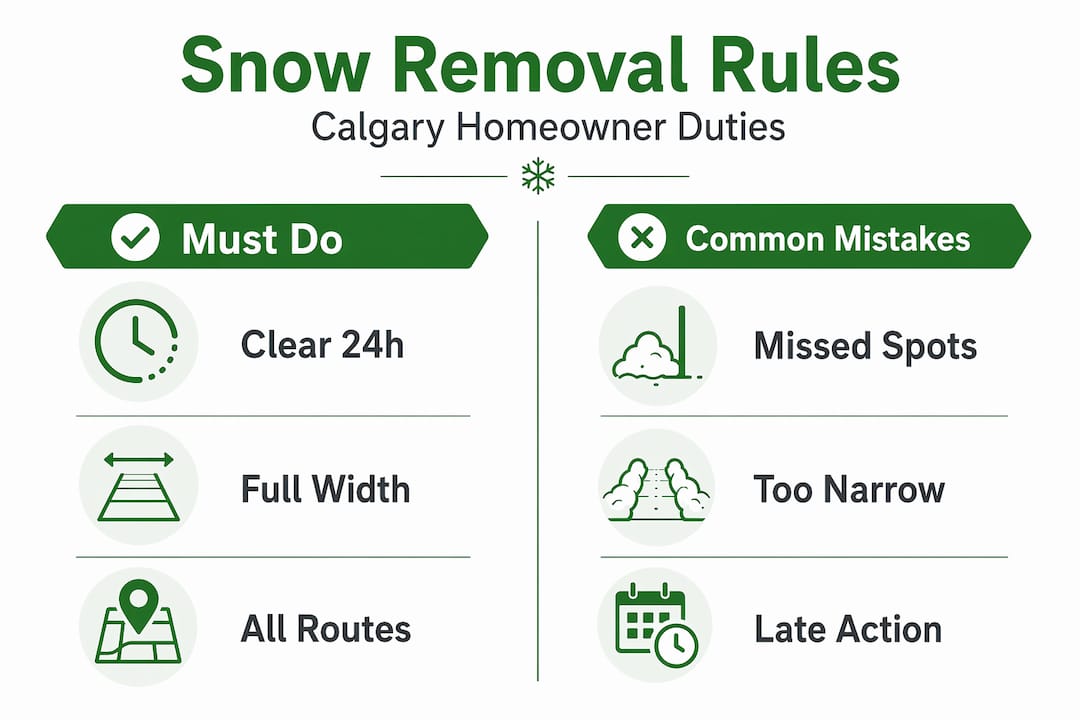
Calgary homeowners must clear snow and ice from sidewalks bordering their property within 24 hours after snowfall ends, with a minimum cleared width of 1.5 metres. That 1.5-metre standard is not a suggestion. It exists so that two people walking in opposite directions, or someone using a wheelchair or stroller, can pass safely. A narrow, shovelled strip down the middle simply does not meet the bylaw requirement.
Understanding what surfaces fall under your responsibility is the first step toward meeting Calgary snow removal standards. In general, you are responsible for:
- Sidewalks along all property edges bordering a public walkway
- Driveways and the curb crossing where your driveway meets the road
- Entrances and steps on your property
- Pathways leading to suite entrances or secondary dwellings
The City can investigate complaints and issue warnings or fines for non-compliance. Repeat offences can lead to the City arranging the clean-up and billing the homeowner directly for the cost, which typically runs far higher than a professional service would charge in the first place. The full details on how to avoid snow-related fines are worth reviewing before the first storm of the season.
| Area | Your responsibility? | Common mistake |
|---|---|---|
| Front sidewalk | Yes | Clearing only a single-person path |
| Side gate walkway | Yes | Skipping it entirely |
| Curb crossing at driveway | Yes | Leaving snow ploughed by the city’s blade |
| Back lane | Varies by property type | Assuming it’s always exempt |
| Public road | No | Shovelling debris onto the road surface |
Pro Tip: Prioritise the areas that get less sun throughout the day, such as shaded side gates and north-facing walkways. These spots stay icy far longer than your sunny front walk and are frequently the areas where falls actually happen.
Good snow removal tips always include a full property walk-around after each snowfall, not just a quick sweep of the front path.
Snow and ice hazards: Why fast removal matters for safety
Knowing the rules tells you when to act. Understanding the hazards tells you why it genuinely matters beyond the threat of a fine.
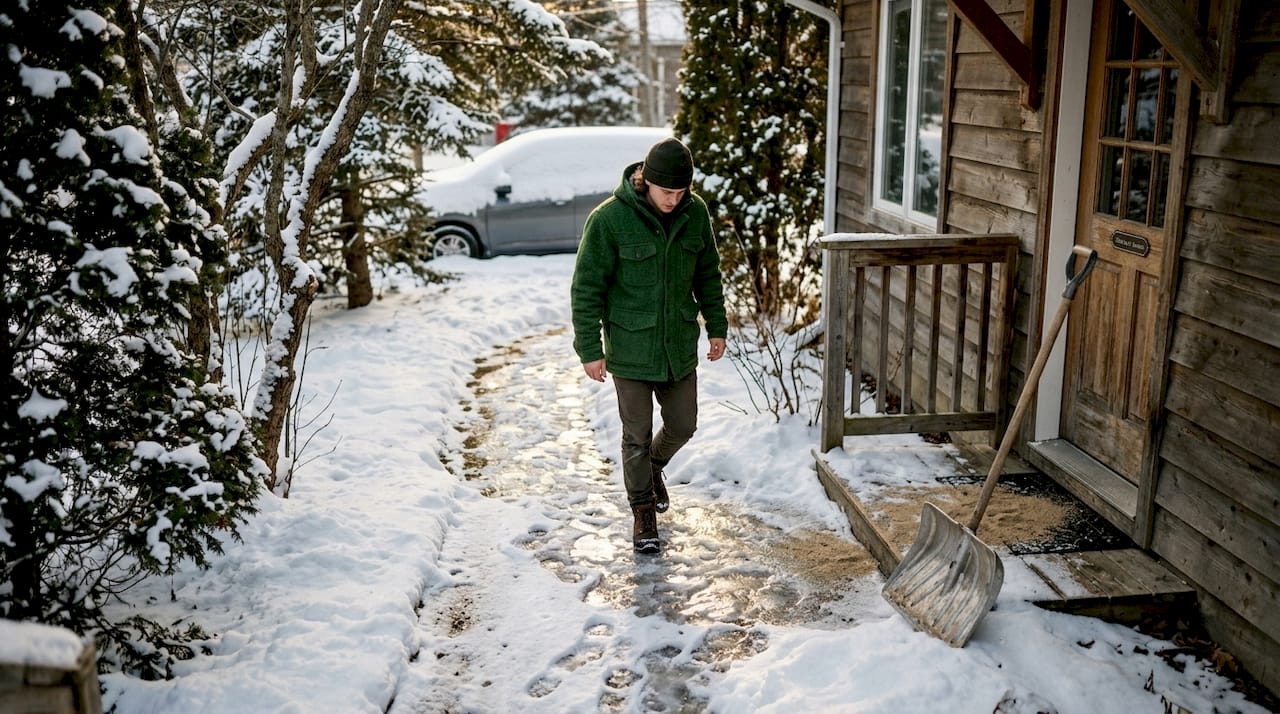
Calgary’s weather is notorious for swinging between mild afternoons and sub-zero overnight temperatures. That pattern creates what’s known as a thaw-refreeze cycle. Snow falls, temperatures rise slightly during the day, the surface layer softens and gets compacted underfoot, then temperatures drop overnight and that compressed layer turns into dense, bonded ice. Compacted snow refreezes into patches that are far harder to remove and significantly more dangerous to walk on than fresh snow.
What makes this especially serious is that the resulting ice is often transparent or nearly invisible against a concrete surface. Pedestrians walking confidently on what looks like a clear path can hit that patch without warning.
Certain spots around a property are consistently the most dangerous:
- Stairs and steps, where a slip can mean a serious fall from height
- Shaded walkways, which stay below freezing even when surrounding areas have cleared
- Ramps and curb crossings, which have sloped surfaces that amplify the effect of ice
- Areas near downspouts, where meltwater drains and refreezes repeatedly
The benefits of professional snow removal become very clear when you consider how many of these spots a homeowner can miss during a quick morning clean-up before heading to work.
“Maintenance should prioritise walking routes including entrances, stairs, ramps, and curb crossings because these are where hazards most affect residents and visitors.”
It’s tempting to think of slip-and-fall injuries as minor inconveniences, but fractures, head injuries, and hip injuries from winter falls are a genuine concern, particularly for older adults and anyone with a mobility challenge. A visitor, a delivery driver, or a neighbour cutting across your pathway can all be affected.
| Property route | Safety status after prompt removal | Safety status after 24+ hour delay |
|---|---|---|
| Front walkway | Clear and safe | Compacted snow, possible ice |
| Side gate path | Clear | Frequently icy, often shaded |
| Stairs | Manageable with traction aid | Bonded ice, high fall risk |
| Curb crossing | Clear for strollers and chairs | Rutted, icy, difficult to cross |
| Driveway apron | Accessible | Ice from tyre melt/refreeze |
Understanding the basics of snow plowing helps homeowners see why systematic removal beats piecemeal efforts every time.
Operational advantages: Make snow removal easier on yourself
There is a practical, physical argument for acting quickly that goes beyond safety and bylaws. Simply put, early removal is dramatically easier on your body and your property.
Fresh snow that fell overnight is light and relatively easy to move. It hasn’t bonded to the concrete, it hasn’t been compressed by foot traffic, and it hasn’t had time to absorb water and refreeze into a solid mass. Snow hardens into ice the longer it remains on surfaces, making later clearing significantly more difficult and far more taxing on your back, shoulders, and wrists.
Here is an ideal early-removal workflow that saves effort and protects your property:
- Clear within the first two hours of snowfall ending. This is when snow is lightest and most moveable.
- Start at entrances and high-traffic paths first. Foot traffic will compact snow quickly in these spots.
- Shovel snow to the side, not across pathways. Piling snow on a cleared walkway just creates a new hazard when it slides back.
- Apply a pre-treatment or traction aid to steps and shaded areas before temperatures drop overnight.
- Do a follow-up check the next morning. Overnight refreezing can create new hazards even after a thorough clear.
- Keep your equipment ready and close. A shovel buried in the garage behind summer gear adds friction to the process and leads to delays.
Investing in the right snow removal equipment for Calgary conditions makes a real difference. A lightweight, ergonomic shovel with a curved handle reduces strain significantly compared to a flat-bladed model. A quality push-style snow plough attachment for a heavy snowfall season is worth every dollar if you have a long driveway.
Early removal also protects your surfaces. When ice bonds tightly to concrete and you then try to chip it off with a steel shovel or ice bar, you risk cracking or pitting the concrete surface. Over several winters, this kind of mechanical damage adds up. Sealing your concrete in autumn is a smart companion step, and it makes spring clean-up much easier too.
Pro Tip: Keep a small bucket of sand or traction grit near your front entrance. If you have to step out early in the morning before you’ve had time to fully clear, a quick scatter of sand gives immediate grip and buys you time to do the proper job.
Snow and ice removal strategies for safer homes
Understanding why to act quickly is one thing. Knowing exactly what to do and when to do it is where most homeowners benefit most from practical guidance.
The key distinction here is between anti-icing and de-icing. These terms get used interchangeably but they describe very different approaches.
Anti-icing means applying a treatment before ice forms or before snow bonds to the surface. Liquid calcium chloride or a light scatter of road salt before a predicted storm prevents the initial bond between ice and pavement. This is proactive and dramatically reduces the effort needed to clear later.
De-icing means treating ice that has already formed and bonded. This requires more product, more time, and more physical effort. Anti-icing before bonding consistently outperforms de-icing after the fact, both in safety outcomes and in workload.
Here is a stepwise breakdown by surface type:
- Concrete walkways and driveways: Shovel first, then apply calcium chloride or a concrete-safe de-icer. Avoid rock salt on concrete surfaces you want to preserve long-term, as it accelerates surface degradation.
- Wooden stairs and decks: Use sand or kitty litter for traction. Chemical de-icers can damage wood finishes and wreak havoc on hardware and fasteners.
- Asphalt driveways: Rock salt works well here and is less damaging than on concrete. Shovel first, then apply sparingly.
- Interlocking brick or paver surfaces: Use sand for traction. Chemical products can displace joint sand and accelerate weathering.
- Shaded areas and spots under eaves: These need the most attention because they stay frozen longest. Apply traction aid proactively and check them more frequently.
A solid snow removal workflow ties all of these steps together so nothing gets missed from storm to storm.
Calgary’s climate also means you need to think about the full season rather than individual storms. A mid-winter chinook can melt a lot of snow quickly, but when temperatures drop again the following night, everything that melted becomes a rink. Staying attentive to weather forecasts and having your materials on hand before you need them is the difference between staying ahead of conditions and scrambling to catch up.
What most homeowners miss about snow removal timing
Here’s the honest, slightly uncomfortable truth we’ve learned from years of working through Calgary winters: most homeowners don’t fall behind on snow removal because they’re lazy or indifferent. They fall behind because they’re focused on the wrong thing.
A lot of household winter safety advice focuses on personal footwear, walking carefully, or taking shorter steps on icy surfaces. That kind of advice has value but it puts all the responsibility on the person navigating the hazard rather than on removing the hazard itself. Good boots don’t help a delivery driver who doesn’t know your shaded side path is a sheet of ice. They don’t help the elderly neighbour who came to drop something off.
The environmental hazard is the thing to fix. Footwear is a backup, not a solution.
What we also see consistently is that homeowners clear the front walk well but miss connection points like the driveway-to-sidewalk transition, the corner where the public sidewalk meets your front path, or the small ramp at the side entrance. These are exactly the places where falls happen. Not on the open stretch of cleared pavement but at the transitions and edges.
Real winter safety is a system built around snow hauling and route-based inspection. Walk the full route from the street to your door, from the car to the side entrance, from the gate to the back. Identify every transition and every shaded spot. Clear and treat those points first, before you do anything else. This systematic approach takes no more time than a haphazard effort but it covers the spots that actually matter most.
Need reliable snow removal? Trusted Calgary experts can help
Knowing what to do and actually having the time and energy to do it consistently through a Calgary winter are two very different things. That gap is exactly where professional support makes the most sense.

At YearLong Property Maintenance, we’ve been keeping Calgary properties safe and compliant since 2017. Our professional snow removal in Calgary service is built around exactly the timing and coverage this article describes. We handle the full route, not just the front walk, and we’re out clearing before ice has a chance to bond. If you want to stay current on best practices, our Calgary snow removal tips and snow removal workflow guide resources walk you through every step. Reach out today and let us take over the part of winter you don’t want to think about.
Frequently asked questions
How quickly must I remove snow from my sidewalk in Calgary?
Calgary’s bylaw requires homeowners to clear sidewalks within 24 hours after snowfall ends, with a minimum cleared width of 1.5 metres. The clock starts once the snowfall event is officially over, not when it began.
What happens if I miss a patch or small spot when shovelling?
Even a small missed patch, particularly in shaded spots or near driveway-to-sidewalk connections, can quickly become hazardous ice and may also attract a bylaw warning. Doing a second walk-through after clearing catches these spots before they become problems.
Why is it harder to remove snow after a day or more?
Once snow sits on a surface it compacts, absorbs moisture, and then bonds tightly as it freezes. Removing bonded ice requires far more effort and increases the risk of damaging your concrete or pavers in the process.
Should I use salt or sand, and when?
Apply treatment before ice bonds to the surface whenever possible. Combining mechanical shovelling with anti-icing gives the best results, and your choice of product should match the surface type you’re treating to avoid long-term damage.