

TL;DR:
- Improper outdoor cleaning can cause more damage to your surfaces than weathering over time, especially without proper techniques.
- Professional hardscape cleaning involves careful assessment, specialized methods, and proper timing, particularly in Calgary’s climate.
Improper cleaning can do more harm to your patio than years of weather ever could. That’s the uncomfortable truth most homeowners discover only after the damage is done. Calgary’s freeze-thaw cycles, road salt, and organic debris create a very specific set of challenges for outdoor surfaces like concrete, brick, and stone. Understanding how professional hardscape cleaning addresses safety and longevity concerns helps you make smarter decisions about who you hire and when. This guide walks you through everything you need to know.
Table of Contents
- What is hardscape cleaning and why does it matter?
- The professional workflow: how hardscape cleaning is done
- Material sensitivity: why technique matters for concrete, brick, and stone
- Seasonal timing in Calgary: cleaning for freeze-thaw cycles and property protection
- What most guides miss about hardscape cleaning in Calgary
- Connect with hardscape experts in Calgary
- Frequently asked questions
Key Takeaways
| Point | Details |
|---|---|
| Understand your materials | Different hardscape surfaces require tailored cleaning methods to avoid damage. |
| Safety matters | Regular cleaning reduces slippery buildup and protects guests and family. |
| Professional workflow | Effective cleaning involves assessment, debris removal, tailored cleaning, and quality checks. |
| Calgary’s climate impacts care | Freeze-thaw cycles make seasonal timing and careful technique essential for lasting results. |
| Choose local expertise | Calgary professionals understand unique risks and proper methods for maintaining your outdoor spaces. |
What is hardscape cleaning and why does it matter?
Hardscape refers to the hard, non-living surfaces that make up your outdoor spaces. Think driveways, patios, walkways, retaining walls, stone borders, and brick steps. These surfaces are under constant stress from foot traffic, vehicle weight, weather, and biological growth like moss, algae, and mould. Hardscape cleaning is the process of removing that buildup safely, using the right tools, techniques, and products for each specific material.
Most homeowners assume a simple garden hose rinse is enough. It isn’t. The kinds of deposits that accumulate on outdoor surfaces, including oil stains, calcium buildup from hard water, organic matter, and road salt residue, bond to the surface over time. A standard rinse barely touches them.
The benefits of maintaining outdoor spaces go well beyond aesthetics. There are real safety and financial reasons to take hardscape cleaning seriously:
- Slip prevention: Algae, moss, and wet organic debris make surfaces dangerously slippery. This is especially concerning on steps and walkways.
- Surface longevity: Trapped moisture and organic acids eat into concrete and stone, accelerating wear.
- Property value: Clean, well-maintained hardscapes improve curb appeal and protect your home’s market value.
- Drainage integrity: Debris clogging joints and drains causes water to pool, which creates further damage over time.
- Weed control: Organic buildup in joints is a seed bed for weeds that can physically split pavers apart.
There is also a common misconception worth addressing: many homeowners believe that pressure washing is always the right tool for hardscape cleaning. It is not. The choice of outdoor cleaning services depends heavily on the surface material, its condition, and the type of contaminant being removed.
“Buildup can make surfaces slippery and can contribute to longer-term deterioration; incorrect equipment use can cause injury or property damage.” — Seasonal Home Maintenance Guide
That second part is crucial. Incorrect equipment use is one of the most common ways homeowners accidentally damage their own surfaces while trying to clean them.
The professional workflow: how hardscape cleaning is done
Now that you understand what counts as hardscape and why cleaning is important, here’s what professionals actually do, step by step.
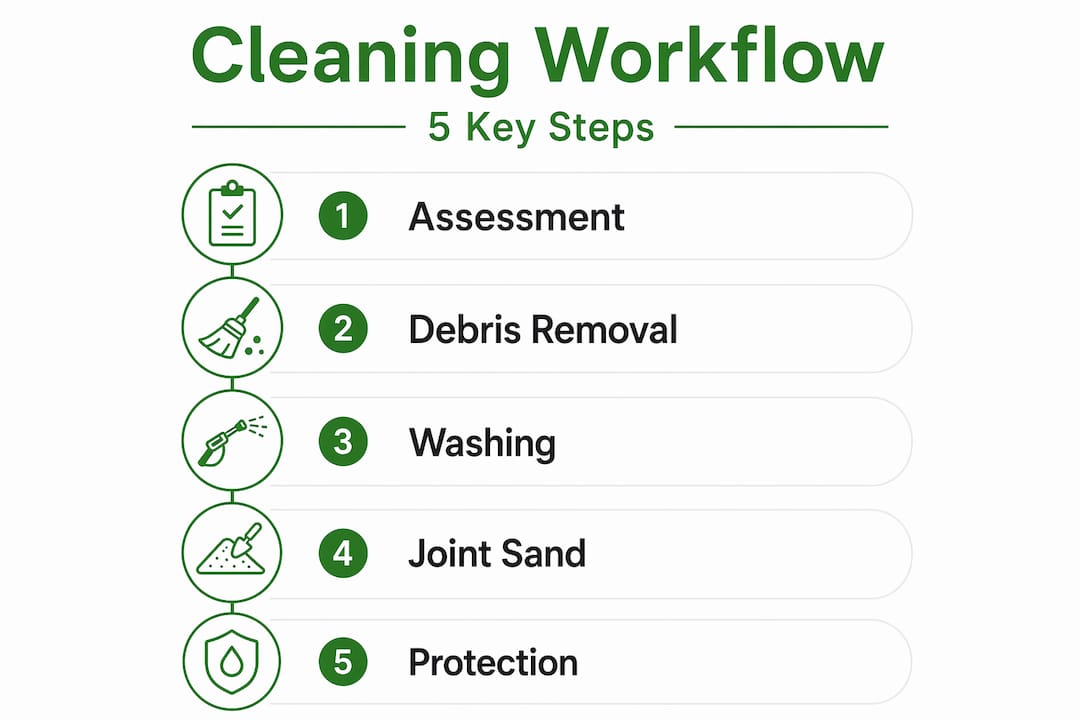
Professional hardscape cleaning is not just pointing a pressure washer at a driveway and calling it done. A thorough professional workflow involves assessment, preparation, treatment, and post-clean restoration. Each phase matters.
A typical professional process includes:
- Surface assessment: The technician examines the material type, existing damage, staining, joint condition, and any safety hazards. This determines the entire approach.
- Debris and weed removal: Loose material, leaves, and any vegetation growing in joints are cleared before any water is applied. Wetting debris first makes it harder to remove.
- Pre-treatment application: For tough stains (oil, rust, organic growth), a targeted cleaning solution is applied and allowed to dwell. This loosens the contamination before any mechanical cleaning begins.
- Mechanical cleaning: This is where pressure washing, scrubbing, or surface-specific methods come in. Settings are adjusted based on the material. Brick, for instance, tolerates lower pressure than reinforced concrete.
- Rinsing: A thorough rinse removes all cleaning agents and loosened debris. Improper rinsing leaves residue that can attract new dirt faster.
- Joint sand inspection and replacement: Pressure washing, even when done correctly, can displace the polymeric sand between pavers. Professionals check and restore this to maintain structural integrity.
- Sealing (optional but recommended): A sealant applied after cleaning protects the surface from future staining, UV damage, and moisture infiltration.
This is what separates professional cleaning of concrete and patios from a weekend DIY job. Each step builds on the last, and skipping one creates problems down the line.
| Cleaning phase | Purpose | Consequence of skipping |
|---|---|---|
| Surface assessment | Prevents material damage | Wrong technique, costly repairs |
| Debris removal | Ensures even cleaning | Streaking, trapped organic matter |
| Pre-treatment | Breaks down stubborn stains | Incomplete cleaning, residue left |
| Mechanical cleaning | Removes bonded contamination | Surface remains unsanitary |
| Joint sand restoration | Maintains structural stability | Paver movement, weed growth |
| Sealing | Protects from future damage | Faster re-contamination |
Pro Tip: Ask your cleaning service whether they replace joint sand after pressure washing. Many skip this step, which leaves pavers loose and vulnerable to frost heaving in Calgary winters.
An overview of hardscape cleaning practices confirms that the post-clean steps are just as important as the cleaning itself, particularly in climates with significant temperature variation.
Material sensitivity: why technique matters for concrete, brick, and stone
With the workflow understood, it’s critical to adapt your approach based on the material, which is where many costly mistakes happen.
Not all hard surfaces respond the same way to cleaning. Concrete, brick, and natural stone each have different porosity, joint types, and structural vulnerabilities. Using the wrong pressure, spray angle, or cleaning agent on the wrong surface causes damage that can be expensive to reverse.
Material sensitivity is a genuine concern: using too much pressure can damage pavers or dislodge jointing material, creating both safety problems and the need for costly repairs.
Here’s how the three most common materials compare:
| Material | Pressure tolerance | Main risk | Recommended approach |
|---|---|---|---|
| Concrete | High (up to 3000 PSI) | Surface etching with wrong tip | Fan tip, consistent distance |
| Brick | Medium (1000-1500 PSI) | Joint damage, spalling | Low pressure, gentle detergent |
| Natural stone | Low (under 1000 PSI) | Surface pitting, discolouration | Soft washing, hand scrub |
| Manufactured pavers | Medium | Joint sand displacement | Surface cleaner attachment |
Key material-specific tips:
- Concrete: Avoid using a zero-degree (pencil) tip directly on concrete. It concentrates pressure into a point and can etch lines into the surface that are difficult to remove.
- Brick: Older brick is particularly vulnerable. Mortar joints can crumble under high pressure. A rotating surface cleaner is far safer than a direct-stream nozzle.
- Natural stone: Limestone and sandstone are the most sensitive. These materials require best practices that favour gentle, pH-neutral cleaners over mechanical pressure.
- Manufactured pavers: These look durable but the polymeric sand between them is the weak point. Losing that sand means the pavers start to shift, creating trip hazards and drainage problems.
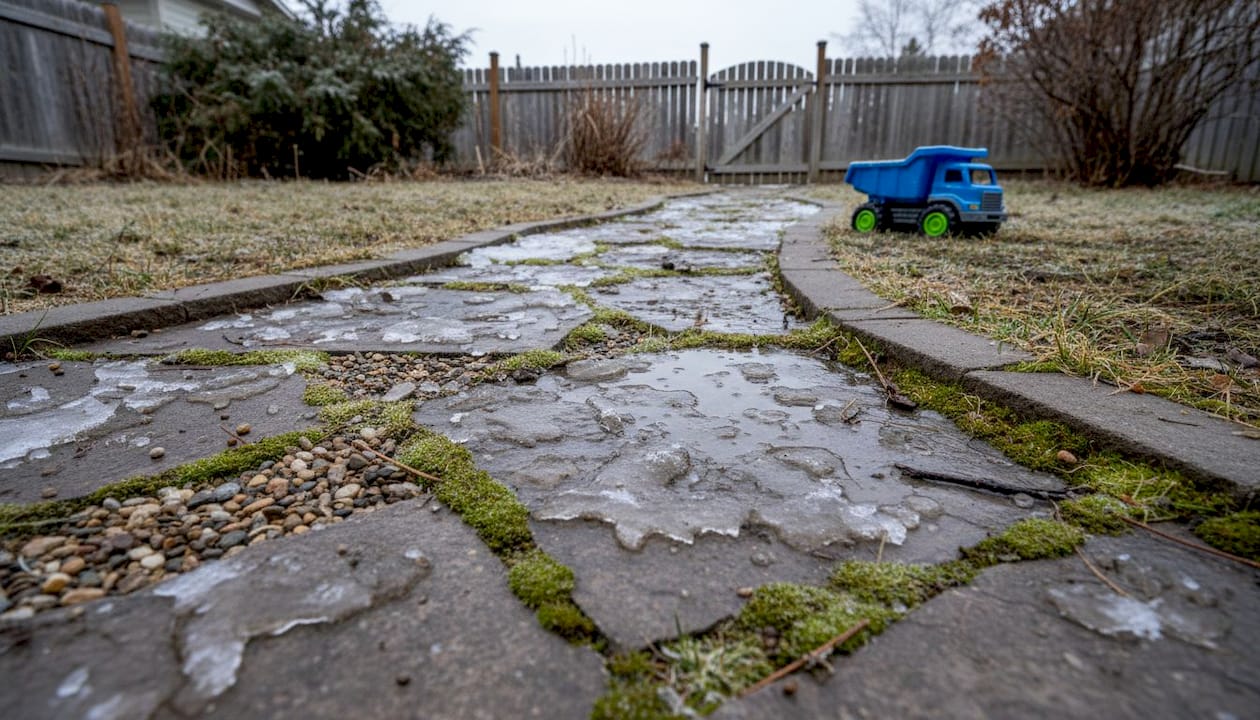
Calgary’s climate adds another layer of complexity. Surfaces that have already been weakened by freeze-thaw cycles (where water enters micro-cracks, freezes, expands, and widens those cracks) are especially vulnerable to high-pressure cleaning. A surface that looks fine may already have internal stress fractures that pressure washing will worsen.
Pro Tip: If you notice white, powdery deposits on your brick or concrete (called efflorescence), that’s a sign of moisture moving through the material. Treating efflorescence correctly requires specific acidic cleaners, not just pressure. Getting this wrong can drive the staining deeper.
There’s a reason experienced technicians spend time assessing surfaces before turning on any equipment. That assessment is not overhead. It is the job.
Seasonal timing in Calgary: cleaning for freeze-thaw cycles and property protection
Beyond technique, cleaning at the right time is essential in Calgary for preventing weather-related damage.
Calgary’s climate is genuinely unique. The city experiences significant freeze-thaw cycling throughout autumn and spring, and even during mild stretches in winter. Each freeze-thaw event causes water that has seeped into surface pores or joints to expand by roughly 9%, physically widening cracks and dislodging material over time. Organic matter trapped in those cracks accelerates the process by retaining moisture.
Cleaning before and after freeze-thaw seasons removes trapped debris and organic matter, directly reducing the risk of freeze-thaw-related damage. This makes the timing of your cleaning schedule as important as the technique used.
Recommended seasonal schedule for Calgary homeowners:
- Late spring (May to early June): This is the most critical cleaning window. Winter sand, road salt residue, and organic debris from the previous autumn have all had months to bond to surfaces. A professional clean at this point removes corrosive material before summer heat bakes it in further.
- Late summer to early autumn (August to September): A second clean before leaves fall gives surfaces a clean surface to enter winter. Sealing is best done in this window when temperatures are consistently above 10°C.
- Avoid cleaning in freezing temperatures: Applying water to surfaces when overnight temperatures drop below zero creates ice, both a safety hazard and a damage risk.
“Removing trapped debris and organic matter before or after freeze-thaw seasons directly lowers the risk of surface deterioration over time.” — Seasonal Home Maintenance Guide
The impact of organic debris is often underestimated. Fallen leaves left on stone or concrete create a layer of tannic acid as they decompose. This acid stains and weakens surface material over an entire winter. Clearing that debris before freeze-up and cleaning the surface in spring removes both the staining and the trapped moisture that drives freeze-thaw damage.
For detailed seasonal outdoor cleanup tips specific to Calgary, planning your cleaning schedule around these windows makes a measurable difference in long-term surface condition. A solid year-round property maintenance plan treats hardscape cleaning as a scheduled event, not a reaction to visible dirt.
What most guides miss about hardscape cleaning in Calgary
Most online guides about hardscape cleaning are written for generic North American climates. They assume mild winters, moderate rainfall, and surfaces that age gradually and predictably. Calgary fits none of those assumptions.
The freeze-thaw issue is genuinely severe here. Calgary can experience multiple freeze-thaw cycles in a single week during autumn and spring. This is not the same as a city that freezes hard in November and thaws once in April. The repeated cycling means surfaces in Calgary age faster and require more attentive care than equivalent surfaces in most other Canadian cities.
We have seen this play out repeatedly in our work across Calgary. Homeowners who follow generic advice, cleaning once a year in summer, skipping sealing, using whatever pressure setting “feels right,” end up with surfaces that look fine for a couple of seasons and then deteriorate rapidly. The damage was happening invisibly, driven by water infiltration and freeze-thaw expansion, and the one-size approach missed it entirely.
The real value of working with a local professional is not just their equipment. It is their understanding of how Calgary’s specific conditions interact with specific materials. A technician who has cleaned hundreds of Calgary driveways knows that the same paver product from the same manufacturer behaves differently on a north-facing property (more persistent ice, less UV drying) than on a south-facing one.
The questions worth asking any service provider include: Do they assess surface condition before starting? Do they adjust pressure settings per material? Do they replace joint sand after washing? Do they recommend sealing based on the material’s actual condition, not just as a default upsell?
Those questions quickly separate knowledgeable local professionals from generic service providers. Preventative landscaping tips reinforce the same principle: making smart, proactive choices based on local conditions beats reactive repairs every time.
The uncomfortable truth is that cheap, fast hardscape cleaning that ignores these variables is often more expensive in the long run. Surface repairs, paver replacement, and re-grading from poor drainage add up to far more than the cost of doing it properly from the beginning.
Connect with hardscape experts in Calgary
Your outdoor surfaces protect your property and your family. Getting the cleaning right matters more than most homeowners realise until something goes wrong.

At YearLong Property Maintenance, we bring seven years of Calgary-specific outdoor care to every job. Our concrete cleaning services are tailored to Calgary’s climate conditions, using the right pressure settings, products, and timing to protect your investment rather than inadvertently damage it. Beyond hardscapes, we also handle lawn bed maintenance to keep your planting areas healthy and tidy alongside your cleaned surfaces. If your property needs a full reset before or after the harsh season, our seasonal yard clean up service covers everything from debris removal to surface preparation. Reach out today to book a free assessment and put your hardscapes in the best possible condition for the year ahead.
Frequently asked questions
Can I clean hardscapes myself or should I hire a professional?
DIY cleaning is manageable for light surface dirt, but incorrect equipment use can cause injury or property damage, making professional help the safer choice for most Calgary homeowners.
How often should I schedule hardscape cleaning in Calgary?
Most properties benefit from professional cleaning once or twice per year, timed around Calgary’s freeze-thaw seasons. Cleaning before and after these periods reduces long-term surface deterioration.
What happens if you use too much pressure when cleaning pavers?
Excess pressure can dislodge jointing material and damage the paver surface itself, leading to structural instability and costly repairs that a simple cleaning job should never cause.
Does hardscape cleaning help prevent slippery surfaces?
Yes. Removing algae, moss, and organic buildup that makes surfaces slippery is one of the most practical safety benefits, especially on walkways and steps during Calgary’s wet and icy seasons.
Which surfaces can be cleaned using hardscape cleaning methods?
The most common surfaces are concrete, brick, and stone, including both natural and manufactured options like interlocking pavers, each of which requires a different cleaning approach for safe and effective results.