

TL;DR:
- Proper mowing, fertilizing, and overseeding are essential to building a dense, healthy Calgary lawn that naturally resists weeds. Consistent prevention efforts, including timely overseeding and targeted spot treatments, are more effective than relying solely on herbicides or reactive measures. Focusing on turf health and maintaining a steady routine produces long-term weed control, reducing frustration and environmental impact.
You spend time and money on your Calgary lawn, then dandelions and creeping Charlie undo it all in a few weeks. It’s genuinely frustrating, and you’re not alone. Weed pressure is one of the top complaints we hear from homeowners across Calgary every spring and summer. The good news is that prevention is far more effective than reaction, and with the right routine, you can keep your lawn thick, healthy, and far less inviting to weeds. This guide walks you through exactly how to do that, season by season.
Table of Contents
- Why Calgary lawns face persistent weed challenges
- Essential tools and materials for lawn weed prevention
- Step-by-step: How to prevent Calgary lawn weeds
- Troubleshooting: What to do when weeds persist
- A Calgary expert’s perspective: Why chasing a weed-free lawn is overrated
- Professional help for Calgary lawns: Take the next step
- Frequently asked questions
Key Takeaways
| Point | Details |
|---|---|
| Routine is essential | A healthy Calgary lawn needs consistent mowing, feeding, watering, and spot control to prevent weeds. |
| Perfect is unrealistic | Aiming for zero weeds is unnecessary and can harm the lawn; prevention plus spot-treating works best. |
| Proper tools matter | Simple tools and local timing make weed prevention easier and more effective in Calgary. |
| Tough weeds need persistence | Some perennials require repeated treatments and patience before they’re under control. |
Why Calgary lawns face persistent weed challenges
Calgary’s climate creates a unique set of challenges for lawn care. The short, intense growing season means your turf has a narrow window to develop the density it needs to crowd out weeds. Late spring frosts can stress grass and leave thin patches, and those bare spots are exactly where weed seeds land and take hold. Add in periods of dry heat, which slow turf recovery, and you’ve got conditions that genuinely favour weeds over grass.
Weed seeds arrive constantly, whether you like it or not. Wind carries dandelion seeds from neighbouring properties, birds drop seeds through droppings, and even your shoes and pets track in new species after a walk in the park. Some seeds can remain dormant in your soil for years, then germinate the moment light and temperature align. Our guide on identifying lawn pests touches on how similar hidden threats operate below the surface.
Here’s what that means practically. You cannot eliminate weeds once and be done. Consistent effort and sound prevention are what determine success, not a single treatment in May. Think of your lawn like a neighbourhood: the denser and healthier your turf community is, the less room there is for unwanted guests to move in.
Common weed entry points in Calgary lawns:
- Wind-carried seeds from neighbouring properties and fields
- Bird droppings containing undigested weed seeds
- Soil disturbance from aeration, digging, or pet activity
- Bare or thin patches caused by frost, drought, or heavy foot traffic
- Contaminated topsoil or compost brought in for garden beds
For a broader picture of what healthy lawn management looks like throughout the year, our Calgary lawn care solutions resource is a solid place to start.
Essential tools and materials for lawn weed prevention
Good weed prevention doesn’t require expensive equipment, but having the right tools on hand makes the routine much easier to stick with. Here’s a straightforward overview of what you’ll need and why each item matters.
| Tool or material | Purpose |
|---|---|
| Lawn mower | Regular mowing at the correct height to shade out weeds |
| Sharp mower blades | Clean cuts reduce stress and disease entry points |
| Slow-release fertiliser | Steady nutrient supply builds dense, competitive turf |
| Sprinkler or irrigation system | Deep, infrequent watering encourages deep root growth |
| Spot sprayer | Targeted herbicide application on isolated weeds |
| Gloves and hand weeder | Safe manual removal of individual plants |
| Pre-emergent herbicide (optional) | Applied in early spring to stop weed seeds germinating |
| Compost or lawn top-dressing | Improves soil health and fills in thin areas |
Dense, healthy turf is genuinely the best weed prevention tool available, and it’s achieved through the combination of proper mowing, fertilising, and irrigation listed above. No single product does that work on its own.
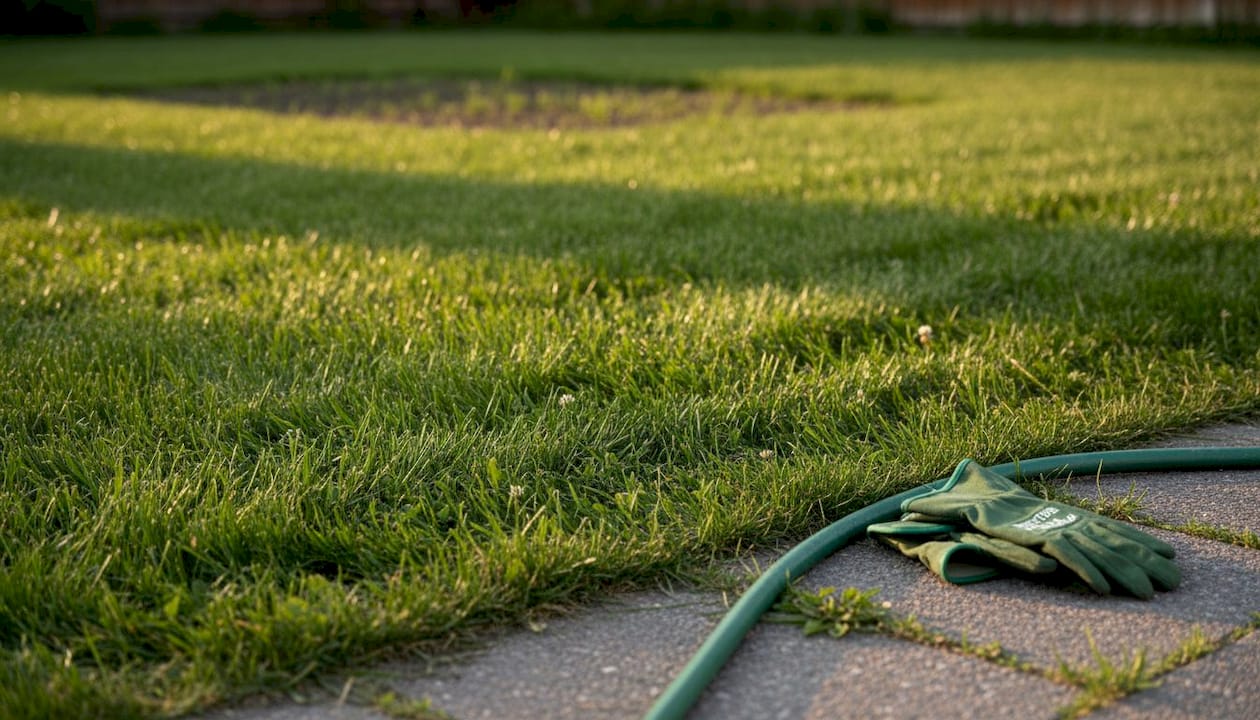
A few extras worth having include a good quality hand weeder for tackling dandelions before they seed, and a bag of grass seed matched to your existing turf type for overseeding bare patches quickly. If you plan to use any herbicide products, always read the full label before purchasing and before applying.
Pro Tip: Check your mower blades at the start of every season. Dull blades tear grass rather than cutting it cleanly, which stresses the turf and makes it more vulnerable to weeds and disease. A sharp blade costs almost nothing to maintain and makes a noticeable difference in lawn health.
Our article on lawn spring clean up tips gives more detail on getting your equipment and lawn ready after the winter months.
Step-by-step: How to prevent Calgary lawn weeds
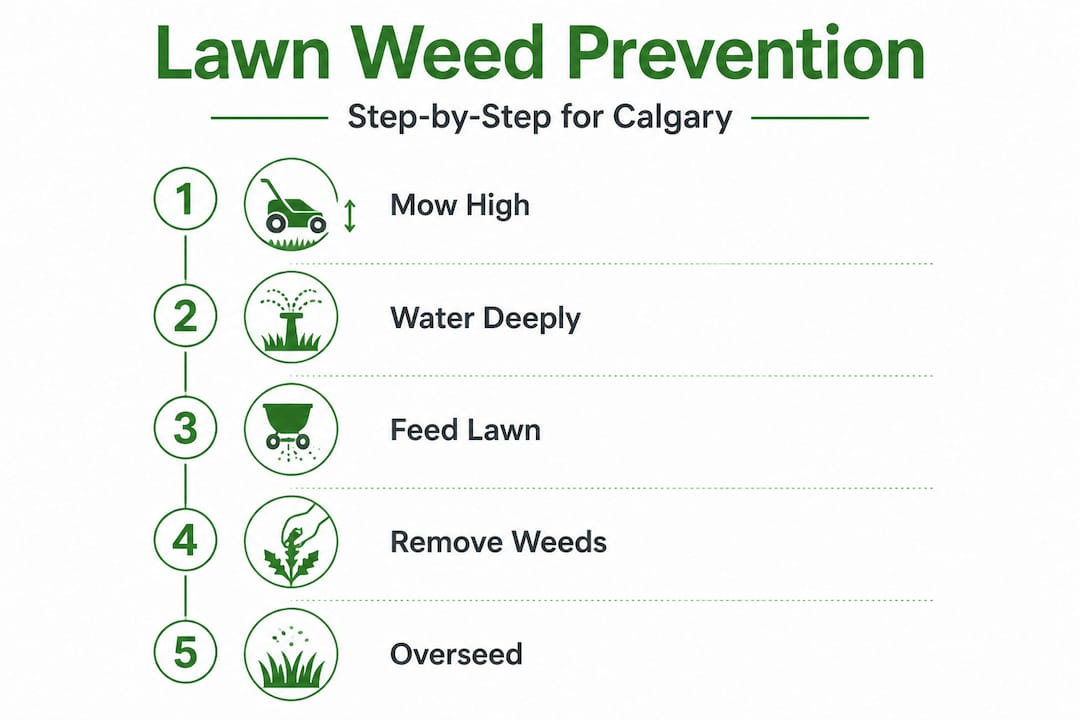
With the right tools ready, here’s the practical routine that makes the biggest difference. These steps build on each other, so follow them in order for the best results.
Mow at the right height. For most Calgary lawns, that means keeping grass at 6 to 7.5 centimetres (roughly 2.5 to 3 inches). Taller grass shades the soil, making it harder for weed seeds to germinate. Mowing height and frequency are among the most powerful factors in weed control, yet most homeowners mow too short.
Fertilise according to the season. Apply a slow-release nitrogen fertiliser in late spring and again in early fall. Avoid over-fertilising in midsummer, which can encourage weedy growth rather than healthy turf. Healthy, fed grass simply out-competes most weed species for light and nutrients.
Water deeply but infrequently. Aim for about 2.5 centimetres of water per week, applied in one or two sessions rather than daily light sprinkles. Shallow, frequent watering keeps the top layer of soil moist, which is exactly what many weed seeds need to germinate. Deep watering trains grass roots to go deep, making the lawn more drought-tolerant and competitive.
Overseed bare and thin patches promptly. Every bare patch is an invitation for weeds. Keep a small bag of matching grass seed and fill thin areas as soon as you spot them, ideally in late summer or early fall when soil temperatures are still warm. Check our spring yard clean up resource for the best timing in Calgary.
Spot-treat weeds as they appear. Pursuing a realistic goal rather than a weed-free lawn is the right mindset. Deal with weeds when you see them: pull dandelions before they flower and seed, and spot-spray persistent broadleaf weeds with a selective herbicide following the label exactly.
| Approach | Pros | Cons | Best used when |
|---|---|---|---|
| Routine prevention | Long-term results, no chemical reliance | Requires consistent effort | Year-round, starting in spring |
| Spot control | Targeted, lower chemical use | Reactive rather than proactive | When isolated weeds appear |
| Broadcast herbicide | Treats large infestations quickly | Higher chemical use, risk to turf | Severe, widespread weed problems only |
Pro Tip: Never remove more than one-third of the grass blade in a single mowing. Cutting too much at once shocks the turf and opens the door to weed invasion. If your lawn gets away from you, bring it back down gradually over several cuts rather than one severe session.
The year-round lawn maintenance checklist we’ve put together offers a month-by-month breakdown to keep this routine on track all season long.
Troubleshooting: What to do when weeds persist
Even a well-managed lawn can have trouble spots. If you’re doing everything right and weeds keep coming back, here’s where to look.
Perennial weeds like dandelions, creeping Charlie, and clover are the hardest to control because their root systems survive winter. For these, a single treatment rarely works. Difficult perennial weeds often require multiple control opportunities, and herbicides must be applied to actively growing plants for absorption to work. Importantly, do not apply herbicide right after mowing, as you need adequate leaf surface for the product to enter the plant.
Common mistakes that make weed problems worse:
- Mowing too short: Scalping your lawn removes the leaf canopy that blocks weed seeds from light. Raise your mowing height and keep it there.
- Over-fertilising in summer: A flush of lush, soft growth in mid-July attracts pests and can thin out turf quickly. Stick to the spring and fall fertilising windows.
- Under-fertilising in fall: Fall feeding is when grass builds energy reserves. Skipping it means weaker turf the following spring, which weeds exploit immediately.
- Leaving bare patches unattended: Bare soil rarely stays bare. If you don’t reseed it, weeds will seed it for you within weeks.
- Watering too shallowly and too often: This is one of the most common mistakes Calgary homeowners make, and it creates perfect conditions for shallow-rooted weeds.
Maintaining your lawn bed maintenance areas adjacent to the lawn is also important. Garden beds that are full of weeds will constantly seed into your turf, undermining all your lawn care efforts.
“Completely weed-free lawns aren’t practical or environmentally sensible. Spot-treat and stay consistent, and you’ll keep weeds from ever becoming a real problem.”
Stay patient with the process. Improvements in turf density take a full season or two to become obvious, but they’re lasting when you build them correctly.
A Calgary expert’s perspective: Why chasing a weed-free lawn is overrated
After years of working on Calgary lawns, we’ve noticed a pattern. The homeowners most frustrated by weeds are often the ones who’ve gone heaviest on herbicides. It sounds backwards, but it makes complete sense when you understand what’s happening.
Heavy chemical use can damage the beneficial microbes and soil structure that healthy turf depends on. When you weaken the soil ecosystem, your grass struggles more, bare patches form faster, and the weeds rush right back in. You end up on a treadmill: spray more, weaken the lawn, create space for weeds, spray more again.
Expert guidance advises against aiming for a 100% weed-free lawn. It’s unsustainable, and in Calgary’s climate, it’s genuinely harsh on the environment. A lawn with a few dandelions and mostly dense, green turf is actually a healthy, well-performing lawn.
What we recommend instead is focusing entirely on turf health. When your grass is thick, well-fed, and properly watered, it physically crowds out most weeds on its own. Weed seeds that land can’t find the light or bare soil they need to establish. The lawn does the prevention work for you, naturally.
Calgary’s short season also means accepting that some weed pressure is normal every spring. Cool, wet conditions early in the year favour many weed species before your turf has fully woken up. That’s not a failure of your maintenance routine; it’s just the local climate doing what it does. Your seasonal yard cleanup habits in spring matter enormously here, because getting ahead of weeds in April is far easier than fighting them in July.
Shift your goal from perfection to consistency. A steady routine of correct mowing, seasonal fertilising, deep watering, and prompt overseeding will produce a lawn that genuinely resists weeds over time. That’s a much more satisfying and sustainable result than chasing zero.
Professional help for Calgary lawns: Take the next step
Managing weeds through consistent lawn care is absolutely something you can tackle yourself, but sometimes your schedule, the size of your property, or a stubborn weed problem calls for professional support.

At YearLong Property Maintenance, we’ve been caring for Calgary lawns since 2017, and we know exactly how the local climate, soil conditions, and weed species behave through every season. Our Calgary lawn care experts provide scheduled mowing, fertilising, and weed management tailored to your property’s specific needs. We also offer full seasonal clean up options to get your lawn set up properly in spring and protected before winter. If your garden beds are contributing to your weed problem, our lawn bed maintenance services address that too. Reach out today and let’s build a plan that keeps your lawn healthy and weed-resistant all season long.
Frequently asked questions
What mowing height is best to prevent weeds in Calgary lawns?
Mowing your turf at 6 to 7.5 centimetres (2.5 to 3 inches) shades out weed seeds and supports stronger root development. Mowing height directly impacts how well your lawn competes against weeds throughout the season.
How soon after seeding or installing sod can I use herbicides?
Wait at least four to six weeks after seeding or sodding before applying broadleaf herbicides, as new turf is highly sensitive to chemical treatments. Applying too soon can damage or kill the establishing grass, setting your lawn back significantly.
Is it possible to eliminate all weeds from my Calgary lawn?
No weed management programme removes every weed species permanently. Consistent prevention and spot-treatments reduce infestations significantly over time, but some weed presence is normal and manageable.
What’s the safest way to get rid of dandelions in my yard?
Pull dandelions by hand before they flower using a long-handled weeder to remove the full taproot, or spot-treat actively growing plants with a selective broadleaf herbicide following all label directions. Spot-treating existing broadleaf weeds is more effective and safer than broadcast spraying for isolated problems.
Should I use weed prevention fabric under my lawn?
Weed prevention fabric is not recommended for established lawns. It interferes with soil health, aeration, and root development. A thick, healthy lawn does a far better job of blocking weeds naturally and without any of the long-term drawbacks.
One Response