

TL;DR:
- Calgary property care requires year-round planning due to its unpredictable, seasonal weather.
- Proper timing and tailored tasks each season prevent damage and promote healthy landscaping.
- Outsourcing high-stakes tasks like spring cleanup, fall prep, and snow removal can save time and ensure quality results.
Calgary is a city where spring can arrive in March and disappear again by April, where summer heat can parch a lawn in days, and where a single October storm can dump enough snow to trap your car in the driveway. That kind of weather doesn’t forgive neglect. For homeowners here, keeping a property in good shape isn’t a weekend hobby. It’s a year-round commitment that requires knowing exactly what to do, when to do it, and how to do it well. This article walks you through practical, expert-backed examples for every season, so your property stays safe, healthy, and looking its best no matter what Calgary’s sky decides to throw at you.
Table of Contents
- How to evaluate your seasonal property care needs
- Spring property care tasks proven to make a difference
- Essential summer property care service examples
- Autumn care routines to protect your investment
- Winter property care: Reliable snow removal and safety
- Our perspective on year-round property care in Calgary
- Ready to take seasonal property care off your to-do list?
- Frequently asked questions
Key Takeaways
| Point | Details |
|---|---|
| Season-specific tasks | Tailor your property care routine for Calgary’s spring, summer, fall, and winter climate. |
| DIY vs. professional help | Understand when to tackle projects yourself and when it pays to hire experts for efficiency and safety. |
| Prevention is key | Regular seasonal maintenance prevents costly repairs and boosts your home’s curb appeal. |
| Document and plan | Keep notes on seasonal issues so you can improve your approach next year. |
How to evaluate your seasonal property care needs
With Calgary’s weather making property care a year-round challenge, it’s important to start with a personalised assessment before you pick up a single rake or shovel. Without a clear picture of your property’s vulnerabilities, you end up reacting to problems rather than preventing them.
Calgary’s four seasons each create distinct pressures on your outdoor space. Spring melt can saturate soil and expose months of hidden damage. Summer heat stresses turf and dries out garden beds fast. Autumn brings leaf buildup and the final window to prepare for frost. Winter delivers snow loads, ice, and the very real safety risk of slippery walkways.
Start by walking your entire property at the beginning of each season and asking yourself some specific questions:
- Which areas hold standing water after rain or snowmelt?
- Where does ice form on walkways or steps?
- Are there bare patches or thinning areas on the lawn?
- Which trees or shrubs show signs of winter dieback?
- How much leaf litter falls onto beds and grass?
Beyond the physical landscape, consider your available time. A large corner lot with mature trees demands far more autumn effort than a compact backyard with minimal landscaping. Slope is another factor. Sloped yards drain differently and can develop erosion problems that flat properties never face. A solid approach to seasonal care planning accounts for all of these details together.
Pro Tip: Keep a simple seasonal log on your phone. After each major weather event or maintenance task, jot down what you noticed and what you did. By year two, you’ll have a reliable guide built from your own property’s history.
Spring property care tasks proven to make a difference
Once you’ve evaluated your property’s specific needs, spring is the perfect time to kick off annual maintenance. The challenge with Calgary springs is that the window between snowmelt and rapid grass growth can be surprisingly short. Miss it, and you’re already playing catch-up.
The first priority is clearing winter’s leftovers. Fallen branches, matted leaves, and decomposing organic matter sitting on your turf can smother emerging grass and invite snow mould, a fungal problem common in Calgary’s cool, wet springs. Raking thoroughly, even when the ground is still damp, gives your lawn the air circulation it needs.
Key spring tasks include:
- Removing all dead leaves, twigs, and plant debris from lawn and garden beds
- Pruning winter-damaged branches from trees and shrubs before new growth begins
- Aerating compacted soil to allow water and nutrients to penetrate the root zone
- Top-dressing thin or bare areas with quality soil and grass seed
- Applying a balanced slow-release fertiliser once soil temperatures rise above 10°C
- Installing a pre-emergent weed treatment to reduce crabgrass and dandelion pressure
These spring clean up tips are more than just cosmetic. Aeration in particular is one of the highest-return tasks you can do for a Calgary lawn. Compacted clay-heavy soils, common across many Calgary neighbourhoods, restrict the root depth of your grass. Aeration breaks that cycle. Pair it with top-dressing and you’re genuinely rebuilding your lawn from the ground up.
“A thorough spring cleanup sets the tone for a lush summer lawn.”
Fertilising timing also matters here more than most homeowners realise. Applying too early, when the ground is still cold, wastes the product and can encourage shallow root growth. Wait for consistent soil warmth, and use your seasonal clean up checklist to sequence tasks in the right order.
Pro Tip: Complete your spring cleanup after snowmelt but before your grass begins growing aggressively. In Calgary, this usually means late April to early May. Getting in during that narrow window makes every task more effective.
Essential summer property care service examples
With spring cleanup complete, summer routines build the foundation for a healthy, attractive outdoor space. Calgary summers can be deceptively demanding. The city enjoys more hours of sunshine than almost anywhere else in Canada, which is great for gardens but hard on lawns that aren’t watered and mowed correctly.
A key principle for summer lawn care is mowing height. Cutting grass too short stresses it during heat waves, exposes soil to evaporation, and invites weeds to fill the gaps. Keeping your mower blade at 7 to 9 centimetres during peak summer heat is one of the simplest improvements most homeowners can make. Following lawn mowing best practices also means never removing more than one-third of the blade length in a single cut.
Here are the core summer tasks in recommended order of priority:
- Mow weekly during active growth, adjusting height upward during heat waves
- Water deeply two to three times per week rather than lightly every day
- Monitor for surface insects and fungal patches, especially after wet periods
- Hand-pull or spot-treat summer weeds before they seed
- Top up mulch in garden beds to retain soil moisture and suppress weeds
- Trim edges along walkways, driveways, and garden borders monthly
Summer task frequency at a glance:
| Task | Frequency |
|---|---|
| Lawn mowing | Weekly (peak growth) |
| Deep watering | 2 to 3 times per week |
| Edging and trimming | Every 2 to 4 weeks |
| Weed control | Weekly inspection, treat as needed |
| Mulch top-up | Once mid-season |
| Pest monitoring | Weekly |
Your ongoing lawn care schedule should be flexible, not fixed. A dry July calls for more watering. A cool, wet August may reduce mowing frequency. Calgary’s weather varies enough that rigid schedules often lead to over or under-caring for your lawn.
Pro Tip: Water your lawn in the early morning, ideally between 5 a.m. and 9 a.m. This reduces evaporation loss significantly compared to afternoon watering and prevents the overnight moisture that encourages lawn disease.
Autumn care routines to protect your investment
As summer winds down, shifting focus to autumn preparation ensures your property is ready for Calgary’s winter. Fall is arguably the most important season for preventing damage, yet it’s also the one homeowners most often rush or skip entirely.
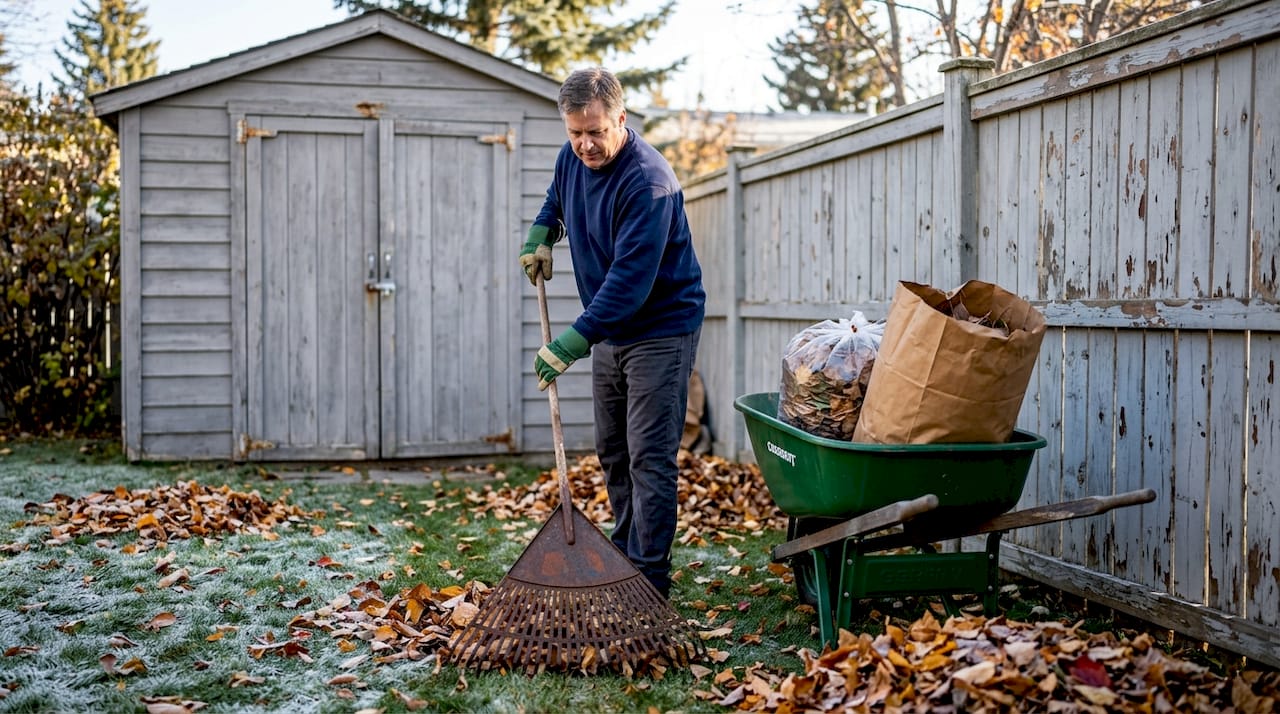
Leaf removal is the obvious task, but the timing matters. Leaving a thick layer of leaves on your lawn through October encourages snow mould, matting, and bare patches come spring. Remove leaves as they fall rather than waiting for the “last drop,” especially if you have large deciduous trees. A single maple or poplar can deposit enough material to smother an entire lawn in a matter of days.
Critical autumn tasks include:
- Final mow at a slightly lower height (around 5 to 6 centimetres) to reduce snow mould risk
- Applying a fall fertiliser high in potassium to strengthen roots before freeze
- Cutting back perennials and removing annuals from beds before hard frost
- Draining and blowing out irrigation systems before temperatures drop below zero
- Cleaning gutters to prevent ice dam formation and water infiltration
- Wrapping fragile shrubs with burlap to protect against desiccation and heavy snow loads
These fall clean-up strategies genuinely pay off. Properties that receive thorough autumn care consistently bounce back faster and healthier in spring. The investment of a few focused weekends in September and October saves significant repair and recovery effort the following year.
DIY vs. professional fall cleanup:
| Factor | DIY | Professional service |
|---|---|---|
| Average time required | 6 to 12 hours | 1 to 3 hours on-site |
| Equipment needed | Rake, mower, blower, bags | Full professional kit |
| Quality of results | Variable | Consistent, thorough |
| Cost | Low direct cost | Moderate service fee |
| Risk of missed tasks | Higher | Lower with checklist |
| Value to property | Good if done correctly | Optimised, reliable |
The comparison above isn’t meant to push you toward one option. It’s meant to help you make an honest assessment of your own capacity. If you’re working long hours through September and October, outsourcing fall cleanup is a practical decision that protects your investment rather than a luxury.
Winter property care: Reliable snow removal and safety
Autumn tasks pave the way for smoother winter property management. In winter, safety and accessibility become your top priorities. Snow and ice aren’t just inconvenient. They’re genuine hazards, and Calgary’s bylaw structure makes timely removal a legal obligation, not just a courtesy.
Calgary’s rules are clear. Homeowners must clear snow and ice from sidewalks bordering their property within 24 hours after a snowfall ends. Non-compliance can result in city-issued fines. With storms that can drop 20 to 30 centimetres overnight, this deadline is tighter than it sounds if you’re working full-time or managing mobility challenges.
Here’s a practical winter care sequence:
- Mark all pathways, garden bed edges, and irrigation heads with stakes before the first snow to prevent accidental damage during removal
- Clear driveways and walks promptly after each snowfall, working from the garage outward
- Apply sand or eco-friendly de-icing products to shaded and high-traffic zones where ice reforms quickly
- Check and re-clear shaded north-facing walks in the 24 hours following a storm, as they refreeze faster
- Inspect roof edges and overhangs after heavy snowfall for ice dam formation, especially on older homes
Following safe snow removal tips also means protecting yourself. Snow removal is one of the leading causes of back injuries and cardiac events in Canada during winter months. Use an ergonomic shovel, push snow rather than lifting when possible, and take breaks.
Eco-friendly de-icers deserve special mention. Traditional rock salt is effective but damages concrete over time and is harmful to grass, garden soil, and pets. Calcium magnesium acetate and sand-based products offer safer alternatives that still prevent slipping without the long-term surface damage.
Pro Tip: Stake your lawn edges, garden bed borders, and irrigation heads before the first snowfall of the season. You’ll avoid accidental damage from shovels and snow blowers, which can cost more to repair than the entire winter’s snow removal.
Our perspective on year-round property care in Calgary
Most property care advice focuses on individual tasks. Do this in spring, do that in fall. What that approach misses is the bigger picture: your property functions as a connected system, and decisions made in one season directly affect what happens in the next.
We’ve seen it repeatedly since 2017. A homeowner skips autumn aeration to save time. Come spring, their compacted, water-logged soil takes weeks longer to recover, and they end up spending more on seed, fertiliser, and labour than the original aeration would have cost. Short-term savings that create long-term costs are the most common mistake in property maintenance.
The second thing worth saying plainly is that Calgary’s climate doesn’t give you a lot of grace periods. Other cities have milder transitions between seasons. Here, you can have snow in May and a heat wave two weeks later. That kind of volatility rewards preparation and punishes procrastination. The homeowners with the best-looking properties aren’t doing more work. They’re doing the right work at the right time.
Our honest take is that a hybrid approach works best for most Calgary households. Handle the mid-season maintenance yourself if you enjoy it and have the time. Bring in professionals for the high-stakes seasonal transitions, spring cleanup, fall prep, and snow removal during heavy storm periods. That combination gives you control without burning you out.
Ready to take seasonal property care off your to-do list?
Managing every season’s demands takes real planning, the right equipment, and a lot of hours you may not have. At YearLong Property Maintenance, we’ve been helping Calgary homeowners stay ahead of every season since 2017.

From spring cleanups and lawn care to snow removal and fall preparation, our team handles the full cycle of outdoor property maintenance so you don’t have to. We serve homeowners, property managers, and HOAs across Calgary with flexible service packages built around your schedule and budget. Every job comes with our satisfaction guarantee, because your property deserves reliable care, not guesswork. Contact us today to get a custom quote and a plan that works for your property year-round.
Frequently asked questions
What is the best time for spring yard cleanup in Calgary?
Plan your spring yard cleanup right after the snow fully melts but before your grass starts growing aggressively, typically late April to early May in most Calgary neighbourhoods.
How often should lawns be mowed in Calgary during summer?
Lawns should be mowed once a week during peak growing season for optimal health and curb appeal, though you should adjust frequency during heat waves or slow-growth periods.
Do professional fall clean-ups really make a difference?
Yes, professional fall clean-ups can prevent winter damage and lead to a healthier lawn in spring by removing debris, cutting back plants correctly, and prepping turf before freeze.
What are the legal requirements for snow removal in Calgary?
Calgary homeowners must clear snow and ice from city sidewalks bordering their property within 24 hours after a snowfall ends, or risk city-issued fines.
How can I save time on seasonal property maintenance?
Outsourcing time-intensive seasonal tasks like spring cleanup, fall preparation, and snow removal to a local property care team keeps your property in top shape without consuming your evenings and weekends.