

TL;DR:
- Snow hauling involves removing snow offsite to prevent safety hazards and property damage.
- Proper snow management protects against liability, infrastructure deterioration, and preserves property value.
- Proactive hauling ensures compliance with Calgary bylaws and long-term property health.
Calgary winters are relentless. A single overnight snowfall can pile up fast enough to block your driveway, bury your walkway, and leave you scrambling before work. Most homeowners grab a shovel or call a plowing service and consider the job done. But when snow has nowhere left to go, simply moving it around your property is no longer enough. Snow hauling, the process of physically removing snow from your property and transporting it offsite, is a critical service many Calgary residents overlook until they are already facing safety risks, property damage, or a city bylaw notice.
Table of Contents
- What is snow hauling and how does it differ from snow removal?
- How snow accumulation can impact safety and property value
- Legal responsibilities: Calgary bylaws and snow management
- When should you haul snow rather than just remove it?
- The hidden value of smart snow hauling: Beyond compliance
- Keep your property clear: Snow hauling and beyond
- Frequently asked questions
Key Takeaways
| Point | Details |
|---|---|
| Snow hauling defined | Hauling means transporting snow offsite, unlike regular on-site snow removal. |
| Prevents safety hazards | Removing excess snow helps reduce slip, fall, and vehicle accidents on your property. |
| Bylaw compliance avoided fines | Meeting Calgary’s snow management rules can prevent unnecessary municipal fines. |
| Protects property value | Professional snow hauling safeguards your landscape and outdoor surfaces against damage. |
| Smart timing is key | Recognising when to haul snow keeps winter property management simple and cost-effective. |
What is snow hauling and how does it differ from snow removal?
Snow removal and snow hauling are related, but they are not the same thing. Understanding the difference helps you make smarter decisions about winter property care.
Snow removal covers the everyday tasks of clearing snow from driveways, walkways, parking areas, and other surfaces. This includes shovelling, snowblowing, and plowing. The snow is moved, but it stays on your property, usually pushed to the sides of a driveway or piled near a fence line. For light snowfall, this works fine. The piles stay manageable, and they melt away before causing problems.
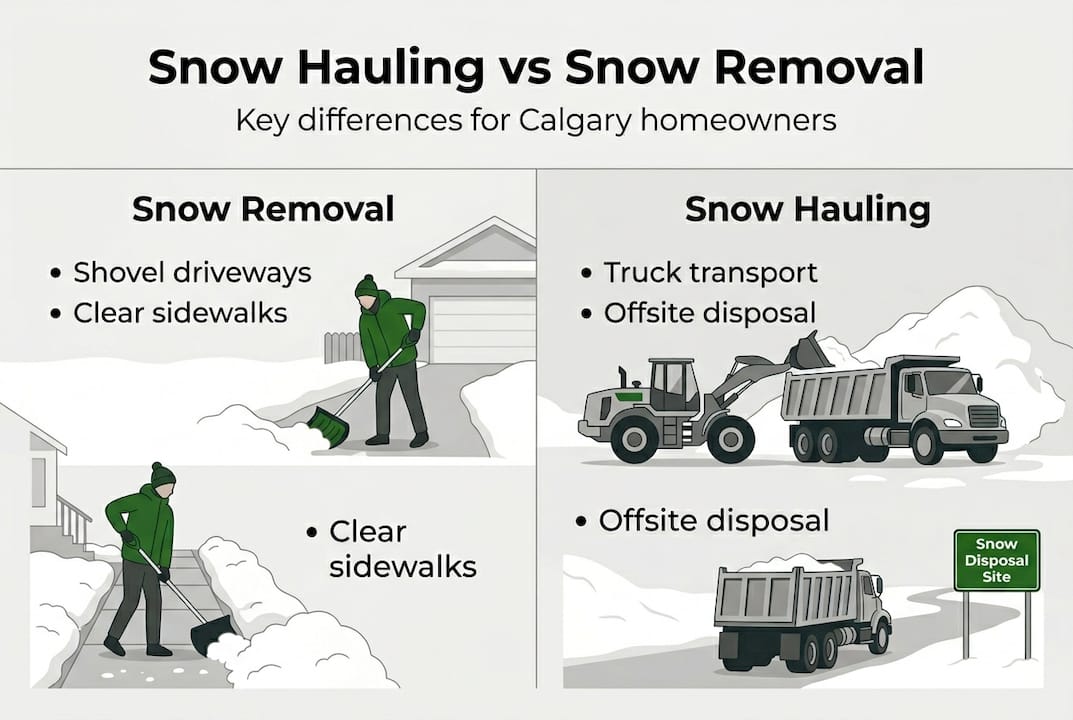
Snow hauling goes a step further. Once snow has been cleared, it is loaded into trucks and transported offsite to a designated snow disposal facility. This is the option you need when on-site piles have grown too large, are blocking access, or are simply running out of space to go. You can learn more about snow plowing basics and how clearing and hauling work together in a complete winter plan.
Here is a quick comparison to illustrate when each service applies:
| Situation | Snow removal | Snow hauling |
|---|---|---|
| Light to moderate snowfall | ✓ Usually sufficient | Not typically required |
| Heavy or repeated snowfall | ✓ Essential first step | ✓ Often needed |
| Limited yard or pile space | Partial solution | ✓ Necessary |
| Commercial or managed properties | ✓ Regular requirement | ✓ Frequently required |
| Blocked drainage or access | Partial solution | ✓ Best option |
Key reasons why homeowners and property managers turn to professional snow hauling include:
- Piles from repeated snowfalls become too high to safely add more snow
- Accumulated snow begins to block sightlines at driveways and intersections
- Melting and refreezing cycles turn large piles into dangerous ice masses
- Property managers need parking lots kept fully functional throughout winter
- Snow hauling by professionals is critical for residential property maintenance when standard removal cannot keep up with Calgary’s heavier snowfall events
The bottom line: snow removal gets the snow off the ground, while snow hauling gets it off your property entirely. Both are valuable, and knowing when to use each one is what separates a well-managed property from a liability.
How snow accumulation can impact safety and property value
Now that you know what snow hauling is, here is how unchecked snow can lead to costly and dangerous outcomes.
Most people think of snow as a temporary inconvenience. It falls, it sits, it eventually melts. But in Calgary, where temperatures swing dramatically and freeze/thaw cycles repeat throughout the winter, large snow piles do real, measurable damage.
Safety hazards are the most immediate concern. When snow piles grow along driveways and walkways, they narrow pedestrian paths and make it harder to see oncoming traffic. Ice forms at the base of piles as snow melts during warm spells and then refreezes overnight. This kind of ice is notoriously difficult to spot and is a leading cause of slip and fall injuries. Professional snow hauling actively prevents the buildup that leads to these hazardous conditions on home exteriors and walkways.
Here is a summary of the most significant risks when snow accumulation goes unmanaged:
| Risk type | Cause | Potential outcome |
|---|---|---|
| Slip and fall injuries | Ice forming under snow piles | Personal injury, liability claims |
| Blocked emergency access | Piles obstructing driveways | Delayed emergency response |
| Driveway deterioration | Freeze/thaw cycle damage | Cracking, heaving, costly repairs |
| Landscape damage | Excessive weight on plants | Broken shrubs, crushed perennials |
| Drainage blockage | Melting snow has nowhere to go | Flooding, ice dams, water intrusion |
Beyond immediate safety, consider the longer-term effects on your property. Concrete and asphalt expand and contract with temperature changes. When heavy snow sits on a surface for extended periods, the repeated freeze/thaw action accelerates cracking and deterioration. Driveways and pathways that might have lasted another decade can require resurfacing years ahead of schedule. Regular cleaning walkways after snow and keeping them clear helps extend the life of your surfaces significantly.
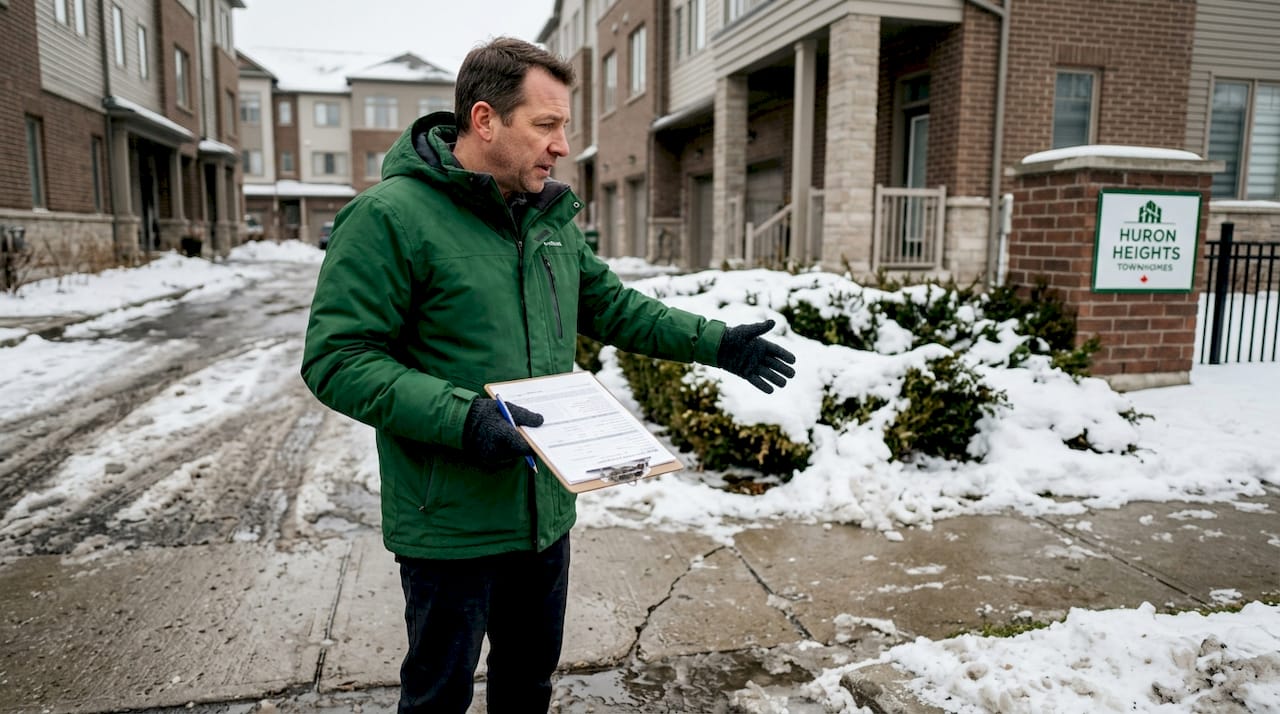
Curb appeal takes a hit, too. A property with unkempt snow piles that block sight lines, encroach on neighbouring driveways, or overflow onto the street signals neglect. For homeowners who may be considering selling, or property managers responsible for tenant satisfaction, the visual impact of poorly managed snow is real. Buyers and tenants notice.
Pro Tip: After any snowfall greater than 15 centimetres, walk your property and assess where current piles are sitting. If a pile is already at chest height or blocking part of your drainage path, that is your signal to book a hauling service before the next storm arrives. Proactive hauling is far less disruptive than emergency cleanup. Review efficient snow removal steps to build a workflow that includes hauling triggers. And if you need reliable local help, local snow removal pros can assess your property and advise on the right service level.
Legal responsibilities: Calgary bylaws and snow management
Beyond personal safety and aesthetics, there are legal stakes every Calgary homeowner and manager should know.
Calgary has clear municipal rules about snow and ice management. Failing to follow them doesn’t just create risk for you and your neighbours; it can result in fines and liability that are entirely preventable. Many residents are surprised to learn just how specific the city’s expectations are.
Under Calgary’s bylaws, homeowners are required to clear snow and ice from sidewalks adjacent to their property within a set timeframe after a snowfall ends. The standard requirement is that sidewalks must be cleared within 24 hours of a snowfall stopping. This applies to the public sidewalks bordering your property, not just your private driveway. Municipal rules also require that cleared snow not be deposited onto the road or other public areas.
Key obligations under Calgary’s snow management framework include:
- Clear all adjacent public sidewalks within 24 hours of snowfall ending
- Do not deposit snow onto roadways, alleys, or neighbouring properties
- Ensure cleared snow does not block fire hydrants, catch basins, or accessibility ramps
- Maintain accessible pathways to entrances and exits at all times
- Property managers of multi-unit residences face additional obligations and stricter timelines
“Property owners who fail to remove snow and ice from sidewalks within the required time may be subject to a fine, and the City may arrange for the work to be done at the owner’s expense.” — City of Calgary snow bylaw guidelines
When you combine these requirements with limited on-site storage space, snow hauling becomes more than a convenience; it becomes a compliance tool. Piling snow against fences or into the street is a bylaw violation. If your property doesn’t have room to store cleared snow within its own boundaries, hauling is not optional. Understanding how to avoid winter fines is part of responsible property management in Calgary.
For property managers overseeing condominiums, townhouse complexes, or rental properties, the stakes are higher. You are responsible for more surface area, more pedestrians, and more liability. A single uncleared pathway or a pile of snow blocking a parking spot can result in complaints, fines, and in the event of an injury, a serious legal claim.
When should you haul snow rather than just remove it?
With bylaws and risks in mind, here is how to spot the tipping point where hauling becomes a must.
There is no single universal rule that tells you exactly when to haul versus simply remove, but there are clear scenarios where on-site snow storage stops being practical. Recognising these situations early helps you act before problems escalate.
Situations where snow hauling is the right call:
- Existing piles are already at maximum height. If your snow piles are reaching the top of your fence or are taller than the roof line of your car, adding more snow to them creates unstable, dangerous structures.
- Snow is beginning to block drainage paths. Large piles sitting over or near catch basins, downspout extensions, or low points in your yard will cause serious drainage problems when temperatures rise. Meltwater has to go somewhere.
- Parking is being reduced. In residential settings with limited driveway space, or in managed parking lots, accumulated snow piles eat into usable parking area. When tenants or family members can no longer park safely, hauling becomes a necessity.
- You are close to a property line. Pushing snow against a neighbour’s fence or encroaching on shared pathways is a bylaw issue and a neighbourly one. Hauling removes the problem entirely.
- You are managing a commercial or multi-unit property. For property managers, maintaining safety and property value through reliable snow hauling is a core responsibility, not an afterthought.
- A major storm is forecast. If a significant storm is incoming and your current piles are already sizeable, clearing space now through hauling gives you room to manage the next event without emergency intervention.
Pro Tip: Look at your property after a storm and mentally calculate how many more storms’ worth of snow you can realistically store on-site. If the answer is one or fewer, call for hauling now. Waiting until you are out of space means the next storm arrives with nowhere for the snow to go, and your options shrink. Think about your yard and landscape upkeep too. Snow piles sitting against shrubs and hedges for months cause real damage that shows up in spring.
The hidden value of smart snow hauling: Beyond compliance
Most guides on snow hauling focus on the obvious: stay safe, follow the bylaws, keep the driveway clear. That advice is all valid, but it misses something that we’ve seen play out on countless Calgary properties over the years. Snow hauling, done proactively, is one of the most undervalued investments in long-term property health.
Here is the insight most homeowners don’t realise until after something goes wrong. The damage from seasonal snow accumulation often isn’t visible until spring. Underground drainage systems get stressed by the volume of meltwater from large piles. Landscaping plants that have been buried under heavy, compacted snow for months emerge weakened or dead. Concrete surfaces that were hidden under ice and snow reveal cracking and spalling that wouldn’t have occurred if the load had been managed properly throughout winter.
We’ve seen properties where beautiful hedges and mature perennials had to be replaced entirely because snow was piled against them all season. We’ve seen driveways require full resurfacing years ahead of schedule because freeze/thaw damage accelerated under heavy snow loads. These are not rare outcomes. They are predictable consequences of treating snow management as a reactive task rather than a proactive one.
The financial logic is compelling. A professional snow hauling service costs far less than replanting landscaping, resurfacing a driveway, or repairing water intrusion damage. When you factor in the value of avoiding a single slip and fall liability claim, the return on investment becomes even clearer. Long-term seasonal benefits extend well beyond winter, and the properties that come through Calgary winters in the best shape are almost always the ones where proactive snow management was a priority.
There is also the less quantifiable benefit: peace of mind. Knowing that your property is clear, compliant, and protected is genuinely valuable. Winter in Calgary is stressful enough without worrying whether your walkways are bylaw-compliant or whether your driveway will survive another freeze cycle.
Keep your property clear: Snow hauling and beyond
Protecting your Calgary property through winter takes more than a shovel and good intentions. The right plan combines timely snow removal with strategic hauling to keep your space safe, functional, and compliant all season.

At YearLong Property Maintenance, we’ve been helping Calgary homeowners and property managers stay ahead of winter since 2017. Our team handles everything from routine clearing to full hauling services, so you never have to worry about where the snow is going. Whether you manage a single-family home or a multi-unit complex, we offer flexible packages built around your property’s specific needs. Ready to take the stress out of snow season? Book snow removal with our team today, or explore our snow safety strategies to learn more about keeping your property protected this winter.
Frequently asked questions
What is the main difference between snow hauling and snow removal?
Snow removal relocates snow on your property, while snow hauling transports it offsite to prevent dangerous or unsightly piles. When on-site storage runs out, professional hauling becomes the only practical option.
Do Calgary bylaws require homeowners to haul snow?
Calgary bylaws require timely removal of snow from sidewalks and access points within 24 hours of a snowfall stopping. Municipal snow standards also prohibit depositing cleared snow onto roadways, which may make hauling necessary if on-site storage isn’t available.
When should I consider hiring a snow hauling service?
If snow piles are blocking access, overwhelming available space, or putting you at risk of violating city guidelines, it’s time to hire a professional hauling service. Proactive hauling is always easier and less costly than emergency cleanup.
How does professional snow hauling protect my property?
Professional snow hauling prevents the heavy accumulation that damages landscaping, driveways, and home exteriors through repeated freeze/thaw cycles. Timely hauling also protects underground drainage and prevents costly water intrusion in spring.