

TL;DR:
- Proper pest identification is crucial to effectively manage Calgary lawn pests like grubs, chinch bugs, and wireworms.
- Using simple tools and specific sampling methods helps confirm pest presence and prevent costly misdiagnosis.
- Prevention through healthy lawn maintenance and thorough scouting saves time and money in pest control efforts.
You step outside on a warm June morning to find a spreading patch of brown, brittle grass where lush turf stood just last week. You water it. Nothing. You fertilise it. Still nothing. The truth is, no amount of watering fixes a lawn that’s being eaten alive from beneath the soil. In Calgary, lawn pests are a real and underappreciated threat, and the most expensive mistake homeowners make is treating the wrong problem. Getting the identification right first is what separates a full recovery from a summer of wasted effort and dead turf.
Table of Contents
- Get to know Calgary’s common lawn pests
- What you need for effective pest scouting
- Step-by-step instructions to spot and identify lawn pests
- Troubleshooting and confirming your pest diagnosis
- A Calgary expert’s take: what matters most in pest identification
- Simplify your lawn pest challenges with Calgary’s trusted experts
- Frequently asked questions
Key Takeaways
| Point | Details |
|---|---|
| Identify before you treat | Matching pest species to treatment methods is vital for effective control in Calgary lawns. |
| Scout with the right tools | Using simple equipment and soil sampling boosts the accuracy of pest identification. |
| Check damage patterns | Distinct patches, feeding signs, and timing help distinguish pests from drought or disease. |
| Confirm before you act | When in doubt, repeat inspections or call in experts to avoid costly mistakes. |
Get to know Calgary’s common lawn pests
Once you understand the value of proper identification, it’s important to learn which pests most commonly threaten Calgary lawns. Alberta’s climate and soil types create specific conditions that favour certain insects over others. The prairie landscape, the freeze-thaw cycles, and the alkaline soils in many Calgary neighbourhoods all influence which pests show up, when they arrive, and how severe the damage becomes.
The four pests you’re most likely dealing with in a Calgary residential yard are cutworms, wireworms, white grubs, and chinch bugs. Each has its own feeding habit, lifecycle, and damage signature. Treating for one when you actually have another is a costly, time-wasting mistake. As Alberta Agriculture confirms, correctly identifying the pest species and understanding its biology and lifecycle is key to successful management.
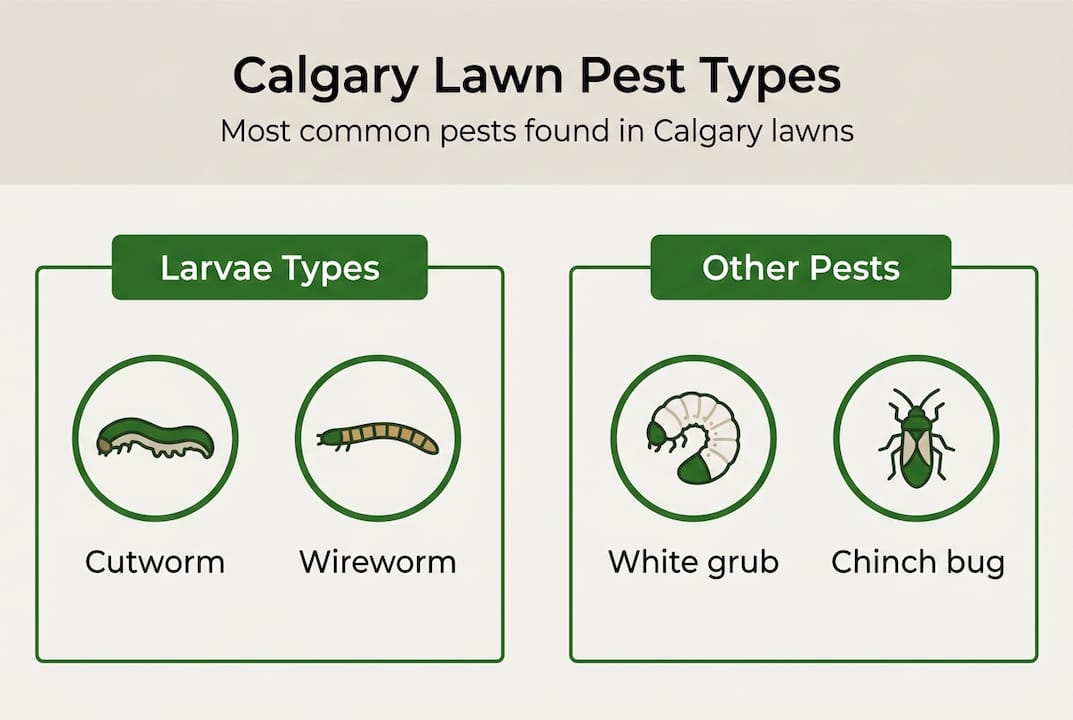
Here’s a quick comparison to help you start narrowing things down:
| Pest | Where found | Damage pattern | Peak activity |
|---|---|---|---|
| Cutworm | Soil surface, thatch | Irregular bare patches, cut stems | Late spring to early summer |
| Wireworm | 5 to 15 cm deep in soil | Thin, yellowing grass; seedling loss | Spring and fall |
| White grub | 3 to 10 cm below surface | Spongy turf that lifts like carpet | Midsummer to early fall |
| Chinch bug | Thatch layer, grass stems | Yellow patches in dry, sunny areas | July to August |
Some details to keep in mind for each pest:
- Cutworms are moth larvae that sever grass stems near soil level overnight. You’ll often find the cut stems lying flat beside the damage.
- Wireworms are the larvae of click beetles. They live deep in the soil and attack roots over multiple years. Damage shows up slowly, which is why many homeowners attribute it to drought.
- White grubs are the larvae of June beetles or European chafers. Skunks and crows digging up your lawn are a reliable signal of grub activity.
- Chinch bugs feed on grass juices directly. They prefer hot, dry, sunny spots and their damage is often confused with drought stress.
Reading up on a residential pest control guide can also help you cross-reference what you’re seeing with known pest behaviours. Pairing this with solid Calgary lawn maintenance tips sets you up with a strong foundation before pest season even begins.
What you need for effective pest scouting
Knowing your opponent is half the battle, but you’ll need the right equipment and timing to get reliable scouting results. Pest scouting doesn’t require professional gear or expensive kits. What it requires is a methodical approach and a handful of inexpensive tools you likely already own or can grab at any hardware store.
Essential scouting tools:
- Spade or hand shovel for soil sampling
- Small potatoes for wireworm baiting (more on this below)
- Ruler or measuring tape for assessing damage area
- Notebook or phone to record observations and photograph damage
- Nitrile gloves to handle soil and larvae safely
- Lidded sample jars or zip-close bags for collecting specimens
- Flashlight for checking thatch and soil at dawn or dusk
- Bucket of soapy water for flushing surface insects
Here’s a simple breakdown of what each tool helps you accomplish:
| Tool | Purpose |
|---|---|
| Spade | Dig soil plugs and expose larvae |
| Potatoes | Bait wireworms for easier detection |
| Ruler | Measure damage spread and record soil depth of larvae |
| Notebook | Track patterns across multiple scouting sessions |
| Sample jars | Preserve specimens for expert review |
| Soapy water | Flush chinch bugs and cutworms to the surface |
Wireworm sampling methods outlined by Alberta Agriculture include soil plugs and bait traps as standard monitoring approaches, because these insects are notoriously difficult to spot without deliberate sampling. Timing matters too. Scout early in the morning or in the evening when larvae are most active near the surface. Avoid scouting directly after heavy rain, when moisture drives insects deeper into the soil.
Best scouting conditions:
- Soil temperature between 10°C and 20°C
- Three or more days after significant rainfall
- Early morning (before 9 a.m.) or late evening (after 7 p.m.)
- During extended dry periods, which push pests closer to the surface seeking moisture
Good scouting is also more effective when your lawn is in generally healthy shape. Reviewing your lawn maintenance checklist and ensuring your yard is properly fed is worth doing before or alongside pest investigation. Properly fertilised grass, as covered in this guide to Calgary yard fertilisation, is more resilient and easier to assess because it removes nutrient deficiency as a confounding variable.
Pro Tip: Before your main scouting session, prepare a small 30 cm by 30 cm test area in the damaged zone by removing thatch and loosening the top 10 cm of soil. This makes larvae far easier to spot and count, giving you a quicker sense of whether your infestation is above the treatment threshold.
Following a structured monthly pest maintenance approach throughout the season also prevents infestations from building up to levels that are harder to manage.
Step-by-step instructions to spot and identify lawn pests
With your tools ready, here’s a hands-on process for finding and identifying the pests damaging your Calgary lawn. Follow these steps in sequence and record your findings at each stage. The goal is to build a clear picture before you commit to any treatment.
Map the damage. Walk your entire lawn and mark where damage is visible. Note the size, shape, and location of each patch. Irregular, scattered patches suggest cutworms or grubs. Wedge-shaped patches in sunny areas point toward chinch bugs. Linear thinning following seeded rows can signal wireworms.
Conduct a visual thatch inspection. Crouch low and part the grass in and around the damaged zone. Look for small insects, frass (insect droppings), or cut grass stems lying flat at the base. Use your flashlight if the area is shaded.
Perform a soil plug test. Use your spade to cut a 30 cm by 30 cm section of turf, about 10 cm deep, in a damaged area. Shake it over a white sheet or pale surface. Count the number of larvae present. More than five grubs per plug generally exceeds the threshold for treatment.
Set a potato bait trap. For suspected wireworm activity, cut raw potatoes in half, skewer them on a stick, and bury them 5 to 10 cm below the soil surface. Mark the spot. Return after 48 hours and dig them up. If wireworms are present, you’ll find them feeding on the potato.
Try the soapy water flush. Mix one tablespoon of dish soap with four litres of water. Pour it evenly over a one square metre area in the damaged zone. Wait 10 minutes. Chinch bugs and cutworms will surface if they’re present.
Photograph and record everything. Note the pest type (if identified), count per sample, depth found, and GPS location if you have multiple damage sites. Photograph damage patterns and any larvae or insects you find.
Alberta Agriculture recommends that cutworm control be timed to the pest’s most susceptible life stage and requires accurate scouting to avoid applying controls too early or too late in the season.
The wireworm sampling methods endorsed for Alberta conditions include both the soil plug method and potato baiting, giving you two reliable ways to confirm wireworm presence without relying on guesswork.

Pro Tip: Keep a photo log across multiple scouting sessions. Visual records make it much easier to track whether damage is spreading, stable, or recovering, and they’re invaluable if you eventually consult a professional. You can also cross-reference your photos with pest control best practices to cross-check your identification.
Reviewing how maintaining Calgary lawns year-round contributes to pest resilience is also a smart complement to your scouting process.
Troubleshooting and confirming your pest diagnosis
After your initial scouting and analysis, it’s important to verify what you’ve found and adjust if you’re still unsure. One of the most common mistakes Calgary homeowners make is misidentifying pest damage as drought stress, fungal disease, or nutrient deficiency. These problems can look eerily similar, especially in a dry Alberta summer.
Here’s a comparison to help you distinguish pest damage from other common lawn problems:
| Symptom | Likely pest cause | Likely non-pest cause |
|---|---|---|
| Irregular brown patches | Grubs, cutworms | Drought stress |
| Turf lifts like carpet | White grubs | Loose or shallow root zone |
| Yellow wedge-shaped patches | Chinch bugs | Fungal disease |
| Linear thinning, slow spread | Wireworms | Soil compaction or poor drainage |
| Overnight bare patches | Cutworms | Frost damage or chemical burn |
Common errors in pest diagnosis:
- Assuming drought first. Calgary’s dry summers make it easy to blame heat, but turf that browns despite proper watering deserves a soil check.
- Skipping the soil plug test. Surface damage doesn’t always reveal what’s happening 5 to 10 cm below. Digging is non-negotiable.
- Only scouting once. Pests are not evenly distributed. Scout at least three or four locations across the damaged area.
- Misidentifying the larvae. White grubs, cutworms, and wireworms can look similar to an untrained eye. Note the body shape: wireworms are slender and hard-shelled, grubs are pale and C-shaped, cutworms are soft and grey-brown.
- Treating immediately after identification. Confirm pest counts exceed the damage threshold before applying anything.
When damage is ambiguous or your scouting results are inconsistent, Alberta Agriculture’s guidance is clear: focus on scouting and detection accuracy and confirm species identification before deciding on any control method. Acting on incomplete information wastes money and can harm beneficial insects and soil health.
If you’ve scouted thoroughly and still can’t confirm the pest, that’s the right time to call in a professional. A pest control workflow that includes proper identification steps will give you far better results than applying a generic pesticide and hoping for the best.
It’s also worth noting that some of what looks like pest damage may actually be a consequence of deferred spring yard care. A proper spring clean up to prevent weeds removes the thatch layer where many pests overwinter, reducing your risk before pests even become active.
A Calgary expert’s take: what matters most in pest identification
Here’s what we’ve seen after years of working Calgary lawns: most homeowners don’t fail at treatment, they fail at diagnosis. A bag of grub killer won’t fix a chinch bug problem, and no amount of watering saves a lawn where wireworms are severing root systems underground. The damage looks similar. The solution is completely different.
Calgary’s short growing season makes the stakes higher than in milder climates. You have a narrow window to identify, treat, and recover before the season ends. That’s why patience, even when your lawn looks terrible, is actually the smarter move. One thorough scouting session beats three rushed guesses every time.
What we’d want every homeowner to know is this: prevention and scouting are worth more than any treatment. A lawn that’s properly aerated, fertilised, and cleaned up in spring is a harder target for most pests. If you’re investing in Calgary lawn care expertise and seasonal upkeep, you’re already ahead of most pest problems before they start. When something does appear, the methodical approach we’ve outlined here will save you both time and money.
Simplify your lawn pest challenges with Calgary’s trusted experts
If you still find pest identification tricky or want year-round peace of mind for your Calgary property, consider these professional options.
At YearLong Property Maintenance, we’ve been helping Calgary homeowners keep their lawns healthy and resilient since 2017. Pest identification is just one part of a broader care strategy that includes Calgary lawn care service, proactive Calgary bed maintenance, and thorough seasonal clean up that removes the overwintering conditions pests depend on. Our team brings local knowledge of Calgary’s unique pest pressures and soil conditions to every property we service.

Whether you need a one-time lawn assessment or ongoing seasonal support, we offer flexible packages with a satisfaction guarantee. Contact us today to take lawn pest worries off your plate for good.
Frequently asked questions
How do I know if my lawn problem is caused by a pest or something else?
Look for signs like irregular brown patches, wilting even with adequate water, or visible larvae in a soil plug. If you’re still unsure, use wireworm sampling methods such as soil sampling and bait traps to confirm pest presence before treating.
What time of year is best to scout for Calgary lawn pests?
Late spring through early summer is ideal for most pests. Cutworm control is most effective when timed to the pest’s susceptible life stage, which means early scouting gives you the best window to act effectively.
What should I do if I still can’t identify what’s damaging my lawn?
Focus on improving your scouting accuracy using multiple methods across several sites. Alberta Agriculture’s species identification guidance recommends confirming the pest before selecting any control, and a local professional can provide expert eyes if you remain unsure.
Can regular yard maintenance reduce the risk of pest outbreaks?
Absolutely. Consistent lawn care and seasonal clean up disrupt pest life cycles by removing thatch, improving drainage, and reducing the overwintering habitat that many Calgary lawn pests depend on to survive our winters.