

TL;DR:
- Successful Calgary landscaping requires season-specific planning and proactive maintenance.
- Using native, hardy plants and proper soil and moisture care ensures year-round landscape health.
- Professional services can help implement consistent, preventative landscaping practices to protect property value.
Calgary’s climate does not play fair with landscaping. One week you’re enjoying warm sunshine, and the next a late-spring frost is threatening your freshly planted beds. For homeowners and small business owners across the city, keeping an outdoor space healthy and attractive year-round is genuinely difficult. But here’s the thing: well-timed, consistent landscaping pays off. Studies show that strong curb appeal can increase property value by up to 10%, and in a competitive Calgary real estate market, that matters. This article walks you through season-by-season strategies that actually work for Calgary’s unique weather patterns, so your property looks its best every month of the year.
Table of Contents
- How to plan your landscaping year-round in Calgary
- Spring landscaping checklist: Kickstart growth after winter
- Summer landscaping essentials: Water, mow, and protect
- Fall and winter strategies: Prepare and protect your investment
- Why proactive landscaping wins in Calgary’s four seasons
- Take your landscaping further with help from Calgary professionals
- Frequently asked questions
Key Takeaways
| Point | Details |
|---|---|
| Timing is everything | Properly scheduled landscaping tasks result in healthier plants and increased property value. |
| Water wisely | Deep, infrequent, and well-timed watering builds drought resilience and reduces waste. |
| Mulch for protection | A good mulch layer conserves moisture, regulates soil temperature, and keeps roots safe. |
| Proactive care wins | Consistent, seasonal maintenance prevents expensive problems before they start. |
How to plan your landscaping year-round in Calgary
Calgary sits in a region where temperatures can swing dramatically within a single week. Summers can be scorching and dry, winters bring heavy snow and freeze-thaw cycles, and spring and fall are often unpredictable. That kind of climate punishes landscaping decisions made without a plan. A reactive approach, where you fix problems as they appear, costs more time and money than building a solid yearly framework from the start.
Successful year-round landscaping in Calgary rests on three core pillars:
- Soil care: Calgary’s soil tends to be clay-heavy, which drains poorly and compacts easily. Regular aeration and organic matter additions keep it workable.
- Plant selection: Choose species suited to Zone 3b or 4a growing conditions. Native and hardy plants require less intervention and survive Calgary winters far better than ornamental imports.
- Moisture management: Dry summers and variable spring moisture mean you need a consistent watering schedule adapted to each season.
Setting a quarterly maintenance calendar is one of the most practical things you can do as a property owner. Break your year into four blocks, spring cleanup and planting, summer sustaining, fall preparation, and winter monitoring, and assign specific tasks to each. This gives you a clear roadmap and prevents the scramble that leads to expensive fixes. A good seasonal planning guide can help you structure these blocks based on local conditions.
Understanding yard cleanup importance is also part of the picture. Debris left over winter can harbour pests and fungal issues that set your lawn back by weeks come spring. Building cleanup into your calendar removes that risk entirely. For a broader view of how landscaping decisions affect your bottom line, service planning tips from industry professionals can be a helpful starting point.
Pro Tip: Apply a 7 to 10 cm layer of mulch around your garden beds each season. Mulching helps conserve water and maintain healthy plants, while also suppressing weeds and regulating soil temperature through Calgary’s temperature swings.
Spring landscaping checklist: Kickstart growth after winter
Spring is your single best opportunity to set your landscape up for success. What you do in April and May determines how healthy everything looks through summer. The problem is that Calgary’s spring is notoriously unpredictable, so you need to work in phases rather than all at once.
Here is a practical, sequenced approach:
- Clear debris and thatch. Once snow melts completely, rake up dead leaves, broken branches, and matted grass. Thatch buildup blocks water and nutrients from reaching roots.
- Aerate compacted soil. Calgary’s clay-rich soil benefits enormously from aeration each spring. This opens channels for water, air, and fertiliser to penetrate.
- Fertilise your lawn. Use a balanced, slow-release fertiliser once soil temps reach around 10°C. This feeds roots without burning new growth.
- Plant cool-season species. Hardy perennials, ornamental grasses, and shrubs suited to Calgary’s conditions can go in early spring before the risk of hard frost passes.
- Inspect and restart irrigation systems. Check for cracked lines, blocked heads, and proper coverage before the dry season arrives.
One area homeowners consistently underestimate is watering new plants properly from the start. For new lawns, water daily the first 10 days, then every other day to establish deep root systems before summer heat arrives. Proper spring watering can cut lawn stress by up to 50% during the dry summer months that follow.
If the scale of spring work feels like a lot, Calgary spring cleanup services can handle the heavy lifting efficiently. For those already thinking ahead, pairing spring prep with smart fall yard prep planning means fewer surprises at both ends of the season. Check the summer yard checklist for ideas on bridging your spring efforts into early summer care.
Pro Tip: Wait until you see consistent daytime temperatures above 5°C before applying fertiliser. Applying too early on cold soil wastes product and can encourage shallow root growth.
Summer landscaping essentials: Water, mow, and protect
Calgary summers can surprise people. Long, sunny stretches with little rain are common, and the UV intensity at this elevation is real. Your landscape needs consistent care during this period, not just reactive watering when things start to look brown.
A good weekly rhythm keeps everything on track:
- Mow at the right height (never cut more than one-third of grass blade height at once)
- Edge borders and pathways to keep the property looking sharp
- Deadhead spent blooms on perennials to encourage continued flowering
- Scout for pest activity, particularly aphids, grubs, and fungal patches
- Check mulch depth and replenish where needed
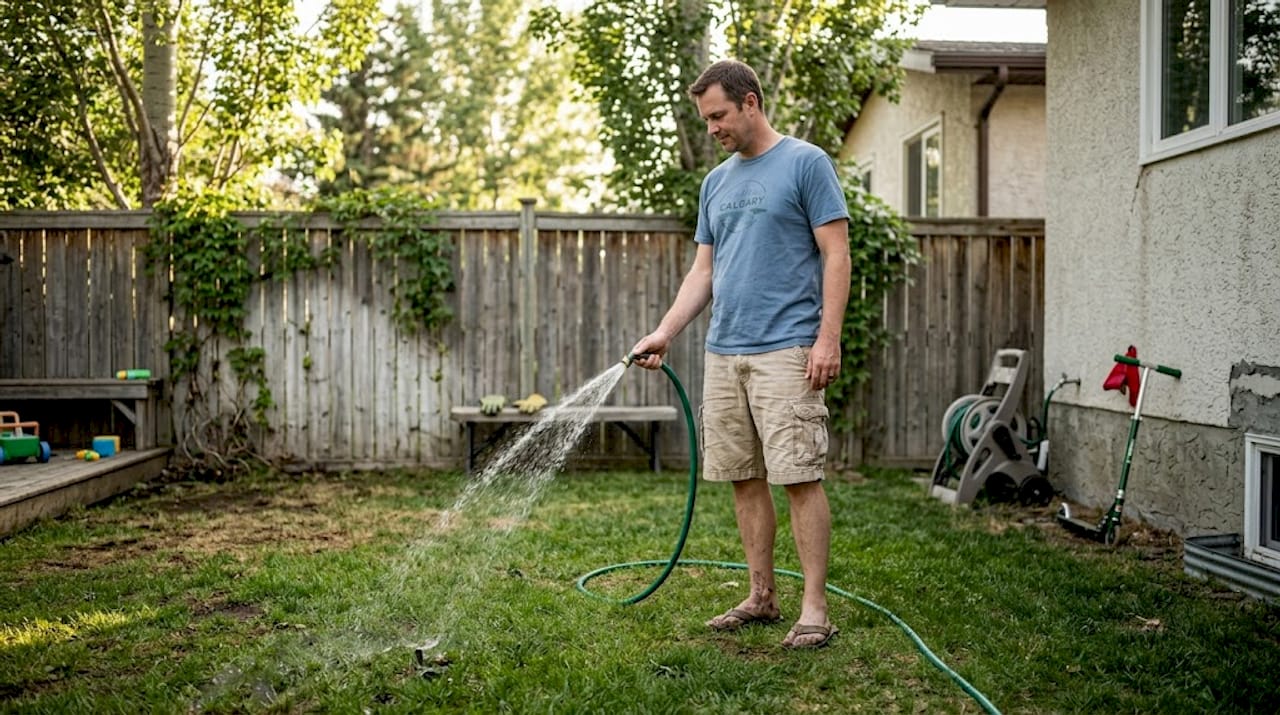
Watering strategy is where many Calgary homeowners lose ground. Water new trees and shrubs weekly, perennials every six days, and always water before 10am or after 4pm to reduce evaporation and improve absorption. Watering at midday in a Calgary summer is essentially pouring water into the air.
| Plant type | Watering frequency | Best time of day |
|---|---|---|
| New trees and shrubs | Once per week | Before 10am or after 4pm |
| Established perennials | Every 6 days | Before 10am or after 4pm |
| New lawns | Daily for 10 days, then every 2 days | Before 10am |
| Established lawns | 2 to 3 times per week | Before 10am |
Smart mulching in summer is one of the highest-value actions you can take. A proper mulch layer reduces surface soil temperature, locks in moisture, and cuts the number of times you need to water each week. For mowing schedules tailored to Calgary’s growing season, seasonal mowing tips offer region-specific guidance. Commercial property owners managing larger sites will find dedicated commercial landscape care strategies especially useful during the busy summer months. For irrigation setup and maintenance, sprinkler system guidance from professionals can help maximise water efficiency.
Fall and winter strategies: Prepare and protect your investment
Fall is not the time to wind down landscaping attention. It is the time to work deliberately so that everything you built through spring and summer survives the long Calgary winter intact.
Key tasks to complete before the first hard frost:
- Give your lawn a final mow at about 6 to 7 cm height to reduce snow mould risk
- Apply a fall fertiliser with higher potassium content to strengthen root systems
- Remove all dead annuals, spent vegetable plants, and fallen leaves promptly
- Drain and winterise irrigation systems completely to prevent pipe damage
- Wrap vulnerable shrubs and young trees with burlap for wind and frost protection
Mulch helps retain soil moisture and shield roots from Calgary’s winter freeze-thaw cycles, making it one of the most cost-effective tools in your fall toolkit.
| Month | Priority action |
|---|---|
| September | Final fertilise, continue watering until ground freezes |
| October | Last mow, remove debris, apply mulch |
| November | Winterise irrigation, wrap shrubs, inspect hardscaping |
| December to February | Monitor for ice damage, clear heavy snow from branches |
| March | Begin thaw assessment, schedule spring cleanup |
“Mulching goes beyond looks. It is the key to winter survival for roots in Calgary’s cold climate.”
For homeowners in specific Calgary communities, the fall care in West Springs guide and the Discovery Ridge winter guide offer neighbourhood-specific advice worth reading. For broader outdoor space inspiration heading into the colder months, outdoor space styling ideas can inform how you set up your property before freeze-up. Thinking through preventative landscaping tips now prevents costly repairs and replanting come spring.
Why proactive landscaping wins in Calgary’s four seasons
After covering all the seasonal steps, it is worth stepping back and being direct about something: the biggest mistake Calgary property owners make is treating landscaping as a series of emergencies rather than an ongoing practice.
Calgary’s climate is genuinely unforgiving. When you neglect soil care in fall, spring aeration becomes twice the work. When you skip proper watering habits in summer, you replant in August. Every reactive fix costs more than the small effort that would have prevented it. We have seen this pattern consistently since 2017 across hundreds of Calgary properties.
The counterintuitive lesson is that less can be more. Homeowners who invest in elaborate ornamental gardens often struggle most, because high-maintenance species demand constant intervention. The properties that look consistently excellent tend to rely on hardy, well-suited plants, consistent small efforts, and a clear seasonal plan. The value of preventative landscaping comes not from dramatic overhauls but from showing up every season with the right priorities. That is a shift in mindset more than a shift in budget.
Take your landscaping further with help from Calgary professionals
Knowing what to do each season is half the battle. Having reliable hands to execute it is the other half.

At YearLong Property Maintenance, we work with Calgary homeowners and businesses across every season to keep outdoor spaces healthy, clean, and protected. Whether you need thorough bed maintenance services to keep garden beds looking their best, dependable lawn care services through the growing season, or efficient seasonal clean up solutions in spring and fall, we have flexible packages designed to fit your property and schedule. Reach out to our team for a personalised quote and let us handle the hard work while you enjoy the results.
Frequently asked questions
What is the best time to water my lawn during Calgary summers?
Water lawns before 10am or after 4pm for best absorption and to reduce evaporation. Midday watering in Calgary’s summer heat loses significant moisture before it reaches the roots.
How can I reduce water usage in my landscaping?
Mulch conserves water and supports healthy root systems, so apply a 5 to 8 cm layer around garden beds. Pair that with deep, infrequent watering and drought-tolerant native species to cut water use significantly.
Do I need to fertilise my lawn every season?
Fertilising in spring and late summer is usually enough for healthy Calgary lawns. Adding a potassium-rich fall fertiliser helps strengthen roots before winter sets in.
What’s the benefit of seasonal landscaping cleanup?
Seasonal cleanup removes disease-harbouring debris, controls weed growth, and prepares soil and plants for the next season. It protects the investment you’ve made in your landscape over the long term.
How soon after planting new lawns or shrubs should I water them?
New lawns need daily watering for the first 10 days, then every other day; new trees and shrubs need watering about once per week to establish strong root systems before summer heat or winter cold arrives.
Recommended
- Spring cleanup tips for Calgary homeowners to refresh yard
- Why seasonal yard cleanup matters for Calgary homeowners
- Expert Lawn Care Services in Calgary
- Achieve a healthy lawn in West Springs: seasonal care guide
- Expert outdoor space styling tips: 7 key steps – Homable
- Spring Home Improvement in Texarkana | Spring Services | TXK Pro
One Response