

TL;DR:
- Aeration relieves soil compaction, promoting healthier roots, water absorption, and nutrient intake.
- Renting a powered core aerator and following proper steps ensures effective lawn relief.
- Post-aeration care like watering, fertilising, and overseeding maximises lawn improvement.
If your Calgary lawn looks patchy, stays soggy after rain, or feels rock-hard underfoot, compacted soil is likely the culprit. Calgary’s clay-heavy ground and heavy foot traffic squeeze the life out of grass roots over time, blocking water, air, and nutrients from reaching where they need to go. Aeration is the fix. It breaks up that compaction, opens the soil, and gives your lawn a genuine chance to recover and thrive. This guide walks you through everything: why aeration matters for Calgary specifically, which tools to use, how to do it properly, and what to do afterward for lasting results.
Table of Contents
- Why aeration matters for Calgary lawns
- Tools and materials you need for effective lawn aeration
- How to aerate your lawn: Step-by-step guide
- After aeration: Lawn care for lasting results
- A professional perspective: What most DIY guides miss about lawn aeration in Calgary
- Get expert help for the healthiest lawn in Calgary
- Frequently asked questions
Key Takeaways
| Point | Details |
|---|---|
| Core aeration is best | Mechanical core aeration is the proven method for tackling soil compaction and promoting healthy Calgary lawns. |
| Use the right equipment | Choosing the proper aeration tool—manual, powered, or professional service—determines your success. |
| Optimal timing matters | Aerate your lawn in early spring or fall for the most visible improvements in health and growth. |
| Post-care maximises results | Fertilising, overseeding, and proper watering after aeration ensure lasting benefits for your lawn. |
Why aeration matters for Calgary lawns
Aeration is the process of creating small holes or removing small plugs of soil across your lawn to loosen compacted ground. Think of it like giving your lawn room to breathe. When soil is compacted, roots cannot push deeper, water pools on the surface instead of soaking in, and fertiliser sits on top rather than reaching the root zone.
Calgary lawns face a particular challenge. The soil here is often clay-based, which compacts more easily than sandy or loamy soil. Add in freeze-thaw cycles every spring and fall, plus kids, pets, and foot traffic through summer, and you have a recipe for seriously dense ground. That density is what causes many of the frustrating problems Calgary homeowners deal with year after year.
Signs your lawn needs aeration:
- Grass is thinning or growing in uneven patches
- Water pools on the surface after rain or watering
- The soil feels hard when you press a screwdriver into it
- Moss or weeds are taking over where grass used to grow
- The lawn looks dull and grey-green even after fertilising
When you aerate, you immediately improve the flow of nutrients, water, and oxygen to the root zone. Roots grow deeper, grass fills in thicker, and the lawn becomes far more resilient to drought and heat. Understanding the Calgary homeowner benefits of regular lawn care makes it clear that aeration is not a luxury; it is a foundation.
Core aeration is the proven method for relieving soil compaction, outperforming liquid alternatives that are marketed as easier options. Liquid products may add some microbial activity, but they cannot physically break apart dense clay. Pairing aeration with proper yard cleanup each season keeps your lawn in the best possible shape.
Pro Tip: Aerating every year prevents the kind of deep compaction that takes multiple seasons to reverse. It is far cheaper to maintain than to rehabilitate.
Tools and materials you need for effective lawn aeration
Choosing the right tool makes a significant difference in your results. Not all aerators are equal, and for Calgary’s clay soils, the choice really matters.
| Tool | Cost | Effort | Effectiveness | Best for |
|---|---|---|---|---|
| Manual core aerator | $30-$60 to buy | High | Good for small areas | Small lawns, spot treatment |
| Powered core aerator | $60-$90/day rental | Moderate | Excellent | Medium to large lawns |
| Spike aerator/shoes | $20-$40 | Low | Poor for compaction | Not recommended for Calgary clay |
| Liquid aerator | $20-$50 | Very low | Minimal for compaction | Not a substitute for core aeration |
For most Calgary homeowners, renting a powered core aerator is the smartest move. It pulls out actual plugs of soil, creating real channels for air and water. Core aeration tools work best for compaction issues compared to liquid products, which cannot replicate the physical relief that mechanical aeration provides.
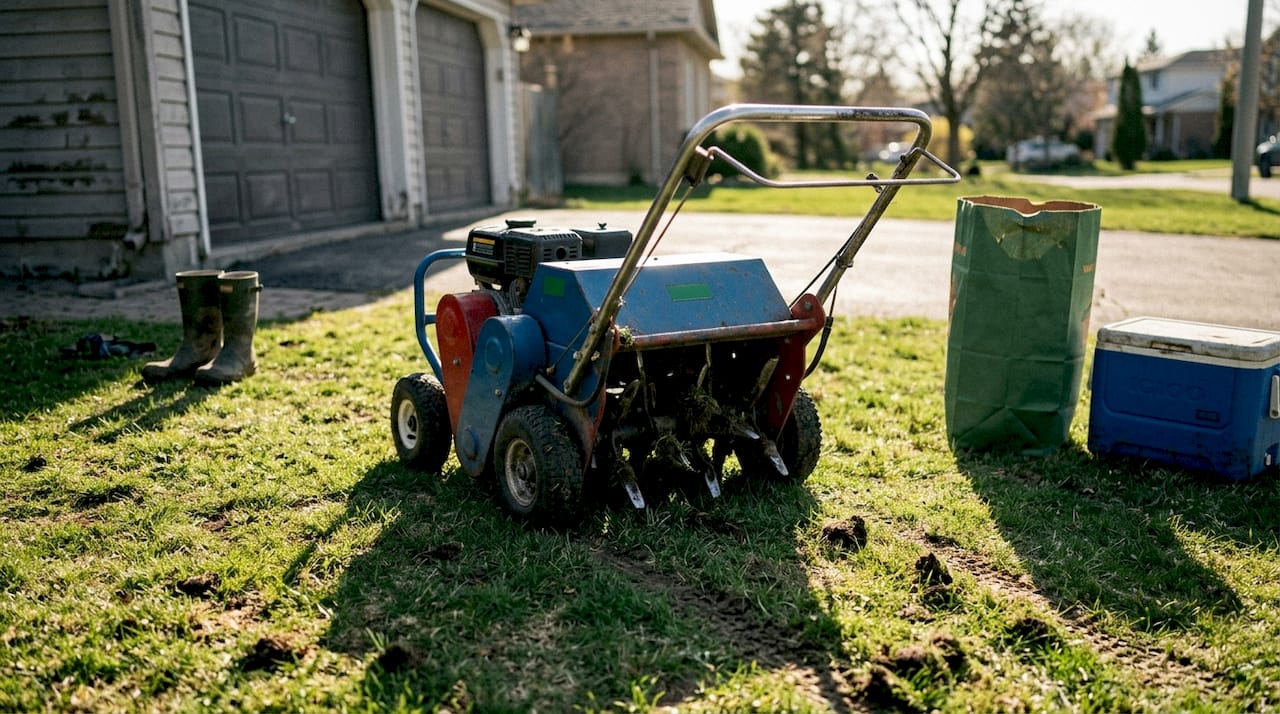
Spike aerators simply push soil aside, which can actually worsen compaction around the spike holes. Avoid them for clay-heavy Calgary lawns.
Before you rent or use any equipment, keep these safety and reliability tips in mind:
- Inspect the machine before leaving the rental shop; check that tines are sharp and undamaged
- Know your lawn’s dimensions so you rent the right size machine
- Wear sturdy, closed-toe footwear when operating any powered aerator
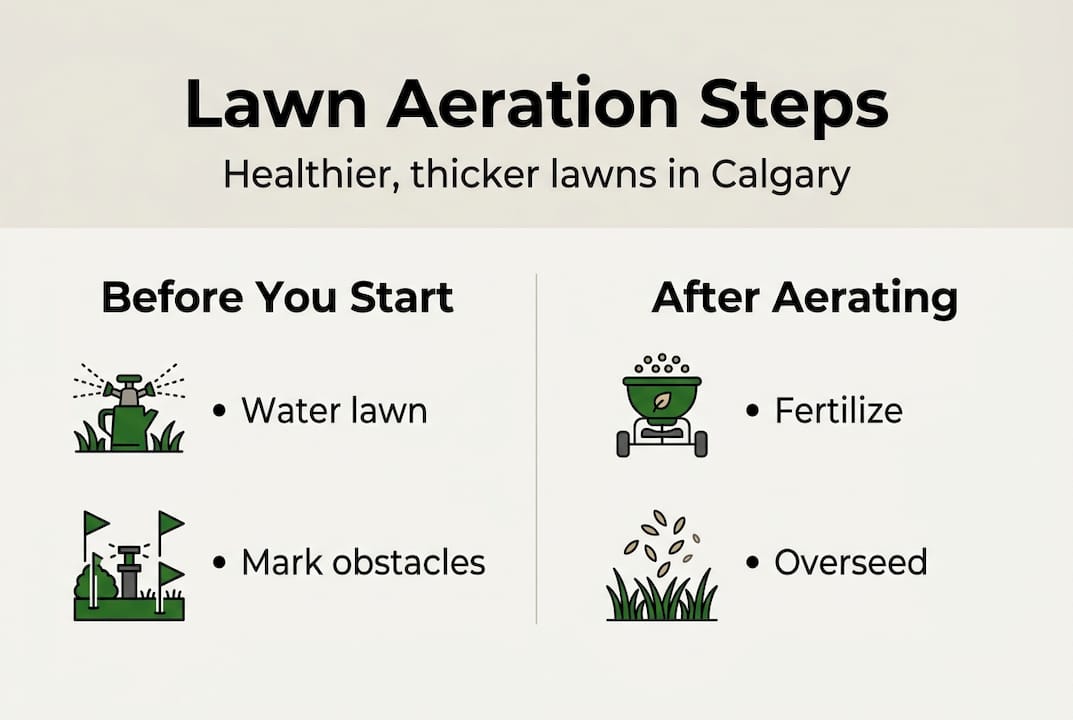
- Mark all sprinkler heads, shallow irrigation lines, and utility flags before you start
- Follow the rental company’s operating instructions carefully; powered aerators are heavy and can be difficult to manoeuvre on slopes
If your lawn is large, heavily compacted, or you simply do not have the time, checking the Calgary maintenance checklist can help you decide whether professional service is the more practical route.
How to aerate your lawn: Step-by-step guide
Armed with the right tools, follow these steps for a successful aeration.
- Check the calendar. Aerate in early spring (mid-April to May) or early fall (late August to September) when grass is actively growing and temperatures are moderate.
- Water deeply the day before. Moist soil allows the aerator tines to penetrate much more effectively. Dry, hard ground limits plug depth.
- Mow your lawn short. Cut grass to about 5 to 6 centimetres before aerating so the machine can reach the soil easily.
- Mark all sprinkler heads and shallow utilities. Use small flags or stakes so you do not damage irrigation lines or underground cables.
- Make two passes in different directions. Run the aerator across the lawn, then make a second pass perpendicular to the first. This ensures even coverage and thorough decompaction.
- Leave the soil plugs on the lawn. Do not rake them up. They will break down within one to two weeks and return nutrients to the soil.
- Fertilise and overseed immediately after. This is the best possible time, as the open channels allow seed and fertiliser direct access to the root zone.
Pro Tip: Water your lawn deeply the evening before aeration. Soil that is slightly moist, not waterlogged, allows tines to pull clean plugs and reach the ideal depth of 5 to 8 centimetres.
| Month | Season | Ideal conditions | Notes |
|---|---|---|---|
| April to May | Spring | Soil above 10°C, moderate moisture | Best for cool-season grasses |
| Late August to September | Fall | Cooling temps, still active growth | Ideal for overseeding after aeration |
| June to July | Summer | Avoid if possible | Heat stress compounds lawn strain |
Safety note: Before operating any powered aerator, call Alberta One-Call (or use the online service) to locate underground utilities. Hitting a gas or electrical line is a serious hazard. Always mark sprinkler heads and irrigation lines with flags before you begin.
Proper core aeration improves soil structure and lawn health measurably, which is why timing and technique matter so much. For more guidance on seasonal aeration timing and the right spring clean-up approach, planning ahead makes the whole process smoother.
After aeration: Lawn care for lasting results
Aeration opens the door; what you do next determines how much your lawn actually improves. The days immediately following aeration are the most valuable window for feeding and thickening your grass.
Post-aeration tasks to prioritise:
- Water consistently. For the first two weeks, water lightly every day or every other day to keep the soil moist and support new root growth. Do not let the surface dry out completely.
- Fertilise within 48 hours. Apply a slow-release, balanced fertiliser right after aeration. The open channels carry nutrients directly to the roots, making this the single most effective time to feed your lawn.
- Overseed bare or thin patches. Spread grass seed over the aerated areas, focusing on thin spots. The open holes give seeds direct soil contact, which dramatically improves germination rates.
- Avoid heavy foot traffic for two to three weeks. Give the new roots and seeds time to establish before resuming normal lawn use.
- Keep mowing height slightly higher for the first few cuts after aeration to reduce stress on recovering grass.
Aeration creates optimal conditions for fertiliser and overseeding to work, which is why combining all three in one session gives you the best return on your effort.
You should see visible improvement within three to four weeks: thicker growth, better colour, and fewer bare patches. If results are slow, check whether you are watering enough. Dry conditions after aeration undo much of the benefit.
If you see no change after four to six weeks, consider whether the soil plugs were deep enough (aim for 5 to 8 centimetres), whether you used a core aerator rather than a spike tool, and whether overseeding was applied promptly. Calgary’s short growing season means every week counts. Preparing for the cooler months with solid fall preparation tips ensures your lawn holds its gains through winter and bounces back strong in spring.
Uneven results are usually caused by inconsistent passes or dry soil at the time of aeration. Overlapping your passes by about 10 centimetres on the second run corrects most coverage issues.
A professional perspective: What most DIY guides miss about lawn aeration in Calgary
Here is something most guides will not tell you: the hardest part of DIY aeration is not the technique; it is the honest assessment of whether it is worth your time and money.
Liquid aerators are marketed aggressively because they are easy to sell. Pour, spray, done. But the evidence on core aeration is clear: liquid products do not physically break apart compacted clay. For Calgary’s soil, there is no shortcut that replaces mechanical core aeration.
What surprises many homeowners is the true cost of DIY. Equipment rental, fuel, your time, the physical effort of operating a heavy machine for two to three hours, and the risk of damaging irrigation lines all add up. When something goes wrong, the repair bill can easily exceed what a professional service would have charged.
We have seen lawns where homeowners aerated with spike shoes for three years running, wondering why nothing improved. The soil was actually more compacted than when they started. That is time and money lost.
For smaller lawns or homeowners who enjoy the work, DIY core aeration is absolutely viable. But for larger properties, heavily compacted soil, or anyone short on time, professional lawn care delivers better results with less risk and often costs less than people expect.
Get expert help for the healthiest lawn in Calgary
If this guide has you thinking that aeration is more involved than you expected, you are not alone. Many Calgary homeowners start the season with good intentions and end up with a half-finished job or the wrong tool for the job.

At YearLong Property Maintenance, we handle the full process: proper timing, the right equipment, and follow-up care that gets real results. Whether you need a one-time aeration or ongoing lawn care solutions throughout the season, we have flexible packages to fit your schedule and budget. We also offer lawn bed maintenance to keep your entire outdoor space looking sharp. Reach out today for a no-obligation quote and let us take the guesswork out of lawn season.
Frequently asked questions
What’s the best time of year to aerate in Calgary?
Early spring or early fall is ideal for aeration in Calgary, as moderate temperatures and active grass growth give your lawn the best chance to recover and fill in quickly.
Can I use a liquid aerator instead of core aeration?
For Calgary’s compacted soils, core aeration outperforms liquid products significantly, and liquid aerators are not a reliable substitute for the physical relief that mechanical core aeration provides.
How often should I aerate my lawn?
Most Calgary lawns benefit from aeration once per year, but high-traffic areas or heavily compacted sections may need a second pass in the same season.
Should I pick up the soil plugs after core aeration?
No, leave the soil plugs in place and let them break down naturally over one to two weeks, as they return valuable organic matter and nutrients directly to your lawn.
What can I do if my lawn doesn’t improve after aeration?
Review your watering schedule, confirm you used a core aerator rather than a spike tool, and check whether overseeding and fertilising were applied promptly after aeration; if problems persist, a professional assessment will identify what is holding your lawn back.
2 Responses