

TL;DR:
- Homeowners in Calgary are responsible for clearing their driveways and sidewalks after snowfalls.
- The city only plows major roads, not private driveways or residential streets.
- Hiring professional snow removal services helps ensure compliance, safety, and environmental responsibility.
Many Calgary homeowners assume the City handles all snow clearing once a storm passes. It doesn’t. Homeowners remain responsible for their driveways and sidewalks, and in many cases, for the snow the City’s own plows push back onto your property. This guide walks you through exactly what snow plowing involves, who is responsible for what, how to hire the right help, and how to stay safe and compliant all winter long. Whether you’re new to Calgary or just tired of guessing, this is the practical knowledge you need.
Table of Contents
- Understanding snow plowing: Essential facts for Calgary homes
- Who is responsible for snow plowing in Calgary?
- Hiring a snow plowing service: What to consider
- Snow plowing safety: Protecting people, property, and the environment
- Why most homeowners underestimate Calgary’s snow plowing challenge
- Reliable snow removal services for Calgary homeowners
- Frequently asked questions
Key Takeaways
| Point | Details |
|---|---|
| Homeowners’ responsibility | Calgary homeowners must clear snow from their driveways and sidewalks, not the city. |
| Bylaw compliance | You have 24 hours after snowfall to clear snow and windrows to avoid fines. |
| Safer, greener methods | Use layered clearing and eco-friendly de-icers to protect your health and the environment. |
| Professional help available | Hiring local experts ensures compliance, reduces risk, and saves time during harsh winters. |
Understanding snow plowing: Essential facts for Calgary homes
Snow plowing is more straightforward than most people think, but it’s also more involved than just pushing snow out of the way. At its core, snow plowing uses a plow blade attached to a vehicle, such as a truck or grader, to push or move accumulated snow from a surface. In a residential context, that surface is usually your driveway, front walkway, or the approach connecting your driveway to the road.
The equipment used varies quite a bit depending on the scale of the job. Large municipal graders handle major roads and arterials. Private contractors typically use half-ton or three-quarter-ton pickup trucks fitted with hydraulic plow blades. For tighter spaces like narrow driveways or back lanes, walk-behind snow blowers or compact tractors with front-mounted blades are common. Each piece of equipment has its place, and a professional service will match the right tool to your property.
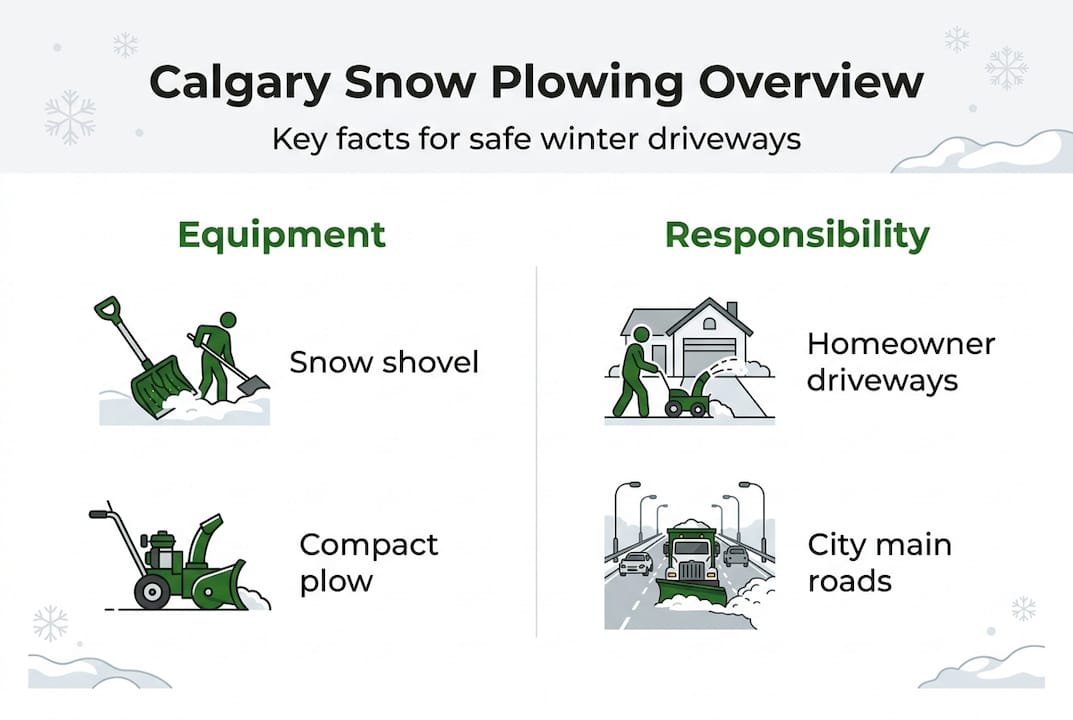
Here’s a quick look at the most common snow plowing equipment used in Calgary residential settings:
| Equipment type | Best use | Typical operator |
|---|---|---|
| Municipal grader | Major roads and arterials | City of Calgary |
| Pickup truck with plow | Standard driveways and approaches | Private contractor |
| Walk-behind snow blower | Tight spaces, walkways | Homeowner or contractor |
| Compact tractor with blade | Large driveways, back lanes | Private contractor |
For homeowners, snow plowing matters for several reasons beyond simple convenience:
- Safety: Packed snow and ice on driveways cause slips and falls, which are a leading cause of winter injuries.
- Access: Emergency vehicles, delivery trucks, and your own car need clear, accessible surfaces.
- Legal compliance: Calgary bylaws require homeowners to maintain clear sidewalks and approaches.
- Property protection: Proper plowing protects your driveway surface and prevents ice from bonding and cracking concrete.
“A well-plowed driveway isn’t just about getting your car out. It’s about making sure your property is accessible and safe for everyone who approaches it.”
It’s also worth knowing that the City of Calgary handles its own network of roads but does not extend that service to private driveways or residential streets. You can explore outdoor cleaning options to understand the full range of winter and seasonal services available for your home. For your own safety around city equipment, review snowplow equipment safety guidelines before the season begins.
Who is responsible for snow plowing in Calgary?
This is where most homeowners get confused, and honestly, the confusion is understandable. The City of Calgary plows major roads, arterials, and bus routes. It does not plow residential streets on a regular schedule, and it certainly does not plow your driveway. That responsibility is entirely yours.
There’s also the matter of windrows. A windrow is the ridge of snow that a city plow leaves at the end of your driveway when it passes through your neighbourhood. It can be heavy, compacted, and difficult to move. Homeowners must clear windrows from their driveways and sidewalks within 24 hours of the city plow passing, per Bylaw 20M88. Miss that window, and you’re looking at potential fines.
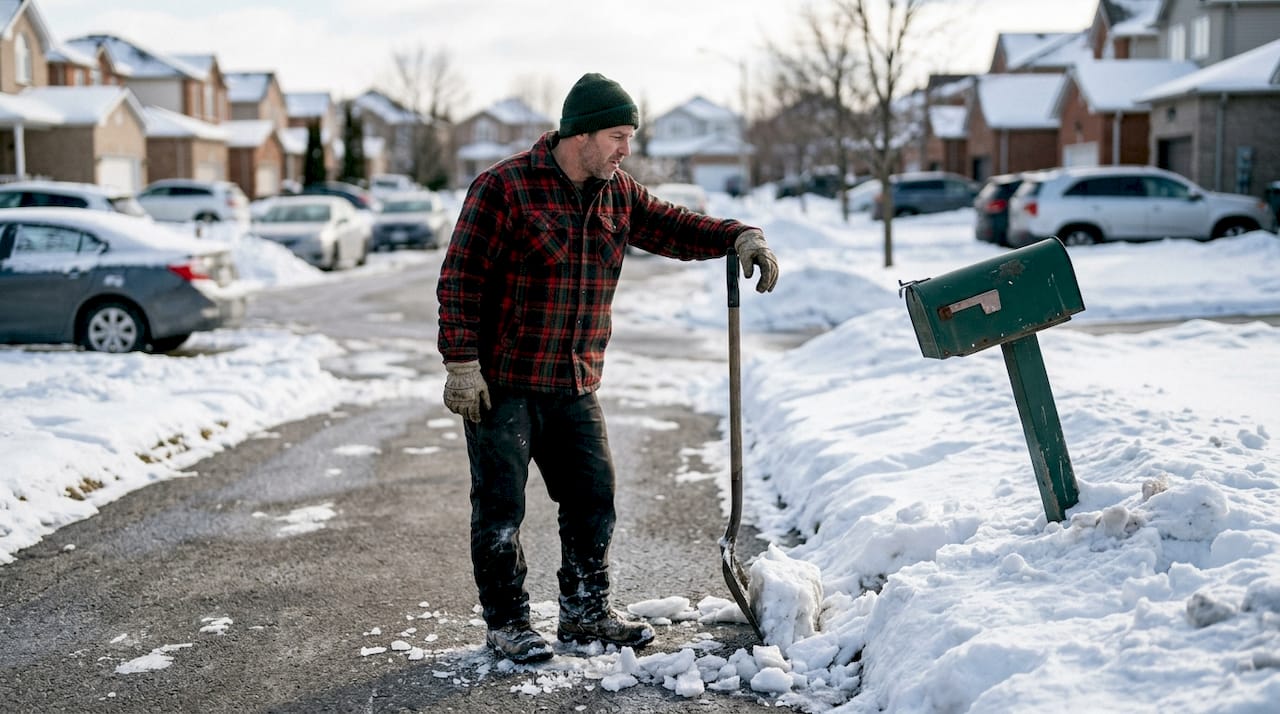
Here’s a clear breakdown of who handles what:
| Responsibility | City of Calgary | Homeowner |
|---|---|---|
| Major roads and arterials | ✓ | ✗ |
| Residential streets | Limited | ✗ |
| Your driveway | ✗ | ✓ |
| Sidewalk in front of your home | ✗ | ✓ |
| Windrow at driveway entrance | Creates it | Must clear it |
To stay on the right side of the snow and ice bylaw, follow these steps after each snowfall:
- Clear your driveway and approach as soon as safely possible after snowfall ends.
- Check whether a city plow has passed and left a windrow at your driveway entrance.
- Clear that windrow within 24 hours of it being deposited.
- Clear the public sidewalk adjacent to your property within the same 24-hour window.
- Document your efforts if you’re in a dispute about compliance timing.
Pro Tip: Set a phone reminder to check your driveway and sidewalk within a few hours of a major snowfall. Calgary’s weather can shift quickly, and what’s manageable at noon can freeze solid by evening.
Non-compliance isn’t just a fine risk. It creates genuine hazards for pedestrians, especially children and elderly neighbours. Understanding snow removal standards helps you stay ahead of bylaw requirements, and knowing how to approach avoiding snow fines can save you real money this winter.
Hiring a snow plowing service: What to consider
Once you understand your responsibilities, many homeowners quickly realise that handling it all themselves isn’t realistic. Work schedules, physical limitations, and Calgary’s unpredictable snowfall patterns make professional help a smart investment. Hiring reliable snow plowing services helps you comply with bylaws, stay safe, and avoid the injury risks of DIY snow removal.
The first decision you’ll face is whether to go with a seasonal contract or per-visit pricing. Each has its place:
- Seasonal contract: You pay a flat fee for the entire winter season. The contractor shows up after every qualifying snowfall. Predictable cost, no surprises.
- Per-visit pricing: You pay each time the contractor comes out. More flexible, but costs can spike during heavy snow years.
For most Calgary homeowners, a seasonal contract offers better value and peace of mind, especially given how variable winters can be here.
When evaluating a snow plowing company, look for:
- Local experience: A contractor who knows Calgary’s Chinook cycles won’t over-salt or under-plow during a warm spell.
- Insurance: Liability coverage protects you if equipment damages your driveway or property.
- Clear service terms: Know exactly what’s included, what triggers a visit, and what the snow depth threshold is.
- Eco-friendly de-icing options: Salt is hard on concrete and waterways. Ask if the company offers calcium chloride or sand-based alternatives.
- Responsiveness: A company that answers the phone during a storm is worth more than one with a flashy website.
Pro Tip: Ask any prospective contractor how they handle Chinook melt-freeze cycles. This is a uniquely Calgary challenge, and their answer will tell you a lot about their local expertise.
You can review snow removal services from local providers to compare what’s available in your area. If you’re also thinking about spring and summer upkeep, pairing snow removal with yard care professionals through one provider often saves both time and money.
Snow plowing safety: Protecting people, property, and the environment
Safety during snow removal goes well beyond just wearing warm gloves. It involves how you interact with city equipment on the road, how you clear your own property, and how your choices affect the broader environment.
When it comes to city plows operating in your neighbourhood, the rule is simple. Never pass active plows unsafely, use layered clearing to reduce physical strain, and choose eco-friendly de-icers over road salt whenever possible. Plow operators have limited visibility, and the snow cloud they generate can obscure road markings and other vehicles entirely.
“Snowplow operators cannot always see vehicles or pedestrians directly beside or behind them. Give them space and time to do their job safely.”
For your own property, safe snow removal means:
- Clear in layers: Don’t wait for 30 cm to accumulate before you start. Clearing in two or three passes is far safer on your back and your equipment.
- Mark your driveway edges: Driveway markers help contractors avoid damaging your lawn, garden beds, or irrigation systems buried under snow.
- Keep children away from active equipment: Snow blowers and truck-mounted plows can throw debris at high speed.
- Store equipment safely: Fuel-powered snow blowers should be stored in ventilated spaces, away from heat sources.
- Dispose of snow responsibly: Don’t push snow into the street or onto a neighbour’s property. Both create hazards and potential bylaw issues.
On the environmental side, traditional rock salt is effective but damaging. It corrodes concrete, kills grass, and washes into storm drains where it affects local waterways. Calcium chloride works at lower temperatures and requires less volume. Sand improves traction without the chemical impact. Connecting with outdoor cleanup safety resources gives you a fuller picture of responsible winter property care. For detailed provincial guidance, the snowplow safety guidelines from Alberta are worth bookmarking before the season starts.
Why most homeowners underestimate Calgary’s snow plowing challenge
Here’s something we’ve observed after years of working in Calgary winters: most homeowners don’t underestimate the snow itself. They underestimate the timing. Calgary’s weather is genuinely unpredictable. A Chinook can turn a 20 cm snowfall into slush by afternoon, which then refreezes overnight into a surface harder than most people’s driveways can handle. That freeze-thaw cycle, repeated several times a season, is what separates Calgary from most other Canadian cities.
The homeowners who manage winter stress-free are the ones who plan before the first flake falls. They’ve already arranged their local snow removal standards compliance, hired a contractor familiar with Chinook patterns, and know exactly what their bylaw obligations are. The ones who struggle are those who respond reactively, calling around for help after a storm has already hit and contractors are fully booked.
DIY snow removal also carries real physical risk. Back injuries from shovelling are one of the most common winter emergency room complaints in Canada. A seasonal contract with a trusted local provider isn’t a luxury. For many homeowners, it’s genuinely the safer and smarter option.
Reliable snow removal services for Calgary homeowners
Winter in Calgary doesn’t wait for you to get organised. If managing windrows, bylaw deadlines, and unpredictable snowfall feels like a lot, you don’t have to handle it alone.

At YearLong Property Maintenance, we’ve been serving Calgary homeowners since 2017 with trusted snow removal services built around local knowledge and genuine reliability. We understand Chinook cycles, bylaw requirements, and what it takes to keep your driveway and sidewalks clear all season. Our Calgary snow removal guide covers the standards we hold ourselves to, and our flexible seasonal packages mean you’re covered from the first snowfall to the last. Visit YearLong Property Maintenance to request a quote and get ahead of winter before it arrives.
Frequently asked questions
Does the City of Calgary plow residential streets?
No, the City only plows major roads and arterials. Homeowners are responsible for their own driveways, approaches, and adjacent sidewalks.
What is a windrow and do I have to clear it?
A windrow is the ridge of compacted snow left at your driveway entrance by a city plow. You must clear it within 24 hours of it being deposited, as required by Bylaw 20M88.
How do I choose a reliable snow plowing service in Calgary?
Look for a provider with local Calgary experience, proper liability insurance, and clear service terms. Ask specifically how they handle Chinook melt-freeze cycles and whether they offer eco-friendly de-icing options.
Are there environmental concerns when plowing or de-icing?
Yes. Traditional rock salt damages concrete and local waterways. Eco-friendly de-icers like calcium chloride or sand-based products are better choices for Calgary’s environment.
What are the penalties for not clearing snow on my property?
The City can issue fines if you fail to clear snow or windrows within the required 24-hour window. Bylaw 20M88 enforcement applies to both sidewalks and driveway approaches adjacent to your property.