

Calgary’s weather has a way of humbling even the most enthusiastic homeowner. One week you’re planning your first mow, and the next a late frost has set your grass back by two weeks. Without a structured plan, lawn care in Calgary becomes a guessing game that costs you time, money, and a yard that never quite looks the way you want. A well-built schedule changes all of that. This guide walks you through exactly how to plan your lawn care from early spring through to pre-winter shutdown, so your yard stays healthy and consistent no matter what the season throws at you.
Table of Contents
- Why scheduling matters for Calgary lawn care
- Tools and information you need before you start
- Step-by-step: Scheduling your Calgary lawn care year
- Common scheduling mistakes and how to avoid them
- How to check your results and tweak your schedule
- Let Calgary lawn care pros help with your schedule
- Frequently asked questions
Key Takeaways
| Point | Details |
|---|---|
| Regular scheduling is essential | Planning your lawn care year ensures consistent growth and reduces wasted time. |
| Calgary timing matters | Unique weather means your schedule should be flexible and based on local seasonal changes. |
| Tools and reminders help | Apps and a solid toolkit make staying on track with your schedule easy. |
| Adapt after each season | Evaluating your results and updating your schedule improves your lawn every year. |
Why scheduling matters for Calgary lawn care
Calgary’s climate is genuinely unlike most Canadian cities. You can experience a warm chinook in February followed by a snowstorm in May. That kind of unpredictability means your lawn’s growth cycles don’t follow a neat calendar, and neither should your maintenance routine. As Calgary seasonal planning experts note, the unique Calgary climate requires tailored lawn scheduling to get real results.
When you rely on “as-needed” care, you end up reacting instead of preventing. That reactive approach leads to some very common and very avoidable problems:
- Patchy grass from inconsistent mowing heights
- Weed outbreaks that take hold before you notice
- Over-watering or under-watering due to missed forecast checks
- Fertiliser applied at the wrong growth stage, wasting product and money
- Snow mould left untreated after a long winter
A proper schedule, built around Calgary’s actual seasons, lets you optimise every input. Water goes down when the grass needs it. Fertiliser lands at the right growth stage. Mowing happens at the right height and frequency. Experts recommend a minimum of six scheduled service touchpoints per year for a healthy residential lawn, covering spring startup, regular summer maintenance, and fall preparation. Using a lawn maintenance checklist as your foundation makes this far easier to manage.
“A scheduled lawn care plan isn’t about being rigid. It’s about giving your yard the right care at the right time, so you’re never scrambling to fix problems that could have been prevented.”
Tools and information you need before you start
Before you map out a single date on your calendar, gather what you need. Trying to build a schedule without the right information is like planning a road trip without knowing your destination. Efficient lawn care workflow resources confirm that using digital tools and the correct materials improves scheduling success significantly.
Here’s what to have on hand:
- Mower with adjustable cutting height settings
- Rake and dethatching tool for spring and fall cleanup
- Aerator (manual or rented) for fall soil health
- Fertiliser matched to your grass type (cool-season grasses are most common in Calgary)
- Sprinkler or irrigation system with a timer
- Calendar app or scheduling tool with reminder alerts
Beyond equipment, you need specific information about your yard. Know the square footage of your lawn, the grass variety you’re working with, and any recurring issues like bare patches, drainage problems, or persistent weeds. Check your local weather forecast regularly, especially in spring and fall when conditions shift fast.
| Information needed | Why it matters |
|---|---|
| Yard size | Determines fertiliser and water quantities |
| Grass type | Guides mowing height and fertiliser timing |
| Past issues | Helps you schedule preventive treatments |
| Weather access | Prevents mowing or fertilising at wrong times |
| Soil condition | Informs aeration and amendment needs |
For seasonal mowing tips specific to Calgary’s grass types, it’s worth reviewing guidance tailored to cool-season varieties before you set your first mowing date.

Pro Tip: Take photos of your lawn at the start of each season. After one full year of scheduled care, the before-and-after comparison will show you exactly where your plan is working and where to adjust.
Step-by-step: Scheduling your Calgary lawn care year
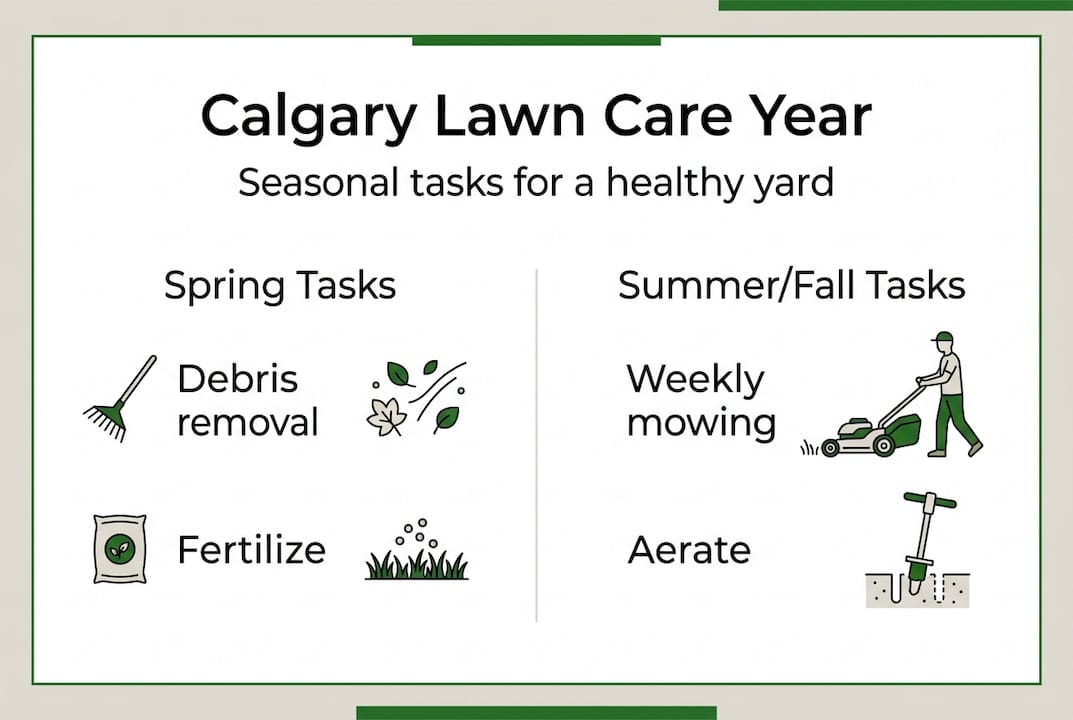
With your tools ready and your yard information gathered, it’s time to map out the year. Think of it in five clear phases. Following a complete seasonal checklist confirms that organising seasonal tasks leads to optimal lawn results.
- Early spring (late March to mid-April): Remove debris, dead leaves, and any matted grass left from winter. Rake gently to lift the lawn and check for snow mould. Do not mow yet. The ground needs to dry and firm up first.
- Late spring (late April to late May): Begin your first mow once grass reaches about 8 cm. Apply a slow-release spring fertiliser. This is also the time to overseed any bare patches and address early weed growth before it spreads. Review spring clean up tips to make sure you don’t miss a step.
- Summer (June through August): Mow weekly, keeping grass at 6 to 8 cm to retain moisture and shade out weeds. Water deeply two to three times per week rather than lightly every day. Apply a mid-season fertiliser in late June if growth is strong.
- Fall (September to mid-October): Aerate the lawn to relieve compaction and improve root depth. Apply a fall fertiliser high in potassium to strengthen roots before freeze. Do your final mow slightly shorter than usual, around 5 cm, to reduce snow mould risk. Check the fall clean up plan for a full task list.
- Pre-winter (late October to November): Clear all leaves and debris. Drain irrigation lines. Store equipment properly. This final step protects everything you’ve built through the season.
| Season | Key tasks | Timing |
|---|---|---|
| Early spring | Debris removal, snow mould check | Late March to mid-April |
| Late spring | First mow, fertilise, overseed | Late April to late May |
| Summer | Weekly mowing, watering, weed control | June to August |
| Fall | Aeration, fall fertiliser, final mow | September to mid-October |
| Pre-winter | Cleanup, irrigation shutdown | Late October to November |
Pro Tip: After heavy rain or a noticeable growth spurt, bump up your mowing frequency for that week. Letting grass get too tall before cutting stresses the plant and leaves your lawn looking uneven for days.
Common scheduling mistakes and how to avoid them
Even with a solid plan, certain mistakes trip up Calgary homeowners every year. Knowing what they are puts you ahead of the curve. Most homeowners miss the ideal timing for spring clean up and late fall prep, which sets the entire season back.
Watch out for these common errors:
- Starting too early in spring: Mowing or fertilising on frozen or waterlogged ground compacts soil and damages roots.
- Ignoring the forecast: Fertilising before heavy rain washes product away. Mowing during a dry spell without watering stresses already-thirsty grass.
- Waiting for weeds to appear: By the time you see them, they’ve already seeded. Pre-emergent weed control in late April is far more effective.
- Skipping fall aeration: This is the single most impactful task for long-term lawn health, and it’s the one most often skipped.
- Leaving debris over winter: Matted leaves trap moisture and create ideal conditions for disease.
“The most overlooked step in Calgary lawn care is proactive scheduling before the snow fully melts.”
If you fall behind, don’t try to catch up all at once. Prioritise the most time-sensitive task for the current phase and move forward. The yard cleanup importance resource is a useful reference when you need to reset your priorities mid-season. For a broader overview of what a full-year plan looks like, the Calgary lawn care guide covers the essentials clearly.
How to check your results and tweak your schedule
A schedule is only as good as the results it produces. After each season, take stock of how your lawn actually performed. Ongoing adjustments create the healthiest lawns long-term, and that means reviewing what worked and what didn’t.
Signs your schedule is working:
- Even colour across the entire lawn with no yellowing patches
- No significant bare spots by mid-summer
- Consistent height between mowing sessions
- Minimal weed pressure compared to previous seasons
- Firm, spongy soil that bounces back when you walk on it
If you’re seeing persistent bare patches, recurring disease, or weeds that won’t quit despite your best efforts, it may be time to bring in a professional. Some issues, like compacted clay soil or deep-rooted perennial weeds, need more than a schedule adjustment. Most Calgary lawns show noticeable improvement within one full scheduled season, which means you’ll have real data to work with by next spring.
Evaluate your schedule every fall. Ask yourself which tasks felt rushed, which ones you skipped, and where the lawn looked its worst. Update your calendar before winter so you’re ready to go the moment the snow melts.
Let Calgary lawn care pros help with your schedule
Building and sticking to a lawn care schedule takes real commitment, especially when Calgary’s weather refuses to cooperate. If you’d rather spend your weekends enjoying your yard instead of managing it, the team at YearLong Property Maintenance builds custom schedules tailored to your specific yard and Calgary’s unpredictable seasons.

From first spring cleanup through to fall aeration and pre-winter shutdown, we handle every phase with the timing and attention your lawn deserves. We also offer bed maintenance services to keep your entire outdoor space looking sharp. Whether you want a one-time seasonal service or a full year-round plan, we make it simple. Use our complete Calgary checklist as a starting point, then reach out to book a consultation and let us take the guesswork out of your lawn care for good.
Frequently asked questions
How often should I mow my Calgary lawn?
Mow weekly during peak growth from late spring to early fall, and drop to every two weeks during slower growth periods in early spring and late fall.
When is the best time for spring lawn care in Calgary?
Begin spring care once the snow has melted and the ground has dried out, which is typically late April to early May in Calgary.
What if I travel or miss scheduled activities?
Adjust your schedule and focus on the most time-sensitive task when you return. Hiring a local lawn care service ensures nothing critical gets missed while you’re away.
Does professional lawn care make a difference in scheduling?
Absolutely. Experts tailor schedules to Calgary’s specific climate patterns, which prevents the timing mistakes that lead to patchy grass, disease, and wasted product.
Can I start a schedule mid-season if I’ve already fallen behind?
Yes. Start with the most urgent task for your current season, document what you’ve done, and build forward from there. A partial season of scheduled care still produces better results than no plan at all.