

Managing lawn care for homeowners’ associations and multi-property portfolios in Calgary presents unique challenges. From unpredictable weather patterns to resident expectations, property managers need systematic approaches that deliver consistent results. An efficient workflow transforms scattered maintenance tasks into a coordinated strategy that protects property values, ensures compliance, and keeps residents satisfied year-round.
Table of Contents
- Understanding The Problem: Common Challenges In Lawn Care Management
- Preparing Your Lawn Care Workflow: Assessment And Planning
- Executing The Lawn Care Workflow: Seasonal Tasks And Responsibilities
- Verifying And Improving Your Lawn Care Workflow
- How Yearlong Can Support Your Lawn Care Workflow
- FAQ
Key takeaways
| Point | Details |
|---|---|
| Strategic planning | Clear workflow planning saves time and improves landscape health through systematic task organisation. |
| Defined responsibilities | Understanding HOA landscaping responsibilities prevents violations and ensures accountability across teams. |
| Seasonal adaptation | Calgary’s climate requires flexible scheduling that responds to short growing seasons and variable conditions. |
| Documentation matters | Communication protocols and task tracking sustain operational efficiency and resident confidence. |
| Year-round protection | Proactive irrigation management and snow removal safeguard properties during Calgary’s extreme seasons. |
Understanding the problem: common challenges in lawn care management
Property managers and HOA leaders face mounting pressure to maintain attractive, safe common areas whilst juggling budgets and resident expectations. Neglected landscaping reduces curb appeal and creates safety hazards that expose associations to liability. Overgrown vegetation blocks essential signage, obscures fire hydrants, and creates tripping hazards along pathways.
Unclear responsibility divisions generate inefficiency and rule violations that frustrate everyone involved. When maintenance schedules lack structure, critical tasks fall through gaps between contractors, board members, and management staff. Calgary’s climate intensifies these challenges with short growing seasons, sudden temperature swings, and dramatic precipitation variations that demand rapid response.
Common workflow failures include:
- Reactive rather than preventive maintenance approaches
- Poor coordination between seasonal service providers
- Inadequate documentation of completed work
- Missing irrigation system checks before freeze periods
- Delayed snow removal responses in communal areas
“Effective landscape management requires clear protocols that specify who handles what tasks, when they occur, and how completion gets verified. Without this structure, even well-intentioned teams struggle to maintain consistent standards.”
These operational gaps compound over time, leading to costly emergency repairs, resident complaints, and potential fines from municipal authorities. Establishing systematic workflows addresses these vulnerabilities before they escalate into serious problems.
Preparing your lawn care workflow: assessment and planning
Successful lawn care planning begins with understanding your property’s specific conditions and regulatory environment. Calgary’s semi-arid climate, with average annual precipitation around 400 millimetres, requires irrigation strategies that differ markedly from naturally humid regions. Your soil composition, whether clay-heavy or sandy, determines fertilisation schedules and drainage management approaches.
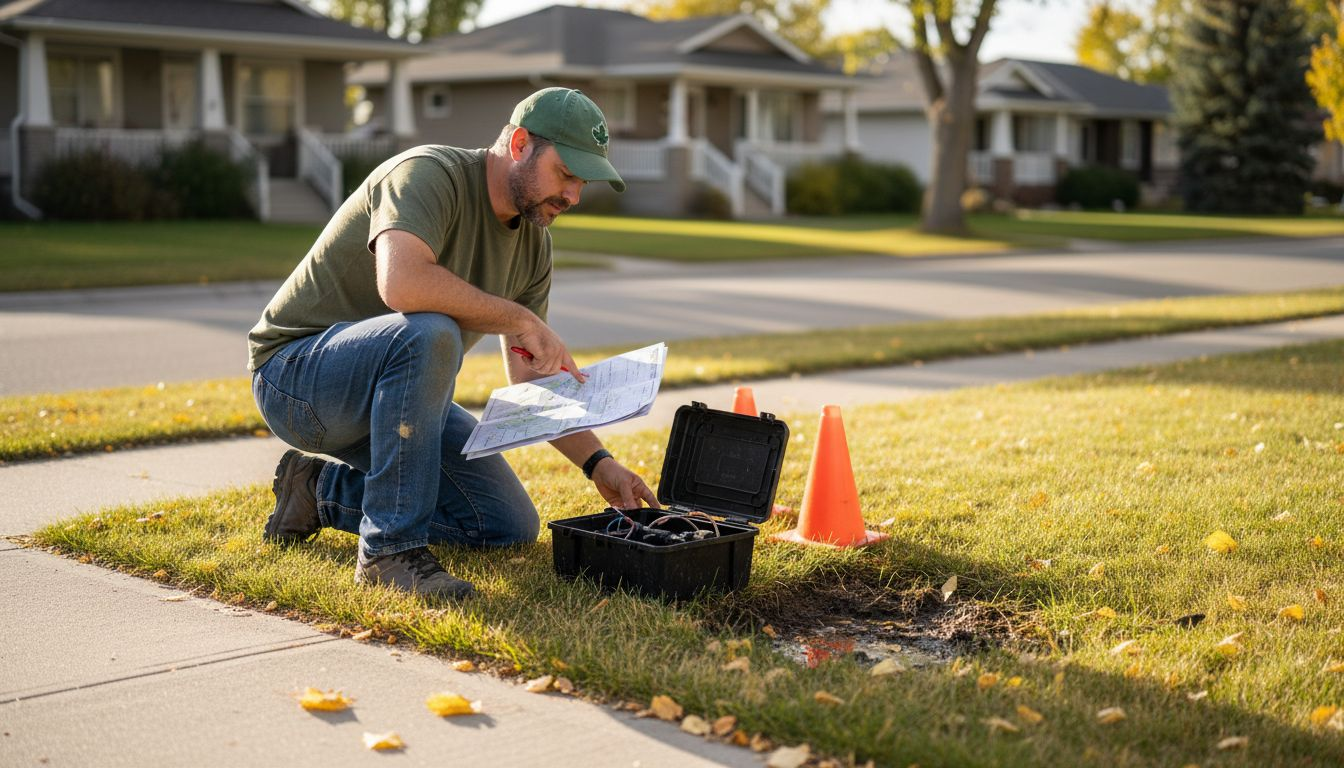
Review your HOA governing documents thoroughly to clarify maintenance boundaries. These legal instruments specify which party maintains common turf areas, individual yards, irrigation infrastructure, and seasonal services like snow removal. Ambiguity here creates conflicts that derail even well-designed workflows.
Create a comprehensive yearly calendar that reflects Calgary’s seasonal realities. Your planning should account for:
- Spring cleanup timing based on last frost dates
- Peak growing season mowing frequencies
- Mid-summer irrigation adjustments during dry spells
- Autumn aeration and overseeding windows
- Winter preparation and snow management protocols
Pro Tip: Build buffer time into your schedule for weather delays. Calgary’s spring can shift by three weeks year to year, so flexible planning prevents bottlenecks when conditions finally permit outdoor work.
| Season | Priority Tasks | Calgary Timing |
|---|---|---|
| Spring | Cleanup, soil testing, irrigation activation | Late April to May |
| Summer | Mowing, pest control, irrigation monitoring | June to August |
| Autumn | Aeration, fertilisation, system winterisation | September to October |
| Winter | Snow removal, pathway safety, equipment prep | November to March |
Assemble your resource inventory before the season starts. Identify reliable contractors for specialised tasks, verify equipment functionality, and establish communication channels with your maintenance team. Smart seasonal planning prevents last-minute scrambles when urgent needs arise.
Executing the lawn care workflow: seasonal tasks and responsibilities
Effective execution transforms planning into tangible landscape improvements through disciplined task management and clear accountability. Your workflow should specify exactly who performs each activity, when it occurs, and what standards define successful completion.
Spring launches your growing season with critical foundation work:
- Conduct comprehensive property walkthrough to assess winter damage
- Clear debris, branches, and accumulated materials from turf and beds
- Test soil pH and nutrient levels to guide fertilisation programmes
- Activate and test irrigation systems for leaks or malfunctions
- Apply pre-emergent herbicides before weed germination begins
Summer demands consistent attention to maintain appearance and plant health. Establish mowing schedules at appropriate heights for your grass species, typically 6 to 8 centimetres for cool-season varieties. Monitor irrigation delivery to ensure even coverage without wasteful runoff. Implement integrated pest management that identifies problems early and applies targeted treatments rather than broad-spectrum chemicals.
Autumn prepares properties for winter stresses and sets up next year’s success. Core aeration relieves soil compaction, allowing roots to access oxygen and nutrients more effectively. Overseeding fills thin areas before dormancy. Final fertilisation with higher potassium ratios strengthens plants against freeze damage.
| Task Category | Manager Role | Contractor Role | Resident Role |
|---|---|---|---|
| Common area mowing | Schedule and verify | Execute and document | Report issues |
| Individual yards | Enforce standards | N/A | Maintain to rules |
| Irrigation systems | Coordinate repairs | Service and adjust | Report leaks |
| Snow removal | Monitor and approve | Clear priority zones | Clear personal walks |
Winter shifts focus to safety and access. Snow removal services must clear walkways, parking areas, and emergency access routes promptly after accumulation. Neglecting these responsibilities creates slip hazards and potential HOA violations that generate fines.
Pro Tip: Create photographic documentation of completed work at regular intervals. Visual records prove task completion, help track seasonal changes, and provide evidence if disputes arise about service quality or timing.
Maintain communication through documented schedules distributed to all stakeholders. Digital task management tools allow real-time updates when weather forces schedule adjustments. Regular updates prevent resident complaints stemming from uncertainty about when services will occur.
Verifying and improving your lawn care workflow
Systematic verification ensures your workflow delivers intended results whilst identifying improvement opportunities before small issues become expensive problems. Regular property inspections catch developing concerns like pest infestations, irrigation malfunctions, or disease outbreaks when interventions remain simple and cost-effective.
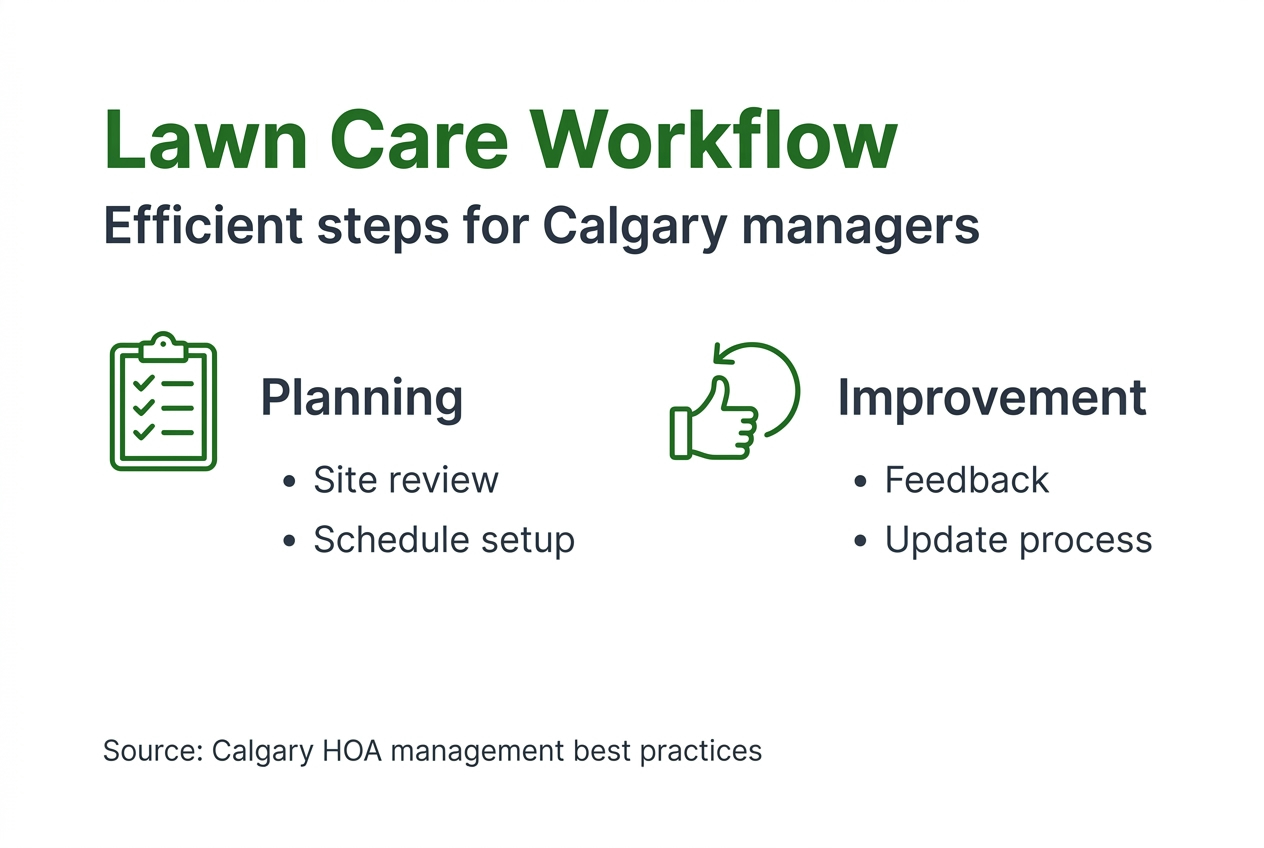
Establish feedback loops with residents and maintenance teams to surface issues quickly. Monthly surveys or digital reporting systems let people flag concerns without lengthy formal processes. Front-line maintenance staff often spot problems before they become visible to casual observers.
Update your workflow based on seasonal performance and unexpected challenges. Calgary’s weather variability means rigid schedules fail when conditions deviate from historical norms. If spring arrives early, advance your activation timeline. If summer proves unusually dry, increase irrigation frequency or adjust to drought-tolerant landscape modifications.
Understanding responsibility boundaries through governing document reviews prevents workflow breakdowns caused by unclear accountability. When everyone knows their obligations, tasks get completed without finger-pointing or duplicated effort.
Maintain comprehensive records that document:
- Task completion dates and responsible parties
- Weather conditions affecting schedule adjustments
- Resident feedback and response actions
- Contractor performance evaluations
- Budget variances and cost trends
Train new staff or board members thoroughly on established workflows. Transitions between management personnel often disrupt continuity, leading to missed tasks or inconsistent standards. Written procedures with visual guides accelerate onboarding whilst preserving institutional knowledge.
Pro Tip: Schedule annual workflow reviews each autumn to assess what succeeded and what needs modification. Involve contractors, residents, and management staff in these evaluations to capture diverse perspectives on operational effectiveness.
Benchmark your results against comparable properties to identify performance gaps. If neighbouring associations maintain healthier turf or lower per-unit costs, investigate their approaches for adoptable practices. Professional lawn maintenance guidance helps calibrate your standards against industry best practices.
Continuous improvement transforms adequate workflows into exceptional ones. Small refinements compound over seasons, elevating property appearance whilst controlling costs through preventive rather than reactive management.
How Yearlong can support your lawn care workflow
Implementing systematic workflows requires reliable partners who understand Calgary’s unique environmental challenges and HOA operational needs. Yearlong Property Maintenance delivers comprehensive lawn care services designed specifically for multi-property managers seeking dependable year-round solutions.

Our team handles everything from seasonal mowing and fertilisation to specialised bed maintenance that keeps ornamental plantings healthy and attractive. Professional service ensures your HOA lawns meet community standards consistently without burdening management staff with technical details.
Winter brings distinct challenges that demand prompt response. Our snow removal services protect communal areas, maintain safe access, and help prevent municipal fines from inadequate clearance. Partnering with experienced providers simplifies seasonal workflow execution whilst maintaining clear documentation for board oversight and resident transparency.
FAQ
What is the typical division of lawn care responsibilities in an HOA?
HOAs generally manage common areas, irrigation system maintenance, and snow removal in shared spaces. Individual homeowners maintain their personal yards according to community standards. Clear governing documents prevent disputes by specifying these boundaries explicitly.
How can I tailor my lawn care schedule to Calgary’s climate?
Plan around Calgary’s short growing season and variable precipitation patterns. Prioritise spring cleanup immediately after final frost, implement efficient irrigation during dry summer periods, and complete winterisation before November freeze cycles. Seasonal planning strategies help synchronise tasks with local weather patterns.
What are the best practices for managing irrigation systems in shared HOA areas?
Ensure seasonal activation and blowout of irrigation systems occur at appropriate times to prevent freeze damage. Schedule regular inspections to catch leaks or malfunctions early. Coordinate with qualified contractors to minimise system downtime and maintain consistent coverage across common areas.
How does snow removal fit into an effective HOA lawn care workflow?
Snow removal is essential for maintaining safe walkways, parking areas, and emergency access routes during Calgary winters. Proper management prevents slip hazards that create liability exposure whilst avoiding municipal fines for inadequate clearance. Integrate professional snow services into your annual workflow to ensure prompt response regardless of accumulation timing.