

If the oil is fresh, absorb it now and scrub with a grease-cutting detergent before it sets. If the stain is old and dark, plan on a poultice or a commercial degreaser applied over several cycles, not one afternoon. Judge either method only once the concrete is fully dry, since wet slabs hide leftover residue.
TL;DR:
- Fresh oil stains should be quickly absorbed with clay cat litter or cornstarch and scrubbed with detergent within an hour for best results.
- Old, embedded stains often require commercial alkaline degreasers and multiple poultice cycles, as surface scrubbing is ineffective for deep penetration.
- Rinsing with low-pressure water following the slope is crucial to avoid spreading oil residue and accurately judge stain removal after full drying.
- Using harsh acid cleaners or wire brushes on decorative concrete can cause permanent damage, making professional treatment necessary for stubborn or large stains.
- DIY methods tend to suffice for small, recent stains, but professional services are best for large, persistent, or recurring oil leaks that do not respond to multiple poultice cycles.
Table of Contents
- How do you remove fresh oil stains from a driveway?
- What’s the best method for old, set-in oil stains?
- Which tools and products actually work in Canada?
- How should you rinse and judge your results?
- When should you call a professional instead?
- What we’ve learned treating Calgary driveways
- Get a professional driveway cleaning quote from Yearlong
- Sources
How do you remove fresh oil stains from a driveway?
Speed is everything here. Oil that’s sat for an hour behaves completely differently than oil that’s had three days to soak into the concrete’s pore structure, so the clock starts the moment you spot the spill.
Here’s what to gather before you start: clay cat litter or cornstarch, a stiff broom, a nylon scrub brush, dish detergent or a laundry detergent with degreasing agents, and hot water.
- Contain the spill. Blot up any oil that’s still pooling on the surface with rags or paper towels before it spreads further across the slab.
- Bury it in absorbent. Cover the stain generously with clay cat litter or cornstarch, then grind the powder into the wet film with your shoe or the back of a shovel. Fine powders create more surface contact, which pulls oil out of the film faster.
- Let it sit, then sweep. Leave the absorbent for 30 minutes to overnight depending on how much oil hit the ground, then sweep it up and bag it for disposal.
- Scrub with detergent. Apply dish soap or a grease-cutting laundry detergent directly to the stain, work it in with a stiff brush, and give it a few minutes of contact time before scrubbing.
- Rinse in a controlled way. Rinse with hot water, following the slab’s natural slope so the runoff moves off the driveway rather than pooling.
This sequence often lifts most fresh stains within an hour, according to standard homeowner guidance from American Family Insurance. Never toss oil-soaked litter or rags in regular household trash if they’re saturated. Let them air dry away from heat sources first, then check with your local municipality on hazardous waste drop-off, since wet petroleum-soaked material is a fire and environmental hazard.
Pro Tip: Keep a bucket of clay cat litter in the garage year-round. The two minutes it takes to grab it and dump it on a fresh drip is the difference between a five-minute cleanup and a weekend project.
What’s the best method for old, set-in oil stains?
Set-in stains behave differently than fresh spills, and treating them the same way almost never works. If a stain has soaked in for six months or more, the oil has migrated deep into the concrete’s pore network, and surface scrubbing simply can’t reach it.
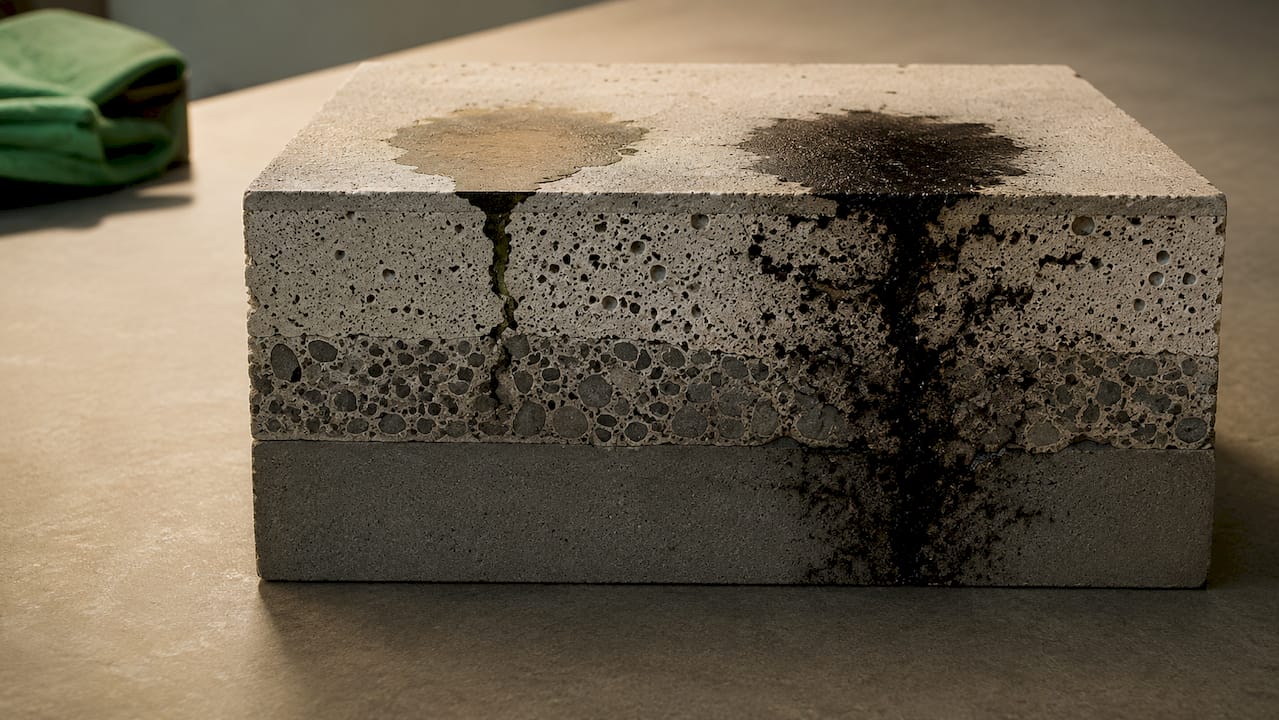
You can tell how deep a stain runs by how it looks dry: a stain that’s uniformly dark and slightly glossy even after the surface dries usually means the oil has penetrated well below the surface, not just stained the top layer.
Using a commercial alkaline degreaser:
- Sweep the area clean of debris first.
- Apply the degreaser and let it dwell for the time listed on the label, usually 10 to 15 minutes, without letting it dry out.
- Scrub with a stiff nylon brush, working in overlapping passes.
- Rinse thoroughly following the slab’s slope.
Independent testing of household and commercial cleaners found that basic detergents lighten stains only slightly, while stronger alkaline degreasers consistently produced better results on embedded staining.
Using a poultice for deeper extraction: mix a fine absorbent with a low-volatile solvent or a commercial extraction compound until it reaches a peanut-butter consistency. Spread it over the stain about a quarter-inch thick, tape plastic over the edges to slow evaporation, and let it cure for 24 to 48 hours. Remove it, rinse, and inspect once the slab has fully dried.
Deep, set-in stains often need multiple poultice cycles before you see real improvement, since each round only draws out a portion of the embedded oil, according to PROSOCO’s guidance on oil stain removal.
Avoid acid-based cleaners on decorative or stamped concrete, and skip wire brushes. Both can etch or scar finished surfaces permanently, turning a stain problem into a texture problem.
Which tools and products actually work in Canada?
Most Canadian hardware stores carry everything you need, and knowing which category fits your stain saves a wasted trip.
- Clay cat litter, baking soda, and cornstarch work as absorbents for fresh spills; cornstarch is gentler on lighter-coloured or newer concrete than clay litter.
- Concrete degreasers are alkaline formulas built for cutting through petroleum on hard surfaces, best for moderate staining that’s resisted basic detergent.
- Poultice or extraction compounds are purpose-built for deep, old stains and are sold specifically for this job rather than general cleaning.
- Microbial cleaners use bacteria to break down hydrocarbons over time and suit light staining where you’re not in a rush.
When reading labels, look for terms like “petroleum remover” or “grease remover” rather than generic “concrete cleaner,” and check the pH and dilution instructions before mixing anything. Biodegradable claims matter if you’re rinsing near a lawn or garden bed.
Wear rubber gloves and eye protection any time you’re handling degreasers or solvents, and never mix cleaning chemicals from different bottles. Store oil-soaked absorbents in a sealed container away from heat until you can dispose of them properly.
How should you rinse and judge your results?
Rinsing badly can undo everything you just did. Pressure washing a stain before it’s been degreased often smears the oil sideways, creating a faint halo around the original spot instead of removing it.
Rinse at low to moderate pressure, always following the slab’s slope so water carries contaminants toward the yard or a controlled drainage point, never toward a storm drain or your grass. This mirrors Canadian spill-response guidance on keeping runoff contained rather than letting it spread.
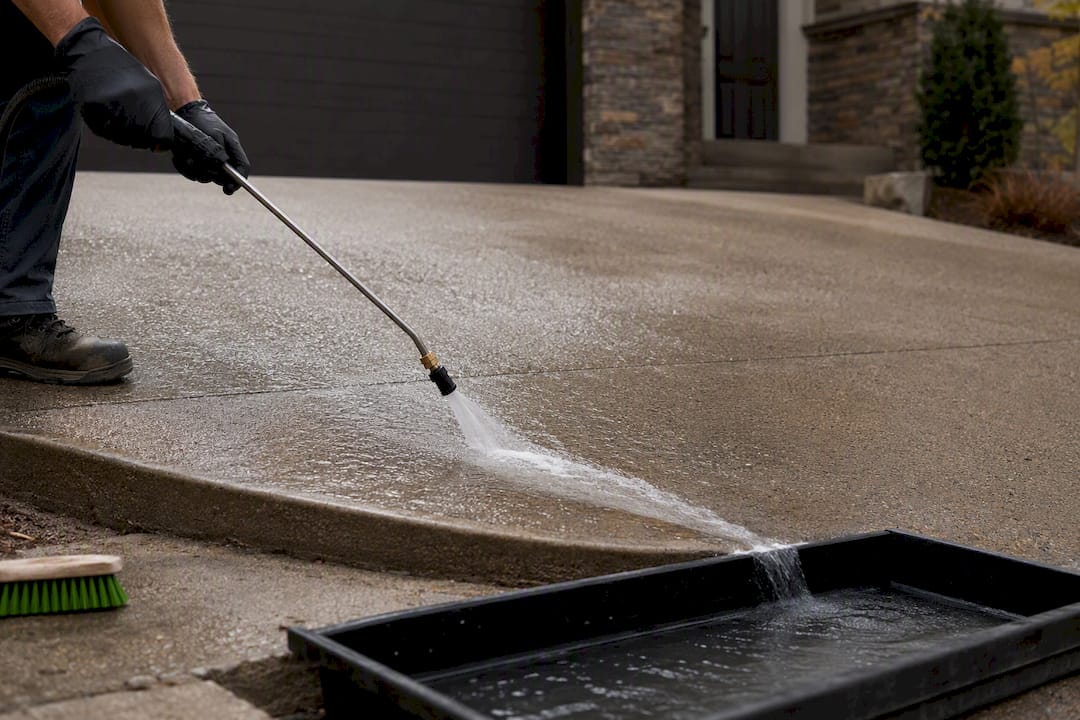
Judge results only after the concrete has fully dried, which can take a full day depending on temperature and airflow. A stain that looks gone while wet but reappears as a faint shadow once dry still has residue below the surface, and that’s your signal to run another cycle rather than assume the treatment failed.
Pro Tip: Wait at least 48 hours after your last poultice cycle before applying a sealer. Sealing over residual moisture or oil traps both underneath and can cause the sealer to peel.
When should you call a professional instead?
Some stains just aren’t a weekend project, and knowing when to stop DIYing saves you from damaging the surface further.
- The stain covers a large area or multiple spots across the driveway.
- The oil source is a recurring leak rather than a one-time spill.
- You’ve run two or three poultice cycles with no visible change.
- The surface looks uneven or blotchy after spot treatments.
Professional crews typically combine heated water, commercial-grade alkaline degreasers, and controlled pressure rather than relying on PSI alone, since cold-water pressure washing tends to smear rather than lift oil. Cost and time depend mostly on the stain’s age and the total area involved. Ask any quote for the number of treatment passes included and whether the price covers a follow-up visit if the stain isn’t fully lightened the first time. Realistically, even professional work often lightens an old stain significantly rather than erasing it completely, and any honest concrete cleaning provider should tell you that upfront.
What we’ve learned treating Calgary driveways
Calgary’s dry summers actually work in your favour. Low humidity shortens dry-down time between poultice cycles, though cold snaps in shoulder seasons can stretch cure times past 48 hours. We’ve seen more damage from homeowners pressure washing too early than from any degreaser choice. One recurring fix: switching a client from dish soap to a proper alkaline degreaser on a decade-old stain finally showed movement by the third cycle.
— Lewie
Get a professional driveway cleaning quote from Yearlong
Yearlong is the alternative to spending your Saturday scrubbing and re-scrubbing a stain that keeps coming back. We handle degreasing and driveway cleaning across Calgary, using the heated water and multi-pass extraction methods that a garden hose and dish soap can’t match on stains that have had years to set in.

Our concrete cleaning service covers everything from single stubborn oil spots to full driveway degreasing, with sealing available afterward to protect the surface from the next spill. It’s a good fit if you’ve already tried a poultice or two without full success, or if the stained area is large enough that a DIY weekend just isn’t realistic. When you request a quote, have the stain’s approximate size, age, and location ready. Book a visit through our locations page and we’ll take it from there.
Sources
- PROSOCO — How to remove oil stains from concrete
- Western Canada Marine Response Corporation — preparedness overview
- Hagerty Media — Tested: 3 ways to remove driveway oil stains
- American Family Insurance — Removing oil stains from a driveway