

Under Calgary’s Street Bylaw, businesses must clear sidewalks bordering their property down to bare surface within 24 hours of a snowfall ending. Miss that window, and the City can fine you, clear the sidewalk itself, and invoice you for the work. If snow is still on the ground right now, the single best move is to get it handled today, either by dispatching staff with the right gear or calling a licensed contractor.
- Clear to bare surface, not just a shovelled path, within 24 hours of the snow stopping
- Confirm your contractor or in-house crew can respond same-day during multi-day storms
- Keep photos and timestamps in case the City or a customer disputes what happened
The City of Calgary’s bylaws don’t care whether you own the building or lease it. A company like YearLong Property Maintenance exists precisely because most property managers don’t have a crew standing by at 6 a.m. after a surprise dump.
Key Takeaways
Calgary businesses must clear sidewalks to bare surface within 24 hours of snowfall ending, and failing to do so risks fines, a City clean-up invoice starting at $150 plus GST, and liability exposure.
| Point | Details |
|---|---|
| 24-hour clearing rule | Clear bordering sidewalks to bare surface within 24 hours of snowfall ending, per the Street Bylaw. |
| Minimum width | Keep at least 1.5 metres clear, prioritizing entrances, ramps, and curb cuts. |
| Windrows are your job | Plow ridges left at your frontage must be cleared by the property owner, not the City. |
| Document everything | Dated photos and contractor invoices are the strongest defence against a complaint or notice. |
| Choose the right contract | Seasonal flat-fee suits high-traffic sites; per-push suits low-traffic or remote lots. |
| Local, ready-to-deploy option | YearLong offers Calgary-based commercial snow removal with flexible packages and a satisfaction guarantee. |
Table of Contents
- What are Calgary’s sidewalk snow and ice rules for businesses?
- A compliance checklist for after a snowfall
- Should you clear sidewalks in-house or hire a contractor?
- How does 311 reporting and City enforcement actually work?
- What should you budget for commercial sidewalk clearing?
- Why YearLong fits Calgary’s sidewalk clearing requirements
- Getting Calgary sidewalk clearing right the first time
- Get sidewalk clearing sorted before the next storm hits
- City of Calgary links and YearLong resources
- Frequently asked questions
- Sources
What are Calgary’s sidewalk snow and ice rules for businesses?
Section 67 of the Street Bylaw is specific: sidewalks bordering your property must be cleared to bare surface within 24 hours of snowfall ending, and the cleared width must be at least 1.5 metres, enough for two people to pass without stepping into traffic. That standard applies whether you run a strip mall, a downtown office tower, or a single storefront on a residential block.
Where you put the snow matters too. It has to stay on private property, never pushed back onto the roadway or piled against a neighbour’s frontage. Windrows, the ridges of snow a City plow leaves at your sidewalk or driveway apron, are your responsibility to clear, not the City’s.
Property owners who ignore a windrow at their frontage are treated the same as if they never shovelled at all.
Enforcement escalates in stages: a warning, then a fine, then City-dispatched clean-up. If the City sends its own crew, the minimum invoice is $150 plus GST, plus administration fees, and that bill can attach to your property tax account if it goes unpaid.
- Clear to bare pavement, not packed snow or ice
- Maintain at least 1.5 m of walkable width
- Keep snow off the roadway and off adjacent properties
- Clear your own windrow after the plow passes
A compliance checklist for after a snowfall
Following the same sequence every time a storm hits keeps your property out of enforcement territory and gives you a paper trail if a slip-and-fall claim ever lands on your desk.
- Inspect the site as soon as snow stops. Walk the frontage, note ice patches, and take dated photos before any clearing starts.
- Clear to bare surface first, width second. Get the walking surface down to pavement, then confirm the cleared path meets the 1.5 metre minimum, especially at entrances, wheelchair ramps, and curb cuts.
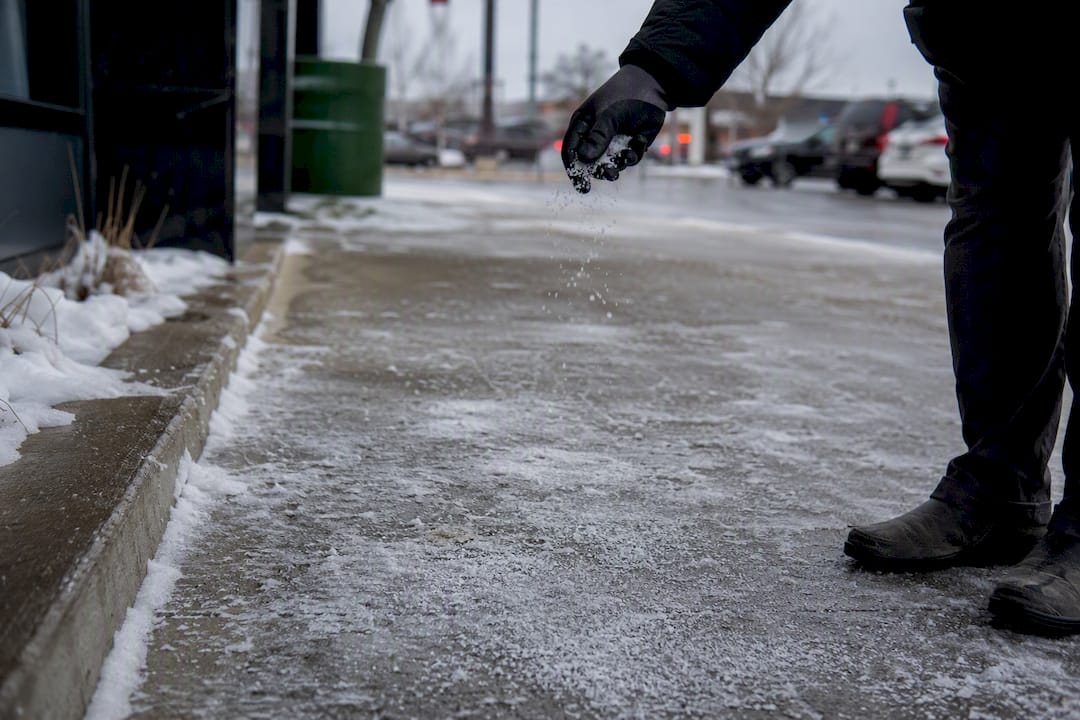
- Apply traction material where needed. The City distributes a limited supply of sand-salt for household use, but most commercial sites need their own stock since municipal supply isn’t meant to cover business-scale frontages.
- Deal with the windrow separately. Plow ridges at your driveway or sidewalk edge don’t clear themselves, and the City won’t do it for you.
- File the paperwork. Save contractor invoices, staff time logs, and your inspection photos in one folder, dated by storm event.
Pro Tip: Photograph the sidewalk before AND after clearing, not just after. A “before” shot with a timestamp is what actually protects you if someone claims they slipped mid-storm, before your crew even arrived.
Skipping the record-keeping step is the most common mistake commercial property managers make. Nobody plans to get a complaint filed against them, but when it happens, the manager with photos wins the conversation fast, and the one without them spends weeks going back and forth with the City or an insurance adjuster.
Should you clear sidewalks in-house or hire a contractor?
Both routes can meet the bylaw. The difference shows up in reliability during the storms that actually matter, the ones that hit overnight or on a weekend when your regular staff aren’t scheduled.
In-house crews give you direct control, but only if you’ve actually got the bodies and the equipment on standby. A single employee with a shovel doesn’t cut it for a large commercial lot or a multi-tenant building with several frontages. Contractors solve that capacity problem, and commercial snow services typically bundle sidewalk clearing with entrance-area ice management and, if you ask, snow hauling off-site.
Two contract structures dominate the Calgary market:
- Seasonal flat-fee contracts suit properties with predictable, high foot traffic, where you want unlimited visits and a fixed budget line for the winter.
- Per-push contracts charge per visit and tend to make more financial sense for lower-traffic or remote sites where an unlimited seasonal plan would be overkill, a distinction worth understanding before you sign anything, as this comparison of contract models lays out.
Whichever way you go, get the vendor’s insurance certificate, confirm they carry worker’s compensation coverage, and put response time and minimum cleared width in writing. For multi-tenant buildings, name one responsible party, property manager or board, so no unit assumes someone else is handling it.
How does 311 reporting and City enforcement actually work?
If a neighbouring business or a member of the public hasn’t cleared their frontage, you can report it through 311 or the Sidewalk Snow Report, but only after the 24-hour grace period has passed. Reporting sooner just wastes everyone’s time since the City won’t act until that window closes.
- Check the City’s pathway and sidewalk clearing map first to confirm whether the sidewalk in question is a City-cleared route or a private-property obligation
- File through 311 or the Sidewalk Snow Report once 24 hours have elapsed
- If you receive a notice yourself, clear the sidewalk immediately and keep your documentation ready in case you need to respond to the fine or invoice
Once the City acts on a complaint against your property, the sequence moves fast: notice, fine, then a City-dispatched crew if nothing changes. Waiting it out costs more than clearing it.
What should you budget for commercial sidewalk clearing?
Pricing follows the property, not a flat citywide rate. A single storefront on a quiet block costs less to service than a shopping plaza with three frontages and a loading dock. Expect one of four pricing shapes: seasonal flat-fee, per-push, hourly labour (rare, usually for one-off jobs), or a storm surcharge added on top of a base contract during extreme events.
Before signing anything, confirm the contract spells out:
- Response time (how many hours after snowfall ends before the crew arrives)
- Minimum width cleared, matching or exceeding the 1.5 m bylaw standard
- Proof of liability insurance and worker’s compensation coverage
- Where cleared snow gets stored on your lot
- Salt and traction material policy, including any concrete-safe product requirements
- Cancellation and mid-season adjustment terms
Estimate your seasonal spend by walking your own frontage length and foot-traffic pattern against these clauses, not against a generic quote. A property with steady customer traffic through the winter justifies the predictability of a seasonal contract; a low-traffic industrial lot usually comes out ahead on per-push pricing.
Why YearLong fits Calgary’s sidewalk clearing requirements
YearLong Property Maintenance has operated in Calgary since 2017, which means its crews have worked through the same freeze-thaw cycles and chinook swings that make this city’s winters unpredictable. That local track record matters when a storm hits overnight and you need a crew that already knows which routes ice up first.
YearLong builds flexible service packages rather than one-size-fits-all contracts, and backs its work with a satisfaction guarantee, addressing the two things commercial property managers actually worry about: getting cleared on time and having recourse if something’s missed.
A local crew that already knows your block’s freeze-thaw pattern responds faster than one learning the terrain during a storm.
- Calgary-based crews with local winter operating history since 2017
- Commercial snow removal services alongside seasonal cleanup and property upkeep
- Flexible packages rather than rigid one-size contracts
- A satisfaction guarantee backing the work
Getting Calgary sidewalk clearing right the first time
The conventional advice on this topic stops at “clear your sidewalk,” as if the bylaw were the whole story. It isn’t. The compliance risk on a commercial property rarely comes from a genuinely uncleared sidewalk; it comes from a property that was cleared, then re-iced by a melt-and-freeze cycle nobody checked on for several hours. Calgary’s weather does that more often than most cities, and a single morning clearing pass can be worthless by mid-afternoon.
What gets underrated is the paperwork side. Property managers spend hours worrying about which contractor to hire and almost no time setting up a simple photo-and-log habit that would actually protect them if a claim or a City notice showed up. That habit costs nothing and takes two minutes per storm.
If there’s one thing to prioritize first, it’s not finding the cheapest per-push rate. It’s locking in a contractor who can respond within hours, not days, because the 24-hour bylaw clock doesn’t pause for a busy dispatch queue.
Get sidewalk clearing sorted before the next storm hits
Handling this yourself means keeping staff on call through every overnight snowfall, buying and storing equipment, and hoping nobody’s on vacation the week a chinook flips to a deep freeze. YearLong replaces all of that with a Calgary crew already scheduled around the city’s storm patterns, so your frontage gets cleared within the bylaw’s 24-hour window without you managing shovels and schedules yourself.

YearLong’s commercial snow removal service covers sidewalk clearing, entrance ice management, and seasonal or per-push contracts built around your property’s actual foot traffic, not a generic package. If you manage a multi-tenant building or a storefront lot and want the bylaw clock handled without staffing it yourself, request a quote through YearLong’s snow removal page and get a plan in place before the next snowfall lands.
City of Calgary links and YearLong resources
- Clearing sidewalks and shoveling snow — reporting process
- Winter maintenance FAQ — City responsibilities
- YearLong’s sidewalk bylaw guide — plain-language overview
Frequently asked questions
How quickly must a business clear its sidewalk after snowfall in Calgary?
Within 24 hours of the snowfall ending, cleared down to bare surface across a minimum width of 1.5 metres.
What happens if the City has to clear my sidewalk for me?
You’ll be invoiced a minimum of $150 plus GST and administration fees, and unpaid amounts can be added to your property tax bill.
Who is responsible for the windrow a City plow leaves at my sidewalk?
The property owner. The City does not remove windrows as a standard service.
Can I hire a contractor instead of clearing sidewalks myself?
Yes. Most commercial properties use seasonal flat-fee or per-push contracts, and a snow removal workflow guide can help you decide which fits your site.