

TL;DR:
- Local climate determines the timing and methods of outdoor maintenance to keep spaces healthy with less effort. Microclimates within properties affect plant choices, water needs, and outdoor comfort, requiring tailored care strategies. Adapting routines to local and microclimate conditions ensures outdoor spaces remain usable and resilient year-round.
Local climate is the single most powerful factor determining when, how, and how often you maintain your outdoor property. The role of local climate in outdoor care covers everything from the timing of your first spring lawn cut to the depth of mulch you lay before a Calgary winter. Ignore it, and your property pays the price. Work with it, and your outdoor spaces stay healthier with less effort. This article draws on recent research in thermal comfort, microclimate science, and regional landscaping practice to give you a clear, practical framework for climate-informed outdoor care.
How do local climatic factors affect outdoor maintenance schedules?
Local climate dictates the timing and technique of every outdoor maintenance task. Temperature thresholds, precipitation patterns, and seasonal transitions all create hard limits on what you can do and when. Understanding these limits is the foundation of sound outdoor maintenance best practices.
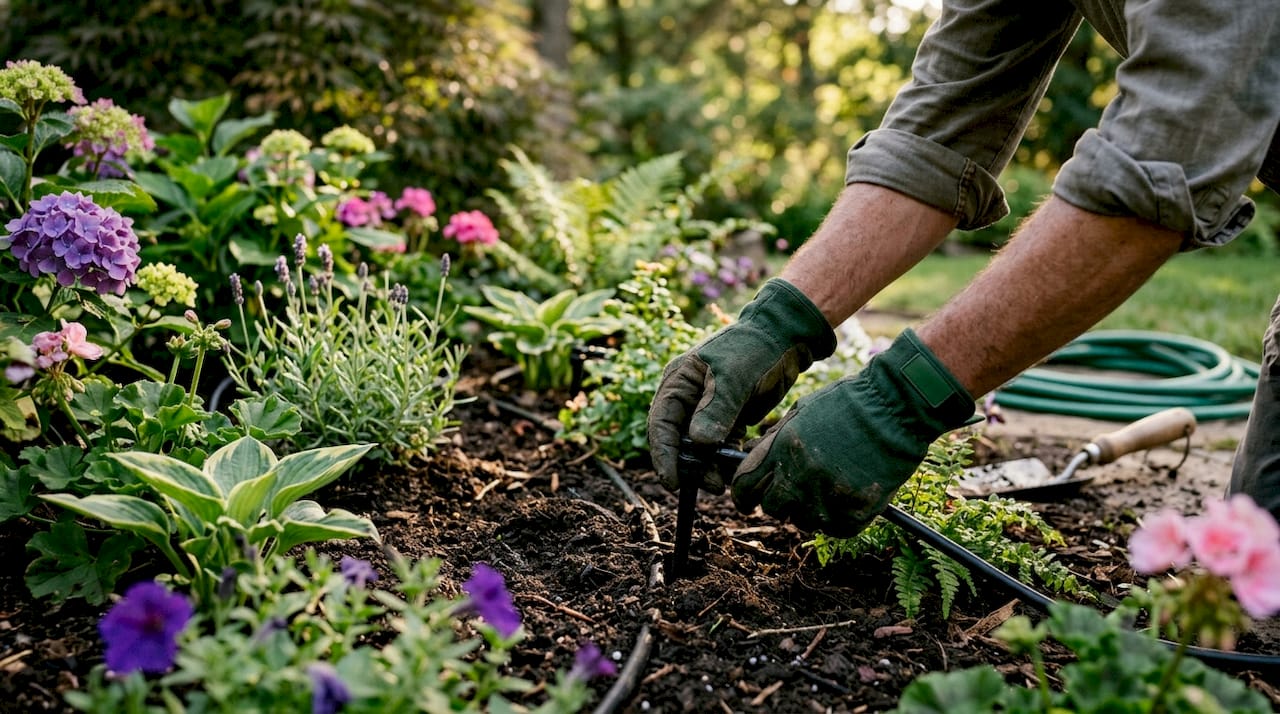
Temperature is the most direct driver. Research on outdoor thermal comfort identifies a neutral comfort range of 17.1–21.2 °C for hot-summer and cold-winter climates like Calgary’s. That range signals the window when outdoor work is most productive and when your lawn and garden plants are actively growing. Outside that window, grass goes dormant, soil freezes, and irrigation becomes either unnecessary or damaging.
Precipitation shapes soil moisture, which controls everything from mowing frequency to bed maintenance. A wet spring in Calgary can delay aeration and dethatching by weeks because saturated soil tears rather than aerates cleanly. A dry summer compresses the irrigation schedule and raises the risk of heat stress on turf. Tracking local rainfall against your maintenance calendar is not optional. It is the difference between a healthy lawn and a stressed one.
Seasonality in Canadian climates creates four distinct maintenance phases. The table below maps the key local climate factors to the outdoor care activities they govern.
| Climate factor | Season | Outdoor care activity |
|---|---|---|
| Soil temperature rising above 5 °C | Spring | Aeration, overseeding, first mow |
| Sustained heat above 30 °C | Summer | Deep watering, mowing height increase |
| First frost warning | Autumn | Leaf removal, bed cleanup, fertilising |
| Ground freeze and snowfall | Winter | Snow removal, concrete sealing |
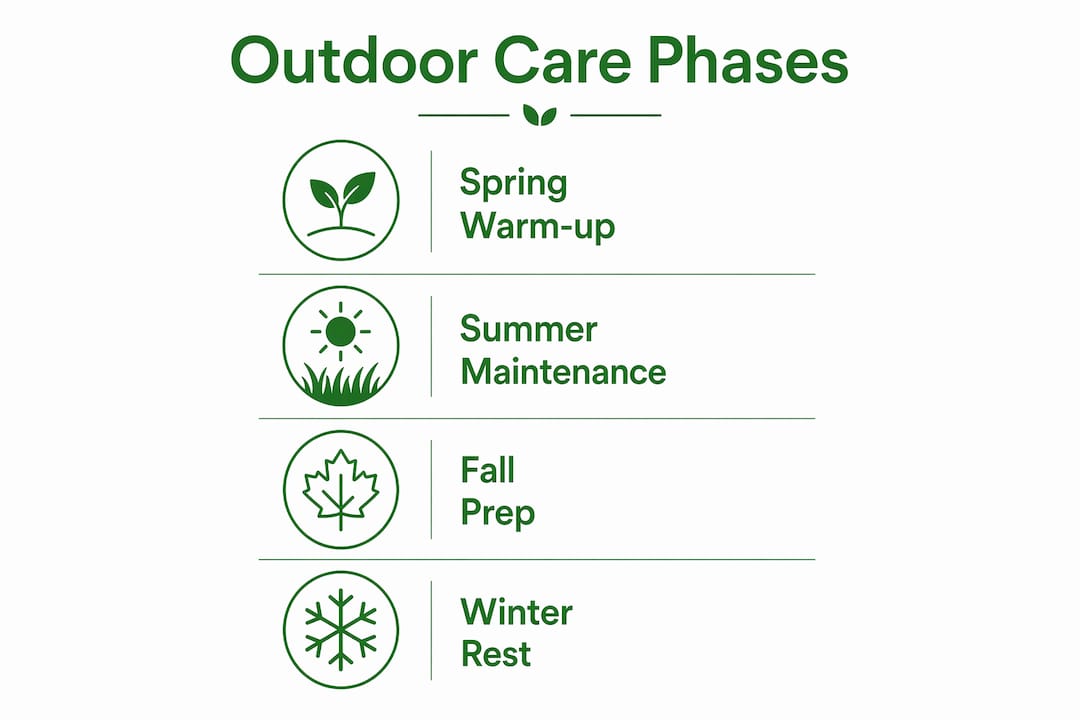
Calgary’s climate adds a layer of unpredictability. Chinook winds can push temperatures above freezing in january, then drop them back below minus 20 °C within days. That volatility means your maintenance schedule needs built-in flexibility, not a rigid calendar. Seasonal property care examples from experienced local providers show how to build that flexibility into a practical routine.
Key climate-driven maintenance triggers to watch:
- Soil temperature at or above 5 °C signals safe seeding and fertilising windows
- Three consecutive days above 30 °C call for deep watering rather than frequent shallow watering
- Overnight temperatures dropping below 4 °C signal the end of the active growing season
- Snowfall accumulation above 5 cm requires prompt removal to protect paved surfaces
What role does microclimate play in shaping outdoor care strategies?
A microclimate is the distinct set of temperature, wind, moisture, and shade conditions that exist within a small area, often varying significantly from the broader local climate just metres away. Your property almost certainly contains more than one microclimate. The south-facing wall of your house is warmer and drier than the north-facing bed beside the fence. That difference changes which plants thrive where and how often each area needs water.
Tree cover is the most powerful microclimate modifier available to homeowners. Strategic tree placement reduces heat stress by approximately 50% compared to fully exposed areas. That is not a marginal gain. It means a shaded patio or lawn section requires less irrigation, experiences less turf stress in summer, and stays usable longer during heat events.
The effects of outdoor microclimates extend indoors as well. Differences in tree cover and impervious surface coverage around a building can create indoor temperature differences of up to 1.42 °C between rooms with identical orientation. That matters for property managers because it affects both comfort and energy costs, not just the garden.
Microclimate components that affect your outdoor care decisions:
- Shade zones: areas under tree canopies need less water but may require shade-tolerant plant species
- Impervious surfaces: concrete and asphalt absorb and radiate heat, raising temperatures in adjacent beds
- Wind corridors: gaps between buildings accelerate wind, increasing moisture loss from soil and plants
- Low-lying areas: cold air pools in depressions, creating frost pockets that damage plants earlier in autumn
Pro Tip: Walk your property at midday in summer and again at dusk. Note where the ground feels noticeably hotter or cooler, where puddles persist after rain, and where wind is strongest. Those observations map your microclimates more accurately than any generic landscaping plan.
Top-down landscaping plans that ignore these local variations consistently underperform. Adaptive capacity in outdoor care depends on integrating your direct knowledge of shadow patterns, moisture pockets, and wind exposure into every maintenance decision.
How does outdoor activity by age group affect your maintenance priorities?
The people using your outdoor space determine when and how that space needs to be at its best. Research on outdoor activity by age shows a clear pattern: children aged 6–12 spend an average of 153.2 minutes outdoors per day, adults aged 18–64 spend 97.2 minutes, and adults aged 65 and over spend just 47.1 minutes. That gap matters because it tells you who is most exposed to outdoor conditions and when.
For property managers overseeing family-oriented or senior-focused properties, these numbers translate directly into maintenance priorities:
- Schedule high-traffic maintenance outside peak use hours. Mowing, blowing, and chemical applications should happen before children are active outdoors, typically before 9 a.m. or after 6 p.m. in summer.
- Prioritise shade and surface safety for seniors. Older adults spend less time outdoors partly because heat and uneven surfaces deter them. Maintaining shaded seating areas and clear, level pathways extends safe outdoor time.
- Time lawn treatments around weather windows. Applying fertiliser or weed control before a rain event reduces runoff and keeps children and pets off treated surfaces sooner.
- Inspect high-use areas more frequently. Paths, play areas, and patios used by children wear faster and accumulate hazards like ice patches or debris more quickly.
Consistent outdoor care directly supports the health and usability of outdoor spaces for every age group. A property that is well-maintained in response to its climate is also a safer, more welcoming space for the people who use it most.
What are the best climate-adaptive solutions for outdoor spaces?
Climate-adaptive outdoor care means choosing plants, structures, and maintenance routines that work with your local conditions rather than against them. The most effective strategies combine nature-based solutions with practical scheduling adjustments.
Strategic tree planting is the highest-return investment for most Calgary homeowners. Deciduous trees on the south and west sides of a property provide shade in summer and allow solar gain in winter after leaf drop. Nature-based shade solutions can reduce peak thermal loads by up to 6 °C in dense settings. That reduction lowers irrigation demand, reduces turf stress, and makes outdoor spaces usable during heat events that would otherwise drive people inside.
Tree species selection requires matching the tree to your local hydrology, not just your aesthetic preference. In semi-arid climates like Calgary’s, wrong species choices can reduce downstream water availability by intercepting precipitation that would otherwise recharge soil moisture. Native and climate-adapted species avoid this problem while also requiring less supplemental irrigation once established.
Pro Tip: Before planting any tree or large shrub, check its water use classification against your local annual precipitation average. In Calgary, that average sits well below what many ornamental species need without irrigation support.
The table below compares common climate-adaptive strategies and their practical benefits for Calgary properties.
| Adaptive strategy | Climate benefit | Maintenance impact |
|---|---|---|
| Deciduous tree planting | Summer shade, winter solar access | Reduces irrigation frequency by season |
| Native ground cover in beds | Lower water demand, frost tolerance | Reduces annual replanting and watering labour |
| Permeable paving on patios | Reduces runoff and ice formation | Lowers winter slip hazard and spring cleanup |
| Raised bed gardening | Soil temperature control, drainage | Extends growing season at both ends |
| Mulching garden beds | Moisture retention, temperature buffering | Reduces watering frequency and weed pressure |
Outdoor space design that starts from resident health outcomes rather than planting aesthetics consistently produces better results for thermal comfort and long-term maintenance costs. Climate change also introduces a non-linear risk: small shifts in heat or moisture can cause abrupt loss of outdoor usability during heatwaves. Proactive, climate-informed maintenance routines are the only reliable defence against that kind of sudden disruption.
Key takeaways
Adapting outdoor care to local climate conditions is the most reliable way to protect property health, reduce maintenance costs, and keep outdoor spaces usable year-round.
| Point | Details |
|---|---|
| Temperature thresholds drive scheduling | Soil temperature above 5 °C and air comfort between 17.1–21.2 °C define your active care windows. |
| Microclimates vary within one property | Shade, wind, and surface materials create distinct zones that each need tailored care. |
| Tree cover cuts heat stress significantly | Strategic planting reduces outdoor heat stress by approximately 50% and lowers irrigation demand. |
| User demographics shape maintenance timing | Children spend over three times as many minutes outdoors daily as seniors, which affects when and where care is most critical. |
| Proactive care prevents abrupt usability loss | Small climate shifts can suddenly make outdoor spaces unusable; consistent maintenance is the best buffer. |
What I have learned from watching Calgary properties through every season
The biggest mistake I see homeowners make is treating outdoor care like a fixed calendar. They book their first mow for the third week of may every year, regardless of what the soil temperature or the Chinook forecast says. That rigidity costs them. A lawn aerated too early in wet soil takes weeks to recover. A bed mulched too late loses the frost protection it needed.
What actually works is treating your property as a living system that responds to its specific conditions. The south-facing beds on a property I know well in Calgary’s southwest need water twice as often as the north-facing ones, even in the same week. Generic advice misses that entirely. Local knowledge, built through observation over multiple seasons, is what separates a property that looks good in photos from one that stays healthy through a Calgary July and a Calgary february.
I also think the microclimate conversation is undervalued. Most homeowners think about their yard as one zone. It is not. The area beside your concrete driveway is a heat island. The corner behind the spruce tree is a frost pocket. Recognising those differences and adjusting your care accordingly is not complicated. It just requires paying attention.
The research on outdoor thermal comfort confirms what experienced property managers already know: shade placement and surface choices have measurable effects on how usable and healthy a space is. That is not a landscaping luxury. For a family with young children or an elderly resident who needs safe outdoor access, it is a practical necessity.
— Lewie
Yearlong’s climate-informed care for Calgary properties
Calgary’s climate demands outdoor care that responds to real conditions, not a generic schedule. Yearlong has been providing lawn and bed maintenance across Calgary since 2017, with every service timed to local weather patterns and seasonal shifts.

Whether you need seasonal lawn care through the growing season or spring and fall cleanup that prepares your property for what Calgary’s climate brings next, Yearlong builds each service plan around your property’s specific conditions. The team understands local microclimates, soil behaviour, and the unpredictability of Calgary winters and summers. Contact Yearlong for a property assessment and a maintenance plan that works with your local climate, not against it.
FAQ
What is the role of local climate in outdoor care?
Local climate determines the timing, frequency, and methods of every outdoor maintenance task, from irrigation scheduling to snow removal. Temperature thresholds, precipitation patterns, and seasonal transitions all directly control what your property needs and when.
How does microclimate differ from local climate?
A microclimate is the specific set of temperature, moisture, shade, and wind conditions within a small area of your property, which can differ significantly from the broader local climate. South-facing walls, shaded beds, and paved surfaces each create distinct microclimates that require different care approaches.
Why does tree cover matter for outdoor maintenance?
Strategic tree cover reduces outdoor heat stress by approximately 50% compared to exposed areas, which lowers irrigation demand and extends the usable season for lawns and patios. Tree species must also match local water availability to avoid reducing soil moisture recharge.
How should property managers adjust care for different age groups?
Children aged 6–12 spend an average of 153.2 minutes outdoors daily, making safety and surface quality critical for family properties. Seniors spend far less time outdoors, partly due to heat and uneven surfaces, so shade maintenance and clear pathways directly support their outdoor access.
When does climate change create sudden outdoor usability problems?
Small increases in heat or moisture beyond local thresholds can cause abrupt loss of outdoor usability during heatwaves or wet periods. Proactive, climate-informed maintenance routines are the most reliable way to prevent sudden deterioration of outdoor spaces.