

TL;DR:
- Regular property maintenance preserves building condition, increases market value, and prevents costly repairs. Well-maintained properties attract responsible tenants, reduce vacancies, and improve long-term profitability. Investing consistently in high-ROI tasks and budgeting appropriately safeguards property assets and enhances tenant satisfaction.
Property maintenance is defined as the systematic practice of preserving a building’s condition, safety, and market worth through scheduled inspections, repairs, and upkeep. The role of maintenance in property value is direct: consistent upkeep prevents deterioration that erodes market price, while neglect compounds into costly structural failures. For Calgary homeowners and real estate investors alike, understanding this connection is the difference between a growing asset and a depreciating liability. This guide draws on data from Beryl Engineering, RentTools, and Mattress Miracle to give you a practical, evidence-based framework for protecting what you own.
How does regular maintenance prevent property value loss?
Deferred maintenance is the single fastest way to destroy property value. A leaking roof left unaddressed for one season becomes a mould problem by the next. A cracked foundation seal becomes a flooded basement. Each ignored issue multiplies in cost and compounds the damage to surrounding systems.
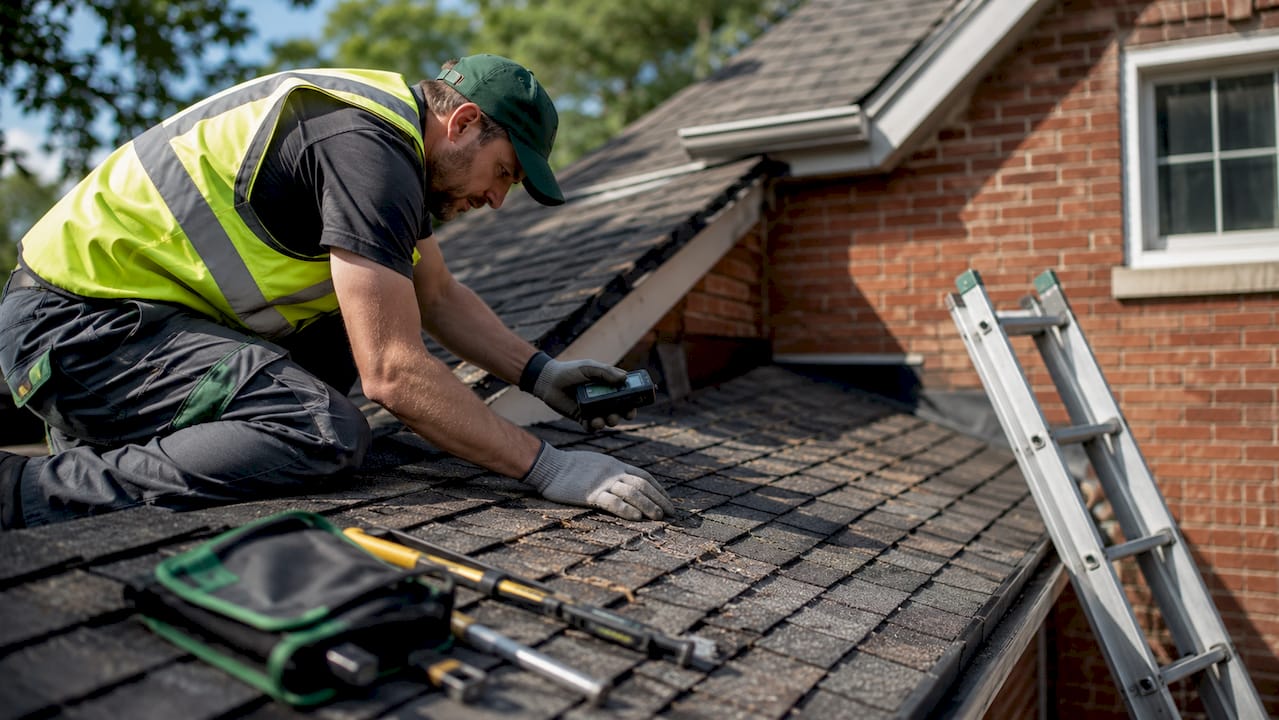
Preventive maintenance costs a fraction of emergency repairs and reduces tenant turnover caused by habitability issues. That means a $200 annual HVAC service call can prevent a $4,000 emergency replacement mid-winter. The financial logic is straightforward: pay a little now or pay a lot later.
From a tenant perspective, the impact of maintenance on property is equally significant. Well-maintained properties attract responsible tenants because upkeep signals that a landlord takes the investment seriously. Tenants who move into a clean, functional property are more likely to treat it with care, reducing wear and tear over time.
Common issues that routine maintenance prevents include:
- Roof leaks from blocked gutters and missing shingles
- Plumbing failures from undetected slow leaks
- HVAC breakdowns from dirty filters and neglected servicing
- Pest infestations from unsealed entry points
- Landscaping deterioration that reduces curb appeal and perceived value
Pro Tip: Schedule a “micro-maintenance” walkthrough every 90 days. Catching a loose door hinge, a dripping tap, or a cracked caulk line costs almost nothing to fix. Left alone, each one becomes a repair bill.
Micro-maintenance, or consistently addressing small repair needs early, is a key factor in portfolio profitability. Investors who build this habit into their quarterly calendar report fewer emergency calls and steadier rental income.
What are effective maintenance budgeting strategies for investment properties?
Budgeting is where most property owners get the importance of property maintenance wrong. They treat it as a variable expense to cut when cash flow tightens, rather than a fixed cost of ownership.
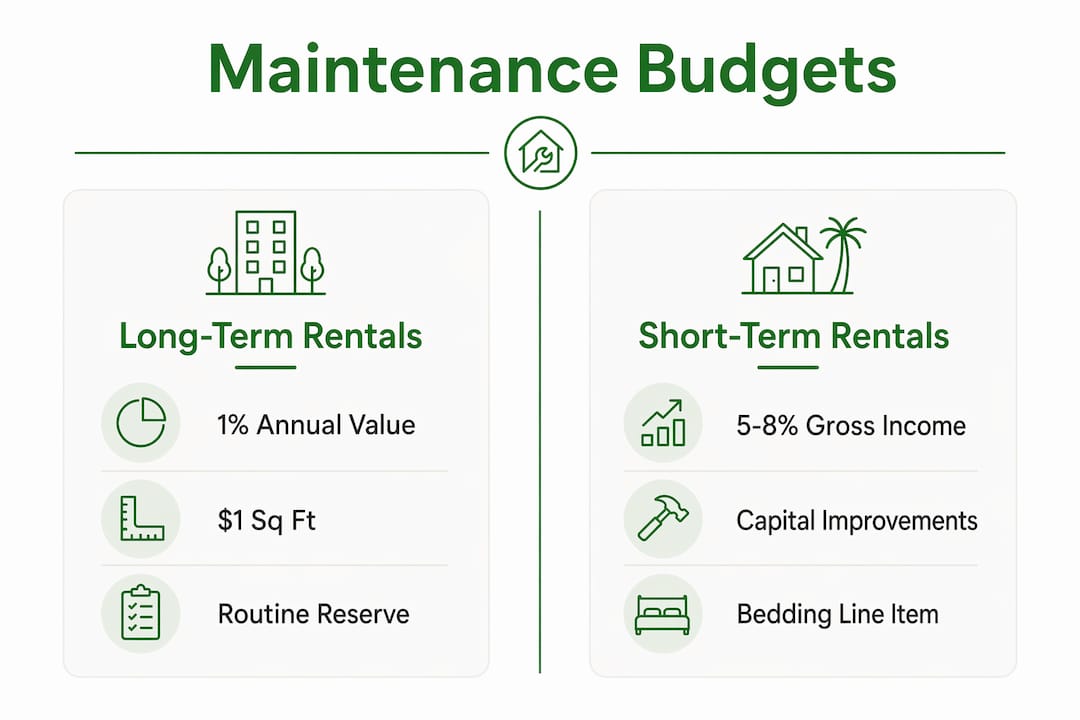
Beryl Engineering recommends budgeting 1% of the property’s value annually or $1 per square foot per year, plus saving an extra 5% of gross income for capital improvements like roofs and HVAC systems. On a $500,000 property, that is $5,000 per year in routine maintenance reserves before you account for major replacements. That figure is not a suggestion. It is a baseline.
The picture changes significantly for short-term rental (STR) operators. STRs require setting aside 5%–8% of gross revenue for maintenance reserves, compared to 1%–2% for traditional long-term rentals. High-turnover and coastal climate properties may require 8%–13% reserves to cover furniture, fixtures, and equipment replacement. Calgary’s climate adds its own demands, with freeze-thaw cycles stressing concrete, caulking, and drainage systems every spring.
| Property type | Routine maintenance reserve | Capital improvement reserve |
|---|---|---|
| Long-term rental | 1% of value or $1/sq ft | 5% of gross income |
| Short-term rental | 5%–8% of gross revenue | 8%–13% for high-turnover properties |
| Owner-occupied home | 1% of value annually | Separate emergency fund |
Smart budgeting also means separating your reserve categories. Routine care covers lawn maintenance, seasonal cleanups, and minor repairs. Capital improvements cover roofs, HVAC, and foundation work. Treating them as one pool leads to under-funding both.
Pro Tip: Evaluate furnishings on cost per year of service life, not sticker price. A $1,125 mattress lasting six years costs $188 per year, while a $400 mattress replaced every 18 months costs $267 per year. The cheaper option costs more.
For STR operators, bed maintenance for investment properties deserves its own line item. Mattress replacement in STRs occurs every 3–5 years versus 7–10 years in residential settings. Investing in waterproof mattress protectors costing $40–$80 each can extend mattress life by 2–3 years, deferring replacement costs of up to $10,000–$15,000 across a ten-unit portfolio.
How does maintenance influence tenant quality and turnover?
Maintenance acts as a tenant quality filter. Properties that are well-kept before a showing attract applicants who value and respect their living environment. Properties with peeling paint, broken fixtures, and overgrown yards attract applicants who are accustomed to those conditions.
Proactive maintenance correlates with longer leases and steadier income streams. When tenants see that requests are handled quickly and the property is kept in good condition, they renew. When they feel ignored, they leave. Every vacancy costs you one to two months of lost rent plus turnover costs.
The financial case for tenant retention is strong. A single vacancy on a $2,000-per-month unit costs $4,000 in lost income over two months, before accounting for cleaning, advertising, and any repairs needed between tenants. Maintenance that prevents even one vacancy per year pays for itself many times over.
Specific maintenance activities that directly improve tenant satisfaction and retention include:
- Prompt response to repair requests within 24–48 hours
- Annual appliance servicing before the heating and cooling seasons
- Regular exterior upkeep including lawn care, bed maintenance, and snow removal
- Fresh paint and caulking between tenancies
- Seasonal gutter cleaning to prevent water damage complaints
The role of maintenance for investment property extends beyond the physical asset. It shapes the relationship between landlord and tenant, and that relationship determines whether your income is stable or volatile.
Which maintenance tasks best protect and increase property value?
Not all maintenance delivers equal returns. High-ROI tasks are those that prevent catastrophic failures, maintain habitability, and preserve curb appeal. Knowing which tasks to prioritise by frequency and impact is the core of any sound maintenance strategy.
| Maintenance task | Frequency | Value impact |
|---|---|---|
| HVAC filter replacement | Every 3 months | Prevents $3,000–$8,000 system failure |
| Gutter cleaning | Spring and fall | Prevents foundation and roof damage |
| Roof inspection | Annually | Extends roof life by 5–10 years |
| Exterior caulking and sealing | Annually | Prevents moisture infiltration |
| Lawn and bed maintenance | Seasonally | Maintains curb appeal and perceived value |
| Mattress and linen inspection | Every 6 months (STR) | Reduces negative reviews and emergency replacement |
Roofing deserves special attention. A roof maintenance guide for landlords makes clear that annual inspections and minor repairs extend roof life significantly, deferring a $15,000–$25,000 replacement by years. That is one of the highest-return maintenance investments available to a property owner.
For STR operators, standardising mattress inspections and replacement schedules reduces emergency replacements and negative guest feedback. A system that tracks each unit’s mattress age and condition prevents the scramble of replacing a mattress between bookings.
Seasonal maintenance is equally critical in Calgary’s climate. Spring cleanups address winter damage to lawns, beds, and concrete. Fall cleanups prepare drainage and landscaping for freeze conditions. You can find a detailed homeowner maintenance checklist that maps these tasks by season and priority.
Scheduling regular roof maintenance follows the same logic as every other preventive task: small, consistent attention prevents large, disruptive costs. Property value and upkeep are inseparable when you look at the data.
Key takeaways
Consistent, scheduled maintenance is the most reliable strategy for preserving and growing property value over the long term.
| Point | Details |
|---|---|
| Maintenance prevents value loss | Deferred repairs compound in cost and damage surrounding systems, eroding market value. |
| Budget by property type | STRs need 5%–8% of gross revenue in reserves; long-term rentals need 1% of property value annually. |
| Maintenance filters tenant quality | Well-kept properties attract responsible tenants, reducing vacancy and turnover costs. |
| Evaluate cost per service year | A higher-quality purchase that lasts longer costs less annually than a cheap replacement cycle. |
| Prioritise high-ROI tasks | HVAC servicing, roof inspections, and seasonal cleanups deliver the strongest protection per dollar spent. |
Maintenance as investment, not overhead
I have seen investors treat maintenance as the first line item to cut when a property’s cash flow gets tight. That decision almost always costs them more within 12 months. A neglected property does not hold its value quietly. It deteriorates visibly, and visible deterioration drives away good tenants and drives down appraisal values.
What I have found after years of watching properties perform is that the investors with the most stable portfolios are not the ones who bought the best locations. They are the ones who maintained consistently. They scheduled their HVAC checks, kept their exteriors clean, and replaced worn items before they failed. Their vacancy rates were lower, their tenants stayed longer, and their properties appraised higher when it came time to refinance or sell.
The uncomfortable truth about property maintenance is that it is not glamorous. Nobody brags about cleaning gutters or replacing a mattress protector. But those decisions, made consistently over five or ten years, are what separate a property that builds wealth from one that drains it.
Viewing maintenance as an investment strategy rather than a cost centre changes how you make decisions. You stop asking “Can I afford to fix this?” and start asking “What does it cost me not to fix this?” That shift in thinking is worth more than any single repair.
— Lewie
Protect your Calgary property with Yearlong
Calgary’s climate puts real demands on outdoor property. Freeze-thaw cycles, heavy snowfall, and short growing seasons mean your lawn, beds, and hardscape need consistent, professional attention to hold their value year-round. Yearlong has served Calgary homeowners and investors since 2017, providing lawn bed maintenance and seasonal cleanups that keep your property’s exterior in top condition through every season. Whether you need spring and fall cleanups, ongoing lawn care, or snow removal, Yearlong offers flexible plans built around your property’s specific needs. Protecting your investment starts with the basics. Let Yearlong handle the outside so you can focus on the bigger picture.
FAQ
Does maintenance actually increase home value?
Yes. Consistent upkeep prevents deterioration that reduces market value, and well-maintained properties appraise higher and attract stronger offers. Preventive maintenance also defers costly capital replacements, preserving equity.
How much should I budget for property maintenance annually?
Budget 1% of the property’s value per year or $1 per square foot for routine maintenance, plus 5% of gross income for capital improvements. Short-term rental operators should reserve 5%–8% of gross revenue due to higher turnover demands.
What maintenance tasks have the highest ROI for rental properties?
HVAC servicing, roof inspections, gutter cleaning, and exterior sealing deliver the strongest returns by preventing system failures and structural damage. Micro-maintenance tasks like caulking and minor repairs also yield high ROI by stopping small issues before they escalate.
How does maintenance affect tenant retention?
Well-maintained properties attract responsible tenants and signal that a landlord is reliable. Proactive upkeep correlates with longer leases and lower vacancy rates, directly stabilising rental income.
How often should STR operators inspect mattresses and bedding?
Short-term rental mattresses and protectors should be inspected every six months due to higher occupant turnover. Standardising a replacement schedule reduces emergency purchases and negative guest reviews.
One Response