

TL;DR:
- Property maintenance in 2026 focuses on preventive, predictive, and reactive strategies to enhance property value and tenant satisfaction. Early adoption of AI and IoT technology significantly reduces costs and improves response times, making maintenance a key competitive advantage. Standardising vendor agreements and implementing proactive communication further optimize operational efficiency and resident retention.
Property maintenance in 2026 is a strategic operational foundation that drives property value, tenant retention, and cost efficiency. The role of property maintenance in 2026 has shifted from a reactive cost centre to a competitive advantage built on preventive care, predictive analytics, and AI-driven platforms. For property owners and managers in Calgary and across Canada, getting maintenance right now means lower operating costs, higher tenant satisfaction, and properties that hold their value through every season. Maintenance is the top stressor for 38% of rental owners, which tells you exactly how much is at stake.
What are the primary maintenance strategies property managers use in 2026?
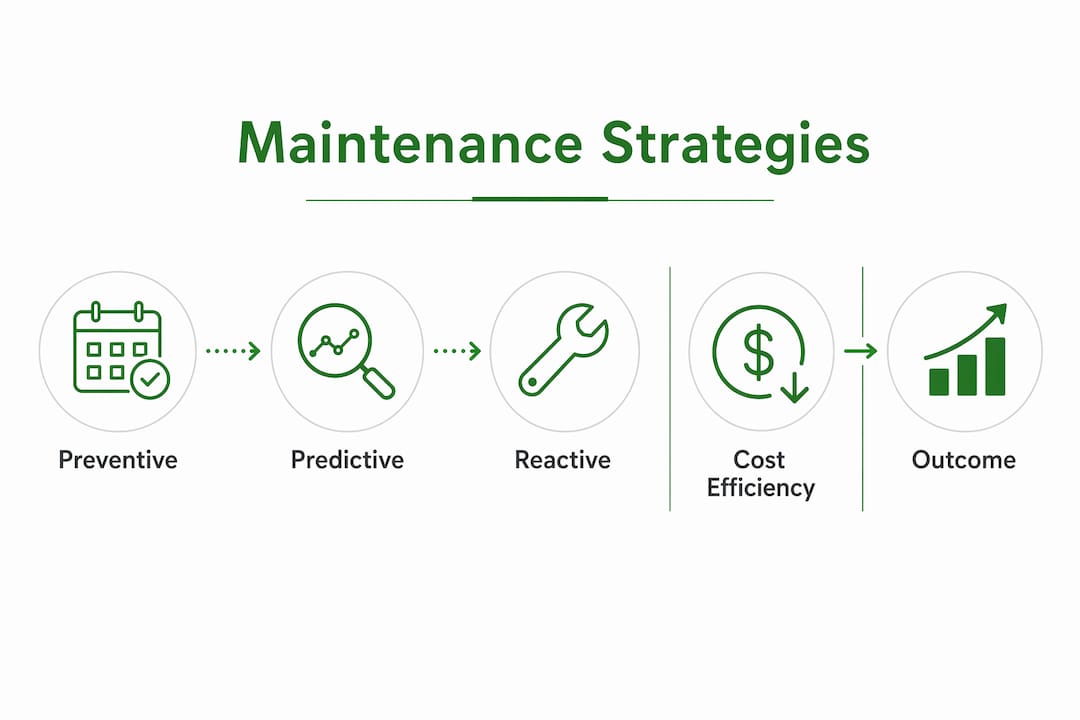
Property management in 2026 centres on three maintenance models: preventive, predictive, and reactive. Understanding how they differ, and what each costs, is the starting point for any serious property management strategy.
Preventive maintenance is scheduled upkeep performed before a failure occurs. Think seasonal inspections, filter replacements, and gutter cleaning. Predictive maintenance goes further by using real-time IoT sensor data to trigger interventions only when equipment shows signs of wear, avoiding unnecessary servicing. Reactive maintenance is the break-fix model: you wait for something to fail, then repair it.
The cost difference between these models is significant. Reactive maintenance costs 3–5 times more than planned maintenance for the same failure mode, with emergency repairs averaging $650 per incident. That premium comes from emergency contractor rates, parts availability, and the disruption caused to tenants.
The optimal strategy mix for 2026 is 70% preventive, 20% condition-based (predictive), and 10% reactive. This approach can reduce annual operating expenses by 12–18%, returning $4–$6 for every $1 invested in preventive care.
| Strategy | Trigger | Relative Cost | Key Outcome |
|---|---|---|---|
| Preventive | Scheduled calendar | Low | Reduces failure frequency |
| Predictive | IoT sensor data | Medium upfront | Avoids unnecessary servicing |
| Reactive | Equipment failure | High (3–5x planned) | Fast fix, expensive pattern |
| Mixed (70/20/10) | Blended approach | Lowest overall | 12–18% operating cost reduction |
Pro Tip: If you are new to structured maintenance, start with preventive programmes before investing in predictive technology. Preventive maintenance requires no sensors or software, just a calendar and discipline, and it delivers measurable savings from day one.
How does responsiveness to maintenance requests impact tenant satisfaction?
Speed of response is one of the most direct drivers of tenant retention. Properties that resolve requests within 24 hours see a 12% higher tenant retention rate than those that do not. That number compounds quickly across a portfolio.
When maintenance goes unresolved past 48–72 hours, the risk of a tenant move-out rises sharply. Each turnover costs approximately $3,500 when you account for vacancy, cleaning, repairs, and leasing fees. Preventing even a handful of move-outs per year through faster response pays for a significant portion of your maintenance programme.
The financial logic is straightforward. A 12% retention improvement across a 50-unit building could mean five to six fewer turnovers per year. At $3,500 each, that is $17,500–$21,000 in avoided costs annually, without changing a single repair.
Best practices for improving response times and communication include:
- Set a 24-hour acknowledgement standard. Tenants want to know their request was received, even if the repair takes longer.
- Use a digital work order system. Paper logs and email chains create delays. Platforms like Buildium, AppFolio, or Yardi centralise requests and assign them automatically.
- Categorise requests by urgency. A leaking roof and a squeaky door are not the same priority. Triage saves time and prevents critical issues from being buried.
- Send status updates proactively. A brief message when a technician is scheduled reduces follow-up calls and builds trust.
- Track resolution times by unit and vendor. Data reveals patterns, such as a specific contractor who consistently runs late, before they become a retention problem.
What technological advancements are transforming property maintenance in 2026?
AI and connected sensor technology are reshaping how property managers detect, assign, and resolve maintenance issues. The impact of technology on maintenance is no longer theoretical. It is measurable and growing.
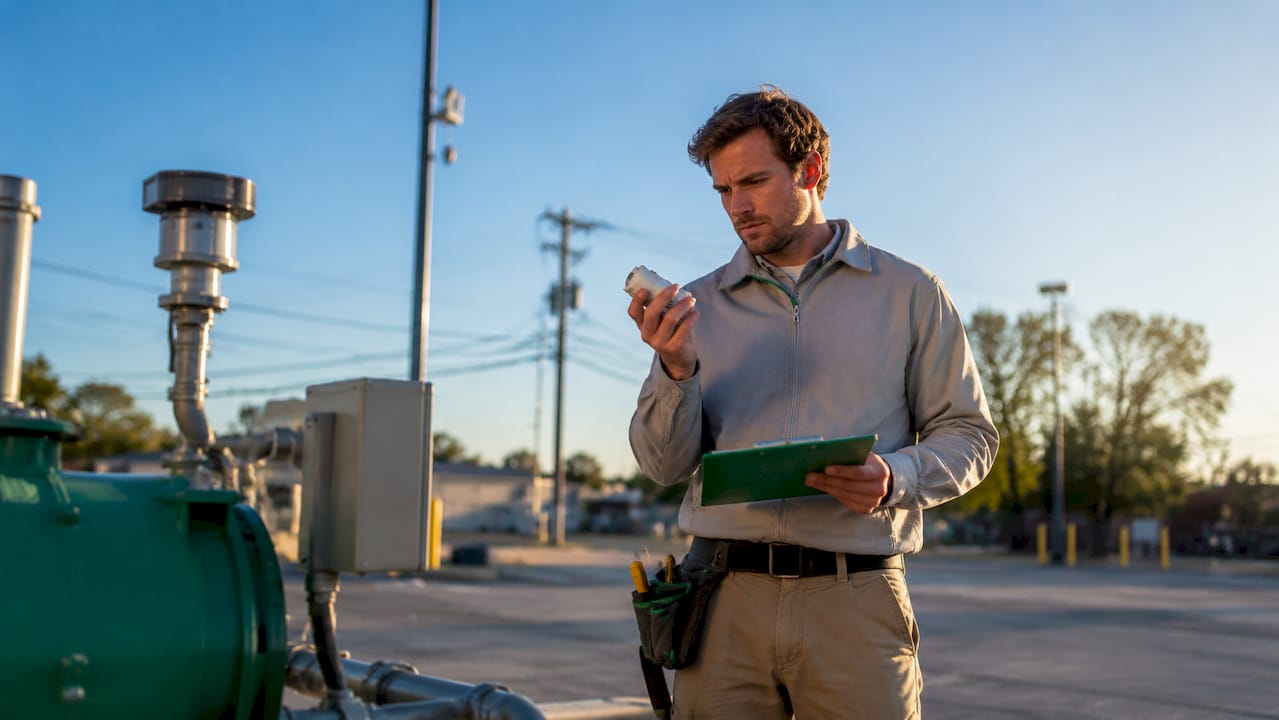
Only 27% of properties have adopted AI-driven predictive maintenance as of mid-2026. Those that have report a 25–40% reduction in maintenance costs and up to a 30% increase in tenant satisfaction. These systems detect equipment failures 14–28 days before they occur, which turns a potential emergency into a scheduled repair.
AI-powered platforms also automate work order triage. Instead of a property manager manually reading requests and assigning technicians, the system categorises urgency, matches the right contractor, and schedules the visit. AI-driven platforms improve resolution speed by up to 3x compared to manual processes. They also audit vendor certificates automatically, blocking contractors with expired licences before they set foot on a property.
Key technology capabilities reshaping property maintenance in 2026:
- IoT sensors on HVAC units, water heaters, and elevators that flag anomalies in real time
- Predictive analytics that model failure probability based on equipment age, usage, and sensor data
- Automated triage that routes urgent requests to on-call technicians without human intervention
- Integrated data platforms that unify lease records, maintenance history, and vendor information for full operational visibility
- Vendor certificate auditing that removes liability risk from expired contractor credentials
The risk is not adopting AI tools too early, but falling behind competitors who do. Properties using these tools are building a data advantage that compounds over time.
Pro Tip: Before investing in AI platforms, build a clean data foundation. Centralise your maintenance history, vendor records, and equipment logs in one system. AI tools are only as good as the data they run on, and fragmented records produce fragmented results.
How do vendor management and standardisation practices improve maintenance quality?
Vendor management is where many property managers lose money quietly. Without structured agreements, contractors set their own timelines, and costs drift upward without accountability.
Standardising vendor SLAs to a 5-day repair turnaround correlates with 10% higher resident satisfaction in neighbouring units. Faster, predictable repairs reduce noise, disruption, and the uncertainty that frustrates tenants. Unstructured vendor management, by contrast, leads to a 10% maintenance cost markup increase over time.
Here is a practical approach to tightening vendor management:
- Create written SLAs for every vendor. Define response times, completion deadlines, and quality standards before work begins. A 5-day turn cap on non-emergency repairs is a reasonable starting benchmark.
- Require photo documentation for every job. Before-and-after photos create a record that protects you in disputes and confirms work was completed to standard.
- Maintain a digital vendor file. Store insurance certificates, licences, and past performance records in one accessible location. This is also the data an AI platform needs to automate compliance checks.
- Conduct quarterly vendor reviews. Score contractors on response time, quality, and cost. Replace underperformers before they become a pattern.
- Negotiate volume pricing for repeat work. If you use the same plumber or electrician across multiple units, formalise that relationship with a preferred vendor agreement and a rate schedule.
Standardisation also reduces the informal markups that accumulate when vendors know there is no oversight. A professional pressure washing contract, for example, should specify frequency, scope, and pricing per visit, not a vague “as needed” arrangement that invites billing surprises.
What practical steps can property owners take to optimise maintenance for 2026?
Optimising your maintenance programme does not require a full technology overhaul on day one. The most effective property management strategies in 2026 combine simple preventive programmes with selective technology adoption and tight operational discipline.
A good example of a high-return, low-complexity programme is scheduled air filter delivery. Preventive air filter programmes reduce HVAC-related work orders by an average of 38%, with some operators seeing up to 50% reduction. The EPA reports an additional 10% reduction in tenant energy bills with timely filter replacement. For a property manager with 20 or more units, that is a meaningful reduction in both call volume and energy complaints.
For a broader view of how to enhance property value through maintenance, the following comparison covers the most practical approaches available in 2026:
| Strategy | What It Involves | Expected Benefit |
|---|---|---|
| Preventive programme | Scheduled inspections, filter delivery, seasonal checks | 12–18% reduction in operating costs |
| AI-driven triage | Automated work order routing and urgency classification | Up to 3x faster resolution speed |
| Vendor SLA standardisation | Written agreements with turn caps and documentation | 10% cost markup reduction |
| Tenant communication protocol | 24-hour acknowledgement, status updates, digital tracking | 12% higher retention rate |
| Predictive maintenance | IoT sensors and analytics for early fault detection | 25–40% maintenance cost reduction |
A customised maintenance plan that layers these strategies progressively gives you the best return without overwhelming your team or budget. Start with preventive programmes and communication protocols, then add technology as your data foundation matures.
Pro Tip: Use your property maintenance checklist as a baseline audit tool. Walk each property quarterly and score it against the checklist. The gaps you find are your maintenance programme’s roadmap.
Key takeaways
Property maintenance in 2026 is a measurable competitive advantage, not an overhead line, and the managers who treat it that way will outperform those who do not.
| Point | Details |
|---|---|
| Preventive maintenance pays | A 70/20/10 strategy mix reduces operating costs by 12–18% and returns $4–$6 per $1 invested. |
| Response speed drives retention | Resolving requests within 24 hours produces a 12% higher tenant retention rate. |
| AI adoption is still early | Only 27% of properties use predictive AI tools, creating a real advantage for early movers. |
| Vendor SLAs reduce cost creep | Standardised 5-day turn caps cut satisfaction gaps and reduce markup by 10%. |
| Simple programmes deliver outsized returns | Air filter delivery alone reduces HVAC work orders by 38% on average. |
Where i stand on maintenance as a competitive advantage
The shift most property managers are still resisting
I have watched the property management world slowly accept that maintenance is not a cost to minimise. It is the single biggest variable in whether a property performs or bleeds money. The managers I see struggling most are still running reactive programmes, not because they lack the tools, but because they have not made the mental shift from “fix it when it breaks” to “prevent the break.”
The technology conversation is real, but it gets oversold. AI platforms are genuinely useful once you have clean data and structured processes underneath them. Without that foundation, you are automating chaos. I always recommend getting your preventive programme and vendor SLAs in order first. That work costs almost nothing and delivers returns immediately.
What I find most interesting about 2026 is that the gap between well-maintained and poorly-maintained properties is becoming visible to tenants before they even sign a lease. People check reviews. They notice response times. A property with a documented maintenance history and fast turnarounds commands better tenants and lower vacancy. That is not a soft benefit. It is a financial outcome.
The managers who will win over the next few years are the ones who treat maintenance as an operational discipline, not a reactive chore. The data is clear. The tools exist. The only thing left is the decision to act on it.
— Lewie
How Yearlong supports your 2026 maintenance goals
Property managers and owners in Calgary know that outdoor upkeep is one of the most visible and time-sensitive parts of any maintenance programme. Neglected lawns, overgrown beds, and debris-covered driveways signal poor management before a tenant ever steps inside.
Yearlong has been delivering reliable outdoor property care across Calgary since 2017. From lawn bed maintenance that keeps your grounds looking sharp year-round to full lawn care and yard cleanup that protects curb appeal and property value, Yearlong’s services are built for property managers who need consistent, professional results without the hassle of coordinating multiple contractors. Contact Yearlong today to discuss a customised outdoor maintenance plan that fits your portfolio and your 2026 goals.
FAQ
What is the ideal maintenance strategy mix for 2026?
The recommended mix is 70% preventive, 20% predictive, and 10% reactive. This balance reduces annual operating costs by 12–18% compared to predominantly reactive programmes.
How quickly should property managers respond to maintenance requests?
Responding within 24 hours is the standard that correlates with a 12% higher tenant retention rate. Delays beyond 48–72 hours significantly increase the risk of tenant move-out, costing approximately $3,500 per turnover.
What does predictive maintenance actually do?
Predictive maintenance uses IoT sensors to monitor equipment in real time and triggers repairs based on actual wear data rather than a fixed schedule. These systems detect failures 14–28 days before they occur, converting emergencies into planned repairs.
How does vendor standardisation reduce maintenance costs?
Standardising vendor SLAs with defined turn times and documentation requirements reduces informal cost markups by 10% and improves resident satisfaction by keeping repair timelines predictable and transparent.
Is AI maintenance technology worth adopting now?
Yes, particularly for portfolios of 20 or more units. Only 27% of properties have adopted AI-driven tools so far, meaning early adopters gain a real advantage. These platforms reduce maintenance costs by 25–40% and improve resolution speed by up to 3x.