

TL;DR:
- Common property maintenance errors involve reactive practices, poor planning, and inadequate water management, leading to costly damages. Regular scheduling, clear roles, updated budgets, and proactive measures are essential to prevent deterioration and reduce expenses. Proper documentation and seasonal inspections help property owners avoid invisible damages and long-term repair costs.
Common property maintenance errors are defined as recurring failures in upkeep planning, execution, or oversight that accelerate property deterioration and inflate repair costs. These mistakes affect everything from your lawn and gutters to your concrete and drainage systems. According to Smart Strata, waiting too long to act on minor defects is one of the most damaging patterns a property owner can fall into. Whether you manage a single home in Calgary or a portfolio of properties, recognising what are common property maintenance errors before they compound is the difference between a well-kept asset and a costly liability.
What reactive maintenance mistakes cause major issues?
Reactive maintenance is the practice of waiting for something to break before fixing it. This approach consistently costs more than addressing problems early, and it creates disruptions that preventive care would have avoided entirely.
Here are the most damaging reactive maintenance mistakes:
- Ignoring small leaks or cracks. Water ingress through a minor crack in a foundation wall or patio surface can expand through freeze-thaw cycles, which are common in Calgary winters. What starts as a $200 repair can become a $4,000 structural fix within two seasons.
- Deferring roof and gutter inspections. Blocked gutters overflow and push water against fascia boards and foundations. Ridge Top Exteriors notes that most homes have at least one gutter configuration error reducing system performance. That means the damage is already happening, quietly, before you notice it.
- Skipping seasonal lawn bed care. Overgrown beds trap moisture against structures and create pest habitats. Addressing this once a year instead of seasonally means more aggressive intervention each time.
- Delaying concrete cleaning and sealing. Unsealed concrete absorbs oil, de-icing salts, and moisture. Surface staining becomes spalling, and spalling becomes replacement.
- Waiting on drainage problems. Standing water after rain is a signal, not a nuisance. Left unaddressed, it erodes soil, shifts hardscape, and infiltrates basements.
Pro Tip: Set a recurring calendar reminder every spring and fall to walk your property with a notepad. Write down anything that looks different from the previous season. This 20-minute habit prevents the majority of reactive repair calls.
The core problem with reactive maintenance is that it removes your ability to plan and budget. Rushed major works, as Smart Strata identifies, are almost always more expensive and more disruptive than scheduled ones. You lose contractor choice, timeline control, and cost leverage when urgency drives the decision.
How do poor planning and budgeting errors impact property maintenance?
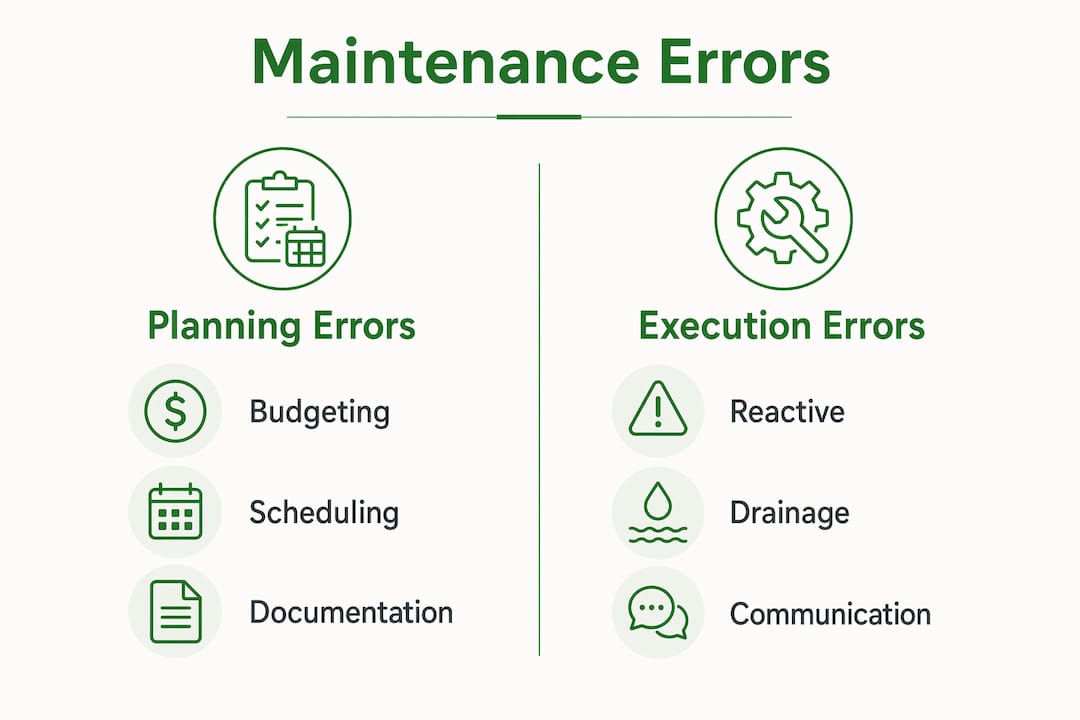
Inadequate planning is the second most common category of property maintenance mistakes, and it is the one most likely to catch property managers off guard. The damage is not visible until the bill arrives.
Key budgeting and planning errors include:
- Outdated maintenance forecasts. Smart Strata identifies outdated sinking fund forecasts as a direct cause of funding shortfalls and deferred maintenance. If your budget was set three years ago and has not been revised, it does not reflect current material costs, labour rates, or the actual condition of your assets.
- No deferred maintenance register. Every task you push to next season accumulates. Without a written list, deferred items disappear from view and resurface as emergencies.
- Misaligned maintenance timing. Scheduling concrete sealing in November in Calgary, or lawn aeration during a drought, wastes money and produces poor results. Timing maintenance to seasonal conditions is a planning discipline, not a luxury.
- Underestimating scope. A customised maintenance plan accounts for the full scope of work across all seasons. Without one, individual tasks get quoted and executed in isolation, which is almost always more expensive than bundled, scheduled service.
Pro Tip: Review your maintenance budget every January. Compare what you spent the previous year against what you planned. Any gap of more than 15% signals a forecasting problem that needs correcting before the new season starts.
Deferred maintenance compounds. A lawn bed that needed edging and top-dressing in spring will need full renovation by autumn if ignored. The cost difference between the two is significant, and the compounding effect applies to every system on your property simultaneously. Effective maintenance scheduling is the tool that breaks this cycle.
Which coordination and communication errors hinder effective maintenance?
Poor coordination between property owners, managers, and service vendors is a consistent source of missed tasks, duplicated work, and budget overruns. The errors in property upkeep caused by communication gaps are often invisible until a major failure surfaces.
Common coordination failures include:
- Undefined roles and oversight. Smart Strata stresses that clear roles are essential for maintaining project direction. When no one person owns a maintenance outcome, accountability dissolves and tasks fall through.
- Vague service scopes. A contract that says “lawn care” without specifying frequency, edging, debris removal, and seasonal transitions creates disputes. MetroMobileWash notes that unclear vendor expectations frequently cause underperformance and tenant dissatisfaction.
- No written maintenance records. Oxmaint identifies inadequate maintenance records as a core failure in property upkeep programs. Without records, you cannot track what was done, when, or by whom. You cannot identify patterns or justify budget requests.
- Reactive vendor relationships. Calling a contractor only when something breaks means you have no established relationship, no preferred pricing, and no scheduling priority. Vendors serve their regular clients first.
The fix is straightforward but requires discipline. Write down who is responsible for each maintenance category, what the service scope includes, and how completion will be documented. Review this with every vendor at the start of each season.
What are common outdoor and water management maintenance errors?
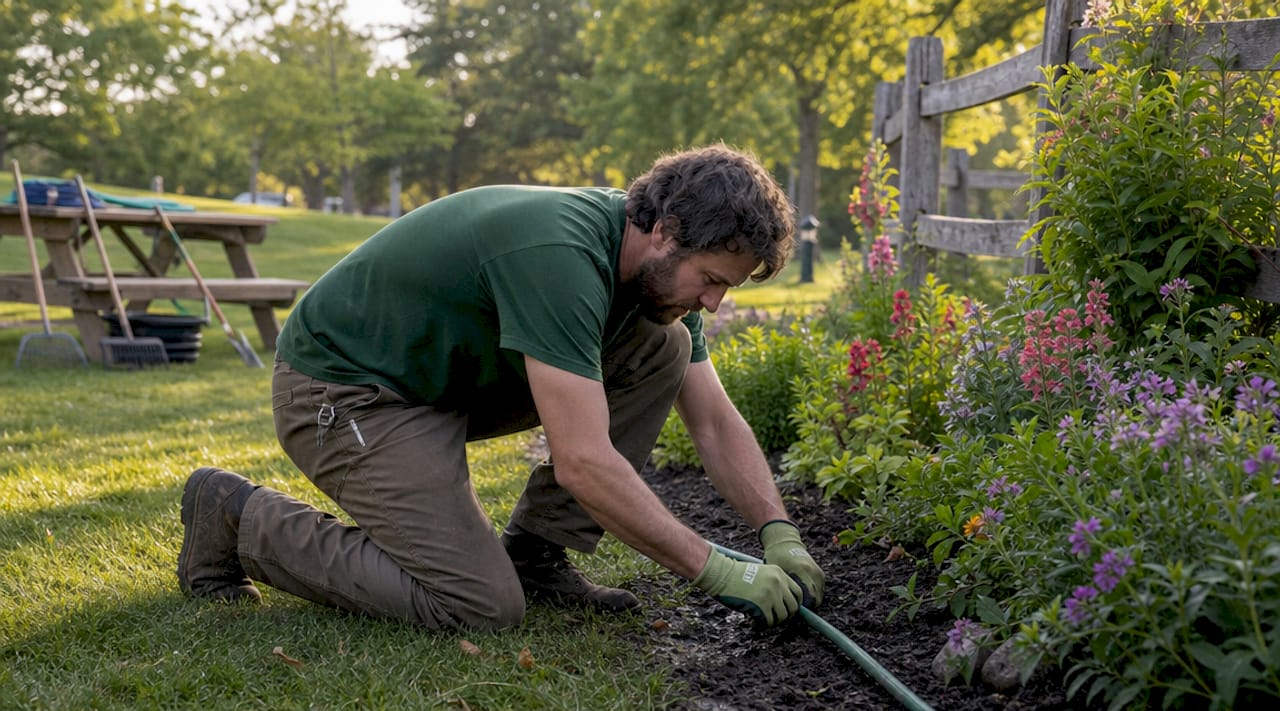
Outdoor property care is where the most visible and most preventable errors in property upkeep occur. Water is the primary cause of outdoor deterioration, and most water-related damage traces back to ignored or misunderstood drainage issues.
| Error | Consequence |
|---|---|
| Improper grading away from foundation | Water pools against structure, causing infiltration and frost heave |
| Downspouts discharging too close to hardscape | Erosion under patios and retaining walls, leading to shifting and cracking |
| Gutters with incorrect pitch | Water retention causes corrosion and overflow onto fascia and siding |
| No downspout extensions | Concentrated discharge saturates soil near the foundation |
| Neglected concrete cleaning and sealing | Surface absorption of salts and moisture accelerates spalling |
Grading and runoff management are the invisible foundations of outdoor longevity. As gconstructionlandscape explains, grading errors degrade outdoor installations by directing water toward structures rather than away from them. Most homeowners never inspect their grading. They notice the cracked patio years later and assume it was a material failure.
Gutters are equally misunderstood. Ridge Top Exteriors points out that visually level gutters often retain water, causing corrosion and overflow. A gutter needs a slight pitch toward the downspout to drain properly. If yours look perfectly flat, they probably are, and that is a problem.
Pro Tip: After the next heavy rain, walk your property and watch where water flows. Note any pooling within two metres of your foundation, any overflow from gutters, and any erosion channels in your lawn beds. These are your highest-priority maintenance items.
For Calgary homeowners, proper gutter maintenance is especially critical given the volume of spring snowmelt and the freeze-thaw cycles that stress every outdoor surface from October through April.
How can preventive maintenance programs fail?
Preventive maintenance (PM) is the industry term for scheduled, condition-based upkeep designed to prevent failures before they occur. Most homeowners and property managers believe they are doing PM when they are actually doing loosely scheduled reactive maintenance. The difference matters.
Preventive maintenance programs fail for these specific reasons:
- Wrong intervals. Oxmaint cites PM completion rates below 90% and low planned-to-reactive ratios as indicators of ineffective PM programs. Scheduling lawn aeration every two years when your soil compacts annually is an interval error. The task exists on paper but delivers no real benefit.
- Incomplete execution. High schedule compliance without quality execution produces programs that look good on paper but fail in practice. Checking a box for “gutter cleaning” when only the front gutters were cleared is incomplete execution.
- No adjustment for asset age. A five-year-old concrete driveway and a fifteen-year-old one need different maintenance frequencies. Effective PM adjusts intervals based on asset condition, not just the calendar.
- Missing parts and materials. Arriving to complete a maintenance task without the right materials or equipment means the job gets deferred. Deferred PM tasks accumulate into the same backlog that reactive maintenance creates.
- No performance metrics. If you are not tracking what was done, when, and what condition the asset was in afterward, you have no basis for improving your programme. A property maintenance checklist is the minimum documentation standard every homeowner should maintain.
The goal of a PM programme is to spend predictable, modest amounts regularly rather than unpredictable, large amounts occasionally. That goal is only achievable when intervals, execution quality, and documentation are all treated as equally important.
Key takeaways
The most costly property maintenance errors share a common root: they are all avoidable with a written plan, clear roles, and seasonal action.
| Point | Details |
|---|---|
| Reactive maintenance costs more | Waiting for failures forces rushed repairs at higher cost with less contractor choice. |
| Budgets must be updated annually | Outdated forecasts cause funding gaps and deferred maintenance that compounds over time. |
| Clear scopes prevent disputes | Written service scopes with defined frequency and reporting reduce vendor misalignment. |
| Water management is the top outdoor priority | Grading, gutter pitch, and downspout placement determine the lifespan of all outdoor surfaces. |
| PM quality matters as much as PM frequency | Incomplete task execution and wrong intervals make preventive programmes ineffective despite good intentions. |
What i have learned after years of outdoor property work
Lewie’s Take on What Actually Goes Wrong
The mistake I see most often is not neglect. It is misplaced confidence. Homeowners walk their property every day and assume that because nothing looks dramatically wrong, nothing is wrong. But the damage that costs the most is always the damage you cannot see yet.
Water is the best example. I have seen patios that looked fine from the surface but were sitting on eroded, saturated soil because a downspout had been discharging in the same spot for eight years. The patio did not fail suddenly. It failed slowly, invisibly, and then all at once.
The second thing I have learned is that documentation is not bureaucracy. It is memory. When you write down what was done and when, you create a record that tells you what to expect next. Without it, every season feels like starting from scratch.
My honest recommendation is this: treat your property like a vehicle. You would not skip oil changes because the engine sounds fine. Apply that same logic to your gutters, your lawn beds, your concrete, and your drainage. The effective maintenance scheduling that works for large property portfolios works just as well for a single home. The principles are identical. The scale is just smaller.
Calgary’s climate is unforgiving to properties that are not actively maintained. Freeze-thaw cycles, heavy snowfall, and spring runoff create conditions that accelerate every one of the errors described in this article. The homeowners and property managers who avoid expensive repairs are not lucky. They are consistent.
— Lewie
Let Yearlong handle the hard part
Avoiding frequent property care errors is easier when you have a reliable team handling the details. Yearlong has been serving Calgary homeowners and property managers since 2017, with services designed to prevent the exact mistakes covered in this article.
From seasonal cleanup services that clear debris before it causes drainage problems, to lawn bed maintenance that keeps your outdoor spaces healthy year-round, Yearlong builds maintenance programmes around your property’s specific needs. Every service comes with a satisfaction guarantee and the kind of local knowledge that only comes from working in Calgary’s climate for nearly a decade. Get in touch with Yearlong today to build a maintenance plan that keeps small problems from becoming expensive ones.
FAQ
What are the most common property maintenance errors?
The most common errors are reactive maintenance, outdated budgeting, unclear vendor scopes, poor drainage management, and incomplete preventive maintenance execution. Each of these compounds over time and increases repair costs significantly.
How does poor drainage cause property damage?
Improper grading and downspout placement direct water toward foundations and hardscape, causing erosion, frost heave, and structural shifting. Addressing grading and runoff issues before they worsen is the most cost-effective outdoor maintenance step you can take.
Why do preventive maintenance programmes fail?
Preventive maintenance programmes fail when intervals are set incorrectly, tasks are executed incompletely, or schedules are not updated as assets age. Oxmaint identifies low PM completion rates and poor planned-to-reactive ratios as the clearest signs of a failing programme.
How often should i update my property maintenance budget?
Review and update your maintenance budget every year. Smart Strata identifies outdated sinking fund forecasts as a direct cause of deferred maintenance and unexpected costs, particularly for major exterior repairs.
What is the difference between reactive and preventive maintenance?
Reactive maintenance addresses problems after they occur. Preventive maintenance schedules upkeep based on asset condition and age to prevent failures before they happen. Preventive maintenance consistently costs less and causes less disruption than reactive repairs.