

TL;DR:
- Annual maintenance involves comprehensive inspections, professional servicing, and compliance testing to protect property value and ensure legal safety standards. Mandatory tasks include HVAC tune-ups, roof and gutter inspections, water heater flushing, and safety device testing, with additional obligations for fire alarms, backflow preventers, and elevators for larger properties. Proper planning, budgeting, and regular updates, especially tailored to Calgary’s climate, help property owners avoid costly repairs and legal liabilities.
Annual maintenance is the once-per-year comprehensive servicing and inspection of key home or building systems required for safety, compliance, and long-term property value. For homeowners and property managers alike, understanding what is included in annual maintenance removes the guesswork and prevents the kind of costly surprises that come from deferred upkeep. A well-structured annual maintenance plan covers everything from HVAC tune-ups and roof inspections to compliance-driven tests like fire alarm checks and backflow preventer certification. This guide breaks down every component so you know exactly what to expect, how to budget, and when to call a licensed contractor.
What are the main components included in an annual maintenance checklist?
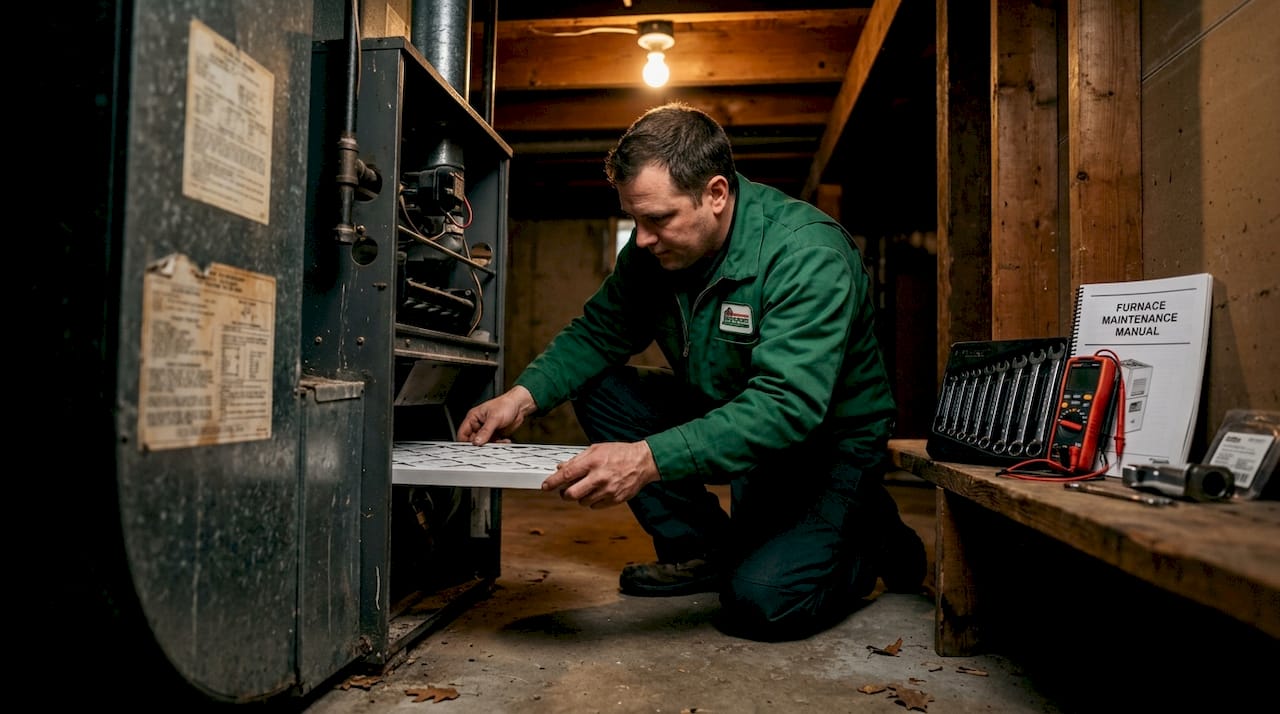
Annual home maintenance typically comprises professional HVAC service, water heater flushing, and a full roof inspection as its core tasks. These are not optional extras. They are the foundation of any credible annual maintenance checklist, and skipping them creates compounding risk over time.
Here is what a complete annual maintenance checklist covers for a residential property:
- HVAC service: A professional tune-up twice per year, once in spring before cooling season and once in fall before heating season, keeps your system running efficiently and extends its lifespan. Filters, coils, and refrigerant levels all need checking.
- Roof inspection: A visual and physical check for missing shingles, damaged flashing, and signs of water infiltration. Catching a small leak early costs a fraction of what a full repair costs after a Calgary winter.
- Water heater flush: Sediment builds up in the tank over time and reduces heating efficiency. Flushing the tank annually removes that buildup and extends the unit’s service life.
- Chimney inspection and cleaning: If you have a wood-burning or gas fireplace, an annual chimney sweep removes creosote and checks for blockages or cracks. This is a fire safety requirement, not just a comfort measure.
- Gutter cleaning: Blocked gutters cause water to back up against fascia boards and foundations. Clean them at least once per year, ideally after the last leaves fall in autumn.
- Safety device testing: Smoke detectors and carbon monoxide detectors need battery replacement and functional testing every year. This takes 20 minutes and is non-negotiable.
Pro Tip: Schedule your HVAC service and roof inspection on the same day each year, ideally in late September. Calgary’s shoulder season gives contractors more availability and gives you time to address any issues before the first hard freeze.
The items above represent the minimum for a single-family home. Older homes, properties with mature trees nearby, or houses with flat roofs will have additional items to add to the list.
How do compliance and safety inspections fit into annual maintenance for property managers?
Property managers carry a different level of responsibility than homeowners. Annual inspections for fire alarms, elevators, generators, and backflow devices require licensed contractors and produce documentation that must be kept on file for regulatory and insurance purposes. Missing one of these inspections is not just an oversight. It can void your insurance coverage or trigger a municipal fine.
The four compliance-critical annual tasks for multi-unit and commercial properties are:
- Fire alarm system testing: NFPA 72 mandates annual testing of every detection device and notification appliance in a commercial or multi-family building. A licensed fire safety contractor must perform the test and provide a written report. This is not a task you can delegate to a building superintendent.
- Backflow preventer testing: Annual field tests are required for most testable assemblies, including RPZ (Reduced Pressure Zone), DCVA (Double Check Valve Assembly), and PVB (Pressure Vacuum Breaker) devices. Reporting requirements vary by municipality, so confirm with your local water authority what documentation they require.
- Elevator inspection and certification: Any building with a passenger elevator must have it inspected and certified annually by a provincially licensed inspector. The certificate must be posted in the elevator cab.
- Emergency generator load bank testing: Generators that serve life safety systems need an annual load bank test to confirm they can carry their rated load under real conditions. A generator that starts but cannot sustain load is a compliance failure.
Annual maintenance is more than a visual walkthrough. It includes compliance testing and documentation that insurers and municipal authorities require. A missed inspection creates a paper gap that can become a legal liability the moment something goes wrong.
DIY visual checks cannot replace documentation-heavy inspections like fire alarm testing and backflow certification. The distinction matters because your insurer will ask for records if you ever make a claim.
How does annual maintenance differ by property type and climate?
The components of annual maintenance scale significantly depending on whether you manage a single-family home, a rental duplex, or a 40-unit apartment building. Climate adds another layer. In Calgary, freeze-thaw cycles, heavy snowfall, and dry summers create maintenance priorities that simply do not apply in milder regions.
| Property type | Key annual tasks | Estimated annual cost |
|---|---|---|
| Single-family home | HVAC, roof, gutters, water heater, safety devices | $1,500 to $4,000 |
| Rental property | Above plus tenant-related wear, appliance checks | $500 to $1,500 per unit |
| Multi-family building | All of the above plus fire, elevator, backflow compliance | $3,000 to $10,000+ |
| Small commercial | Compliance-heavy, exterior, HVAC, parking lot | Varies widely |
Rental property annual maintenance typically runs 6 to 8 hours of coordination time and between $500 and $1,500 per unit in direct costs. That estimate covers scheduling, access coordination, and required professional services. It does not account for unexpected repairs uncovered during inspections.
For Calgary properties specifically, the annual maintenance checklist must include winterisation tasks that are not standard in warmer climates. Exterior hose bibs need to be shut off and drained before freeze-up. Concrete driveways and walkways benefit from sealing before winter to prevent spalling from de-icing salts. A year-round property maintenance guide built around Calgary’s climate will serve you far better than a generic national template.
Building age also matters. A home built before 1990 may have original plumbing, knob-and-tube wiring concerns, or asbestos-containing materials that require specialised inspection protocols. Newer builds have fewer legacy issues but may still be under warranty, meaning some annual service work must be performed by authorised contractors to keep the warranty valid.
Pro Tip: If you manage multiple rental properties, stagger your annual inspections across the calendar year rather than scheduling them all in spring. This spreads your cash outlay and keeps contractors from being overbooked when you need them most.
How should you budget and plan for annual maintenance?
Homeowners typically budget between 1 and 4% of their home’s value annually for maintenance and repairs, averaged across multiple years. For a $500,000 Calgary home, that translates to $5,000 to $20,000 per year. The wide range reflects the uneven nature of property maintenance. Most years cost less. The year you replace a furnace or a roof costs significantly more.
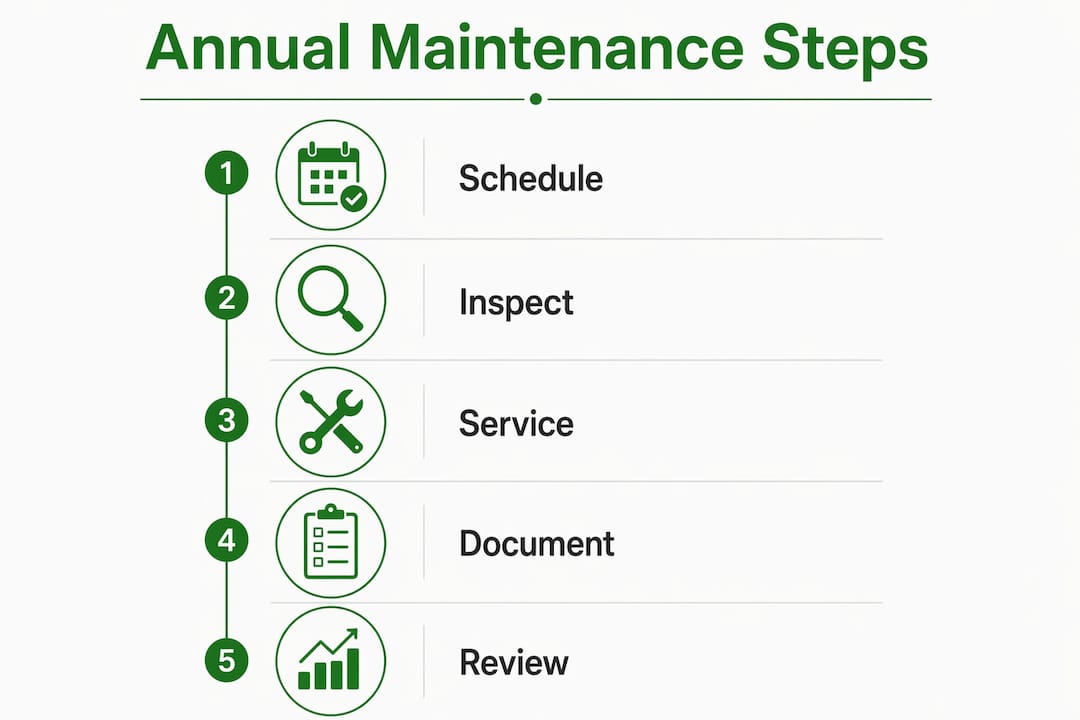
Effective budgeting and planning for annual upkeep requirements involves several practical steps:
- Use a multi-year average, not a single-year target. A new roof costs $10,000 to $20,000 and lasts 20 to 25 years. Spreading that cost across its lifespan gives you a more accurate annual budget figure than trying to save the full amount in one year.
- Build a maintenance calendar, not just a list. Assign every task to a specific month. HVAC in April and September. Gutters in November. Roof inspection in October. A calendar forces action; a list sits in a drawer.
- Prioritise compliance tasks first. Fire alarm testing, backflow certification, and elevator inspection have legal deadlines. Schedule these before anything else and confirm contractor availability months in advance.
- Document everything. Keep invoices, inspection reports, and contractor certifications in a single folder, physical or digital. Your insurer and any future buyer will want this paper trail.
- Review and update your plan annually. Static maintenance lists lead to missed compliance and maintenance gaps over time. Review your checklist every Q4 and update it whenever a major system is replaced or a new compliance requirement comes into effect.
A common pitfall is treating annual maintenance as a single event rather than a year-long programme. Spreading tasks across all four seasons reduces the financial shock of a single large bill and keeps your property in consistently good condition. A property maintenance checklist for homeowners built around seasonal timing is one of the most practical tools you can use.
Key takeaways
Annual maintenance is a structured, year-round programme of inspections, professional servicing, and compliance testing that protects property value, prevents costly repairs, and satisfies legal and insurance obligations.
| Point | Details |
|---|---|
| Core annual tasks | HVAC service, roof inspection, water heater flush, gutter cleaning, and safety device testing form the baseline for any home. |
| Compliance is non-negotiable | Fire alarm testing, backflow certification, and elevator inspection require licensed contractors and written documentation. |
| Budget by percentage | Plan for 1 to 4% of home value annually, averaged across multiple years to account for large periodic replacements. |
| Climate shapes the checklist | Calgary’s freeze-thaw cycles require winterisation tasks like hose bib drainage and concrete sealing not found in generic templates. |
| Treat the checklist as a living document | Review and update your annual maintenance plan every Q4 or after any major system replacement to prevent compliance gaps. |
Why I stopped treating annual maintenance as a single to-do list
After years of working with Calgary homeowners and property managers, the pattern I see most often is this: someone has a list, they complete most of it in a single weekend in spring, and they feel done. The problem is that annual maintenance is not a weekend project. It is a year-long discipline.
The tasks that get missed are almost always the compliance ones. Not because people do not care, but because fire alarm testing and backflow certification do not feel urgent until they are. A smoke detector that beeps when you press the test button is not the same as a certified annual functional test of every device in a building. Insurers know the difference, and so do municipal inspectors.
What I have found works is treating the annual maintenance plan as a living document rather than a fixed list. When a furnace gets replaced, the service schedule changes. When a property adds a new irrigation system, backflow testing obligations may change too. A plan that was accurate three years ago may have real gaps today.
The other thing worth saying plainly: DIY inspections have genuine value for low-risk visual checks, but they cannot substitute for licensed contractor work where compliance documentation is required. Knowing which tasks fall into which category is the single most useful thing a property owner can understand about their annual maintenance obligations.
— Lewie
Keep your Calgary property on schedule with Yearlong
Yearlong has been helping Calgary homeowners and property managers stay on top of outdoor property upkeep since 2017. If your annual maintenance plan includes exterior tasks like lawn care, bed maintenance, or seasonal cleanups, Yearlong handles the scheduling and execution so nothing gets missed. Their seasonal clean-up services cover spring and fall outdoor preparation, while lawn bed maintenance keeps your property looking sharp year-round. For a full picture of outdoor lawn care options, their Calgary lawn care page outlines everything available. Reliable, local, and built around Calgary’s climate.
FAQ
What is included in annual home maintenance?
Annual home maintenance includes HVAC servicing, roof inspection, water heater flushing, gutter cleaning, chimney inspection if applicable, and testing of smoke and carbon monoxide detectors. Properties with compliance obligations, such as rentals or multi-family buildings, also require fire alarm testing and backflow preventer certification.
How much should I budget for annual property maintenance?
Budget between 1 and 4% of your home’s value per year, averaged across multiple years. For a $500,000 home, that means planning for $5,000 to $20,000 annually, with higher costs in years when major systems like roofing or HVAC require replacement.
What annual maintenance tasks require a licensed contractor?
Fire alarm system testing, backflow preventer certification, elevator inspection, and emergency generator load bank testing all require licensed contractors. These tasks produce documentation that insurers and municipal authorities require, and they cannot be completed by a homeowner or building superintendent.
How often should I update my annual maintenance checklist?
Review and update your maintenance checklist every Q4 and any time a major building system is replaced or a new compliance requirement comes into effect. A static list creates gaps that lead to missed inspections and potential insurance or regulatory issues.
Does annual maintenance differ for Calgary properties?
Yes. Calgary’s climate adds winterisation tasks to the standard checklist, including draining exterior hose bibs, sealing concrete surfaces before freeze-up, and preparing irrigation systems for winter shutdown. These steps protect against freeze-thaw damage that is not a concern in warmer Canadian cities.