

TL;DR:
- Proper property maintenance is a crucial investment that extends beyond fixing immediate issues and improves operational costs, legal compliance, and customer confidence. Preventive upkeep offers a significant return on investment, reduces long-term costs, and ensures business continuity by maintaining safety standards and curb appeal. Effective strategies involve structured scheduling, thorough documentation, and balancing internal tasks with professional contracting to uphold safety, appearance, and customer satisfaction.
Most small business owners think of property maintenance as something to deal with when something breaks. That’s the wrong starting point. The role of property maintenance for business owners goes far beyond fixing a leaky tap or patching a cracked walkway. Handled well, facility upkeep, which is the industry’s standard term for the ongoing care of a building and its systems, directly shapes your operating costs, your legal compliance, and whether customers walk through your door with confidence or turn around at the entrance.
Key takeaways
| Point | Details |
|---|---|
| Maintenance is an investment | Preventive upkeep yields a 2-4x return compared to reactive repairs. |
| Neglect multiplies costs | Deferred maintenance costs 3-5 times more than planned work over the life of a building. |
| Curb appeal drives customers | First impressions formed outside your building shape customer confidence before anyone steps inside. |
| Documentation protects you | Poor record-keeping contributes to the majority of building code violations and liability exposure. |
| Seasonal planning is non-negotiable | Calgary’s climate demands year-round exterior strategies, from lawn care in summer to safe snow clearance in winter. |
The role of property maintenance for business owners
Facility upkeep falls into two broad categories: preventive and reactive. Preventive maintenance is scheduled, intentional work carried out before something fails. Reactive maintenance is the scramble that happens after it does. Most small business owners default to reactive simply because preventive work is invisible when it’s working. The bill you don’t receive because you serviced your HVAC unit in spring never shows up in your accounting software.
The core components of a sound maintenance programme include:
- Scheduled inspections covering structural, mechanical, electrical, and plumbing systems
- Exterior cleaning of sidewalks, signage, facades, and parking areas
- Landscaping and grounds care, including lawn health, bed maintenance, and seasonal cleanup
- Safety and compliance checks such as fire extinguisher inspections and emergency lighting tests
- Prompt repairs before minor defects become structural problems
When these components are neglected, the consequences compound. Unplanned repairs arrive at the worst times and cost far more than budgeted work. Compliance failures attract fines. A deteriorating exterior signals to customers and potential tenants that the business inside doesn’t pay attention to detail. For a small business owner, that reputation damage can be genuinely costly in ways that never appear on an invoice.
Facility upkeep also underpins business continuity. A retail space with a failed heating system in January loses customers instantly. A restaurant with a blocked drain faces a health inspection failure. The importance of property upkeep is not a matter of aesthetics alone. It is a matter of staying open and operating reliably.
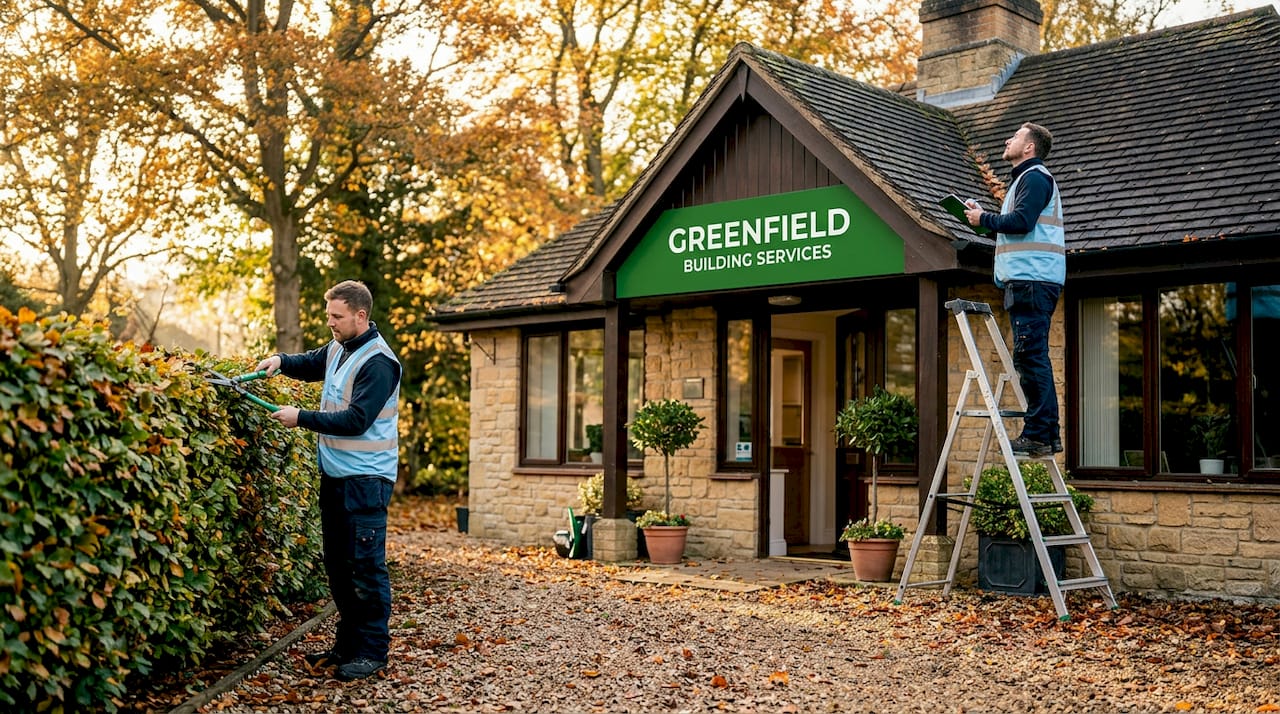
Operational benefits of proactive maintenance
The financial case for preventive maintenance is clear. Deferred maintenance costs 3-5 times more than planned work, largely because neglected systems fail earlier and require full replacement rather than routine servicing. A commercial HVAC unit that is properly maintained lasts 18-22 years. Without regular attention, expect 11-14 years and a costly emergency replacement somewhere in between.
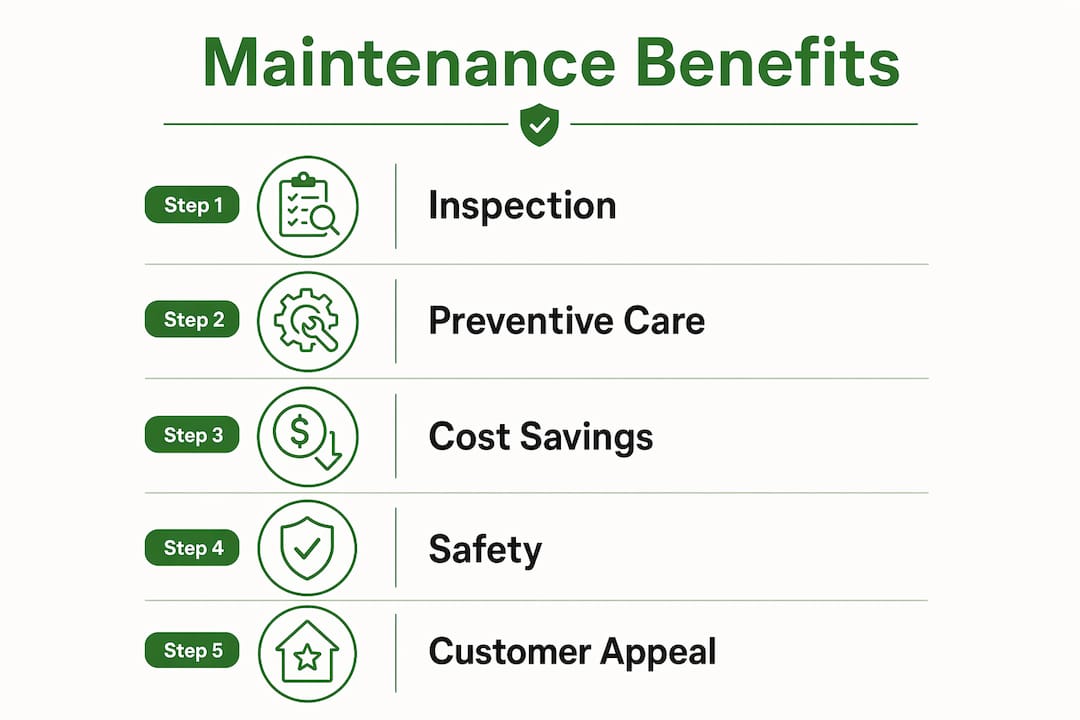
The upside is equally compelling. Preventive maintenance yields a 2-4x return on investment, with some facility management analyses reporting up to 545% ROI when emergency repair and equipment replacement costs are factored in over time.
For small business owners, the practical property maintenance benefits include:
- Lower emergency repair costs because problems are caught before they escalate
- Reduced downtime from system failures that interrupt service to customers
- Longer equipment lifespans across HVAC, plumbing, and electrical systems
- Predictable budgeting through scheduled maintenance contracts rather than surprise invoices
- Reduced liability exposure by staying current on safety inspections
On the safety and compliance side, fire safety inspections follow legally common minimums in most Canadian jurisdictions: monthly visual checks of fire extinguishers, monthly emergency lighting tests, and quarterly sprinkler inspections. Missing these is not just a fine waiting to happen. It is a genuine risk to people on your property.
Pro Tip: Schedule your facility inspections by frequency (monthly, quarterly, semi-annual, annual) and keep a log of every result. This gives you an audit trail that protects your business in any compliance review or insurance claim.
Curb appeal, customer experience, and reputation
Here is something most articles on facility upkeep miss. Customers form opinions about your business before they ever speak to a staff member. The state of your exterior, your parking lot, your landscaping, and your entrance tells a complete story in under thirty seconds.
Exterior cleaning prevents structural damage, maintains curb appeal, and extends the lifespan of building materials. Dirt, mould, and algae accelerate deterioration and trap moisture against surfaces. A building showing visible neglect is also flagged by appraisers as deferred maintenance, which affects property value directly.
The customer experience argument is backed by real numbers. A case study tracking a multifamily property’s shift from manual maintenance workflows to structured facility management reported a 42% reduction in tenant turnover. That figure translates directly: when the physical environment is well maintained, people stay. When it is not, they leave and they tell others.
“Customer experience is strongly shaped by building condition. Visible maintenance quality impacts tenant satisfaction and lease renewals in ways that no amount of marketing can overcome.”
For a small business serving walk-in customers rather than tenants, the same logic applies. A clean, well-kept exterior communicates that the people running this business are organised and attentive. It builds confidence before a word is spoken. As a property care strategy for businesses, exterior upkeep is one of the highest-return activities available because it works on every single person who approaches your door.
Practical maintenance strategies for small business owners
Knowing you should maintain your property and knowing how to organise it are two different things. Here is a structured approach that works for small commercial operations.
Build a frequency-based schedule. Divide tasks into monthly, quarterly, semi-annual, and annual categories. Monthly tasks might include exterior walkthroughs, fire equipment checks, and parking lot inspections. Quarterly tasks cover HVAC filter changes, gutter checks, and pest prevention. Annual tasks address roof inspections, concrete sealing, and full facility audits.
Separate life-safety from cosmetic tasks. Facility inspection checklists differentiate between life-safety maintenance (fire systems, emergency egress, electrical safety) and cosmetic work (paint, signage, landscaping). Both matter, but life-safety tasks are non-negotiable and must be prioritised in your schedule and budget.
Decide what to handle internally versus what to contract out. Interior cleaning and minor repairs can often be managed in-house. Exterior cleaning, snow removal, landscaping, and technical inspections are almost always better handled by professional contractors who carry their own liability coverage.
Document everything. Documentation failures contribute to 62% of building code violations. Use GPS-stamped photos where possible, record corrective actions taken, and store all inspection results in a central location. A simple shared folder works for small operations. A computerised maintenance management system (CMMS) works better as you scale.
Plan for Calgary’s seasons. Summer means lawn bed maintenance, exterior cleaning, and irrigation checks. Winter means safe and timely snow removal, salting, and monitoring for ice on walkways. Letting either season catch you unprepared means higher costs and real safety risk for staff and customers.
Here is a practical comparison to help you weigh how to structure your maintenance approach:
| Approach | Best for | Key advantage | Watch out for |
|---|---|---|---|
| In-house team | Larger operations with volume | Lower per-task cost at scale | Training, equipment, and liability costs |
| External contractors | Most small businesses | Specialist skill and liability coverage | Scheduling gaps if not planned ahead |
| Mixed model | Growing businesses | Flexibility and cost control | Coordination complexity |
Pro Tip: When hiring exterior maintenance contractors, ask specifically whether they carry commercial general liability insurance. If a contractor slips on your property during a snow removal job, their insurance coverage determines whether that claim lands on them or on you.
Common mistakes to avoid
Even well-intentioned business owners fall into patterns that undermine their maintenance efforts. The most damaging mistakes are not dramatic. They are quiet habits that accumulate over time.
- Delaying repairs because the business is busy. A small roof leak ignored for one season becomes a mould problem and structural repair the next. The cost multiplier is reliable.
- Treating cosmetic fixes as a substitute for compliance work. Fresh paint over a water-damaged wall looks fine until an inspector sees it. Prioritise the fix, then the appearance.
- Skipping documentation. Even if your property is well maintained, the absence of records means you cannot prove it during an insurance claim, a tenancy dispute, or a regulatory audit.
- Underestimating exterior maintenance. Your outdoor property upkeep is what every customer, supplier, and passing prospect sees. Neglecting it is free advertising for the wrong message.
- Assuming reactive maintenance is cheaper. It rarely is. The property maintenance benefits of a preventive approach consistently outperform emergency responses on both cost and disruption.
My perspective on maintenance as a business strategy
I’ve spent years watching small business owners treat property maintenance as the thing they get to after everything else is done. And I understand it. When you are managing staff, customers, suppliers, and cash flow, the building feels like a static thing in the background.
What I’ve seen consistently is that the businesses that get this wrong pay for it twice. They pay for the deferred repair, and then they pay again in lost customers or compliance fines they didn’t see coming. The businesses that get it right don’t necessarily spend more. They just spend earlier and more predictably.
My honest take is this: the exterior of your property is your lowest-cost marketing channel. You are not paying per impression. Every person who walks past your building or pulls into your parking lot is receiving a message. Whether that message is positive or negative depends entirely on whether someone has been keeping up with the basics.
The shift from viewing maintenance as a cost to viewing it as a protection of everything you’ve built is not just philosophical. It shows up in your numbers, your compliance record, and the loyalty of your customers. I’ve seen it happen for businesses of every size. The ones who make that shift early build something more resilient.
— Lewie
Keep your property working for your business
If you’re ready to stop reacting and start maintaining, Yearlong makes it straightforward for Calgary small business owners to get consistent, professional outdoor care without the scheduling headaches.

From lawn bed maintenance to year-round snow removal services and exterior lawn care, Yearlong’s team handles the seasonal demands that protect your property’s appearance, safety, and value. You get reliable service backed by local Calgary climate knowledge, a satisfaction guarantee, and the kind of dependable scheduling that means your exterior always reflects well on your business. Reach out to Yearlong to discuss a maintenance package built around what your property actually needs.
FAQ
What is the role of property maintenance for business owners?
Property maintenance, also called facility upkeep, keeps a business operating safely, legally, and attractively. It covers preventive inspections, repairs, exterior care, and compliance checks that protect both the physical property and the business’s reputation.
How much does deferred maintenance cost compared to preventive maintenance?
Deferred maintenance typically costs 3-5 times more than planned maintenance over time, primarily because neglected systems fail prematurely and require full replacement rather than routine servicing.
How does property maintenance affect customer experience?
A well-maintained exterior creates a positive first impression that builds customer confidence before they enter. Research shows that improving maintenance workflows can reduce tenant turnover by 42%, reflecting how directly building condition shapes satisfaction and loyalty.
How often should a small business inspect its commercial property?
A practical schedule organises inspections by frequency: monthly for fire safety and exterior walkthroughs, quarterly for HVAC and structural checks, and annually for roofing and full facility audits.
Why is documentation important in commercial property maintenance?
Documentation failures contribute to 62% of building code violations. Keeping signed inspection records, corrective action logs, and photo evidence protects your business during audits, insurance claims, and tenancy disputes.