

TL;DR:
- Debris removal involves sorting, staging, transporting, and disposing of waste materials according to local regulations. Proper sorting, safety precautions, and administrative steps like permits are crucial to avoid delays, fines, and health hazards. Regular proactive cleanup saves money, reduces hazards, and ensures compliance with local bylaws.
Debris removal is one of those property maintenance tasks that sounds straightforward until you’re standing in your yard after a storm, staring at a pile of branches, broken fencing, and soggy insulation, unsure where to start. What is debris removal, exactly, and what does the process actually involve? For most Calgary homeowners, the answer is more layered than simply hauling junk to the curb. There are categories to understand, safety rules to follow, costs to anticipate, and local bylaws that can make or break how smoothly your cleanup goes. This guide covers all of it.
Table of Contents
- Key takeaways
- What debris removal actually involves
- Safety and staying on the right side of the rules
- Cost factors and service options
- Keeping your property clear year-round
- My honest take on debris removal
- Keep your Calgary property in top shape
- FAQ
Key takeaways
| Point | Details |
|---|---|
| Debris has multiple categories | Sorting vegetative, construction, hazardous, and electronic debris correctly prevents fines and delays. |
| Safety comes before speed | Personal protective equipment and proper documentation protect your health and your insurance claim. |
| Administrative steps matter | Permits and authorisation forms are often the most overlooked part of the debris removal process. |
| Costs vary significantly | Volume, debris type, and disposal fees all affect your final bill, whether you DIY or hire help. |
| Year-round upkeep saves money | Seasonal cleanups reduce the scale and cost of major debris removal jobs. |
What debris removal actually involves
At its core, debris removal is the collection, sorting, transport, and disposal of waste materials from a property. That definition sounds simple, but the process varies enormously depending on what kind of debris you’re dealing with.
The EPA identifies five major debris categories used to organise removal and disposal after residential cleanup events:
- Vegetative debris: Branches, leaves, grass clippings, shrub trimmings, and fallen trees. This is the most common type on Calgary properties, especially after windstorms or seasonal clearing.
- Construction and demolition debris: Lumber, drywall, concrete, roofing materials, and metal. What is construction debris in a residential context? Think renovation offcuts, old decking, or materials left behind after a contractor finishes a job.
- Household garbage: General waste that does not fall into a specialised category but still requires proper disposal.
- Hazardous waste: Paint, solvents, pesticides, batteries, and other materials that require special handling. These cannot go in a standard bin.
- Large appliances and electronics: Refrigerators, televisions, and other e-waste that require separate collection streams.
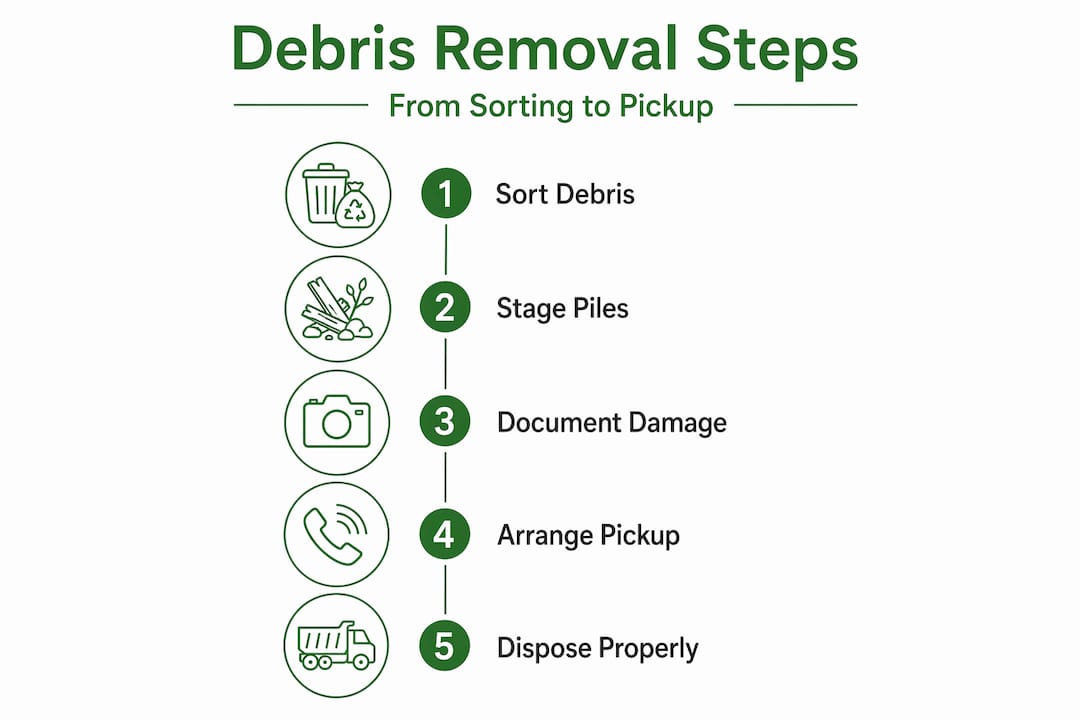
Sorting debris before removal is the single most important step you can take. Inaccurate sorting can cause contamination issues and legally non-compliant waste handling that results in costly rework. Local governments specify sorting requirements that vary by jurisdiction, so checking your municipality’s guidelines before you start is not optional.
Once debris is sorted, the general removal process involves staging piles near the curb or a designated pickup point, then choosing your removal method. Manual collection works for small volumes of yard waste. Mechanical equipment such as chippers or skid steers suits larger vegetative or construction loads. Haul-away services transport sorted debris to licensed facilities, and some full-service companies handle the entire process from sorting to final disposal. Understanding how to remove debris efficiently often comes down to matching the method to the volume and type of material you have.
Safety and staying on the right side of the rules
The physical work of removing yard debris or construction material is only part of the picture. Safety and regulatory compliance are where many homeowners run into trouble, often because they underestimate both.
Personal protective equipment you should not skip
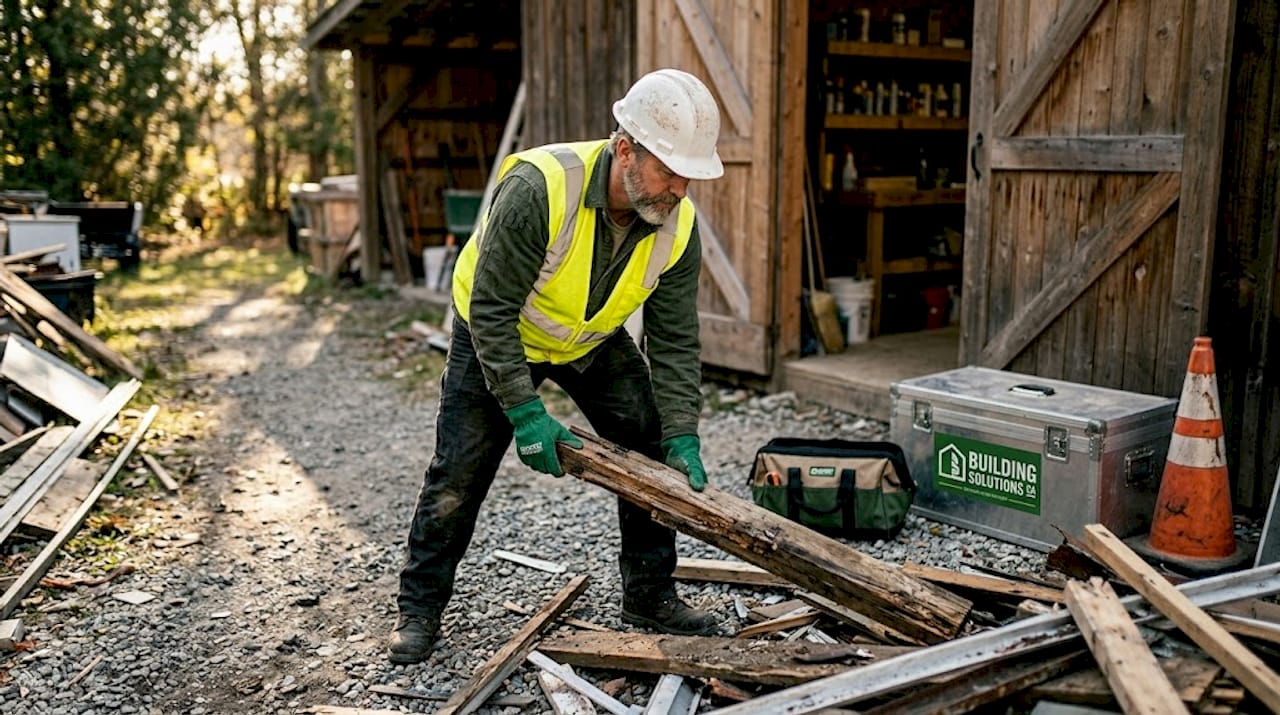
Before you pick up a single branch or bag of waste, gear up appropriately. The basics include:
- Heavy-duty work gloves to protect against punctures and splinters
- Safety glasses or goggles when working near power tools or breaking apart materials
- Steel-toed boots on any site with heavy debris
- An N95 respirator if you are working with dusty, mouldy, or potentially contaminated materials
- High-visibility clothing if you are working near a road or shared access point
Handling hazardous materials
This is where debris cleanup gets genuinely risky if you are not careful. Debris containing toxic materials should be sealed in plastic bags to prevent airborne hazards, and you should never burn such debris. Burning treated wood, painted materials, or household chemicals releases toxins that are harmful to you, your neighbours, and the surrounding environment.
FEMA advises homeowners to document all damage with photos and video, keep receipts for disposal costs, and follow official placement instructions throughout the process. This documentation matters for insurance claims and may be required if you are seeking government assistance after a disaster event.
Pro Tip: Before you call a removal company, photograph all debris piles from multiple angles. This protects you if there is a dispute about volumes, helps you get more accurate quotes, and supports any insurance documentation you may need.
Permits and authorisation forms
Administrative tasks are often the most underestimated part of what debris removal involves, particularly after a significant event. In federally supported debris removal programmes, homeowners must submit a Right of Entry (ROE) form by a specified deadline to receive free or subsidised removal services. Missing that deadline shifts the full cost and permitting responsibility back to the property owner.
Even outside disaster contexts, some Calgary cleanup projects involving large volumes of construction debris or work near property lines may require a permit. Check with the City of Calgary before you start work on anything beyond routine yard waste.
Cost factors and service options
Understanding what drives debris removal costs helps you budget realistically and avoid surprise invoices. Typical cost drivers include volume of debris, debris type, disposal fees, labour costs, and any permits required.
Here is a comparison of the main service options available to residential property owners:
| Option | Best for | Typical cost range | Key considerations |
|---|---|---|---|
| DIY removal | Small volumes of vegetative debris | Low (time + disposal fees) | Requires your own transport and sorting knowledge |
| Dumpster rental | Mid-size renovation or yard projects | $200 to $600+ depending on size | You load it; pick-up and drop-off scheduled separately |
| Haul-away service | Mixed debris loads you cannot transport | $150 to $500+ per load | Pricing often based on truck space used |
| Full-service cleanup | Large or complex debris removal jobs | $400 to $1,500+ | Company sorts, loads, hauls, and disposes for you |
How much does debris removal cost in practice? A single truckload haul-away for standard yard waste in Calgary typically falls between $150 and $300. Add construction materials or hazardous items and that figure climbs quickly. Hiring professional debris removal services makes the most sense for large, complex, or hazardous loads where the risks of cutting corners outweigh the savings.
When evaluating companies, ask whether they are licensed to handle the debris types you have, whether disposal fees are included in the quoted price, and whether they carry liability insurance. That last point matters if equipment damages your driveway or a crew member is injured on your property.
For jobs involving significant tree debris, checking a tree service hiring checklist before you commit to a contractor can save you from common hiring mistakes.
Keeping your property clear year-round
Reactive debris removal, the kind that happens after a storm or a major project, is always more expensive and stressful than proactive upkeep. Regular seasonal cleaning and timely debris removal help prevent property hazards, maintain curb appeal, and reduce overall maintenance costs. The good news is that a straightforward routine makes a significant difference.
Here is a simple year-round approach for Calgary homeowners:
- Spring: Collect and bag winter debris including dead plant material, gravel tracked onto lawns, and any storm damage from the shoulder season. Book a professional cleanup if the volume is beyond what a single afternoon can handle.
- Summer: Manage ongoing vegetative debris by mowing regularly, collecting grass clippings, and trimming hedges and shrubs before cuttings accumulate.
- Fall: This is the heaviest debris season for most Calgary yards. Rake and bag leaves promptly to prevent matting over grass, clear garden beds, and remove any dead annuals before freeze-up.
- Winter: Monitor for storm debris after significant wind events and clear walkways of material that could create slip hazards.
Pro Tip: Schedule your fall and spring cleanup appointments in advance, not after the work is already overdue. Calgary’s short transition seasons mean booking windows fill up quickly, and a two-week delay can mean frozen ground or dead turf.
Proper debris disposal also has genuine environmental benefits. Vegetative debris composted or chipped into mulch returns organic matter to the soil rather than going to landfill. Separating and recycling construction materials reduces waste volume and may lower your disposal fees. The backyard cleanup process for Calgary homes offers more detail on sorting and preparing debris for curbside collection under local guidelines.
My honest take on debris removal
I’ve seen a lot of homeowners treat debris removal as a purely physical problem. They rent a truck, haul everything to the kerb, and figure the job is done. What catches them off guard, every time, is the administrative and regulatory side.
In my experience, the paperwork and local compliance steps slow things down far more than the actual lifting does. Homeowners who skip sorting requirements end up with loads rejected at the transfer station. Those who miss permit windows or authorisation deadlines lose access to subsidised programmes they would otherwise qualify for. Administrative tasks like permit applications are genuinely underestimated parts of the debris removal process, and I think most guides gloss over this because it is less visually compelling than “here is how to load a truck.”
My take: treat the sorting and documentation phase as non-negotiable before you move a single bag. It is also worth separating the question of “can I do this myself” from “should I do this myself.” For a yard full of leaves and branches? Do it yourself if you enjoy the work. For anything involving construction materials, suspected hazardous content, or volumes requiring multiple loads, the time and liability risk almost always justify hiring professionals.
Proactive property maintenance is where I think the real savings live. The homeowners I see managing their properties well are not the ones responding to crises. They are the ones with a regular cleanup schedule who never let debris accumulate to problem scale.
— Lewie
Keep your Calgary property in top shape
If debris removal and outdoor upkeep feel like an ongoing battle, Yearlong can take that off your plate. Based in Calgary and operating since 2017, Yearlong specialises in year-round property maintenance that keeps your outdoor spaces clean, safe, and well-kept through every season.

From spring and fall yard cleanups to full lawn care and debris clean up services, the Yearlong team handles the sorting, hauling, and disposal so you do not have to figure it out on your own. They also offer lawn bed maintenance to keep garden areas clear and healthy between major cleanup seasons. Serving all of Calgary with flexible packages and a satisfaction guarantee, Yearlong is built for homeowners who want reliable, professional results without the hassle. Reach out today to get a quote.
FAQ
What does debris removal involve for homeowners?
Debris removal involves sorting waste into categories such as vegetative, construction, hazardous, and electronic debris, then staging, hauling, and disposing of materials according to local guidelines. The process includes both physical cleanup and administrative steps like permits or authorisation forms.
How much does debris removal typically cost?
Costs depend on volume, debris type, labour, and disposal fees. A standard haul-away load in Calgary ranges from roughly $150 to $500, while full-service cleanup for complex jobs can exceed $1,500.
Can I remove debris from my property myself?
Yes, for manageable volumes of vegetative or household debris. For large loads, construction material, or anything potentially hazardous, professional removal services are safer and often more cost-effective once you factor in disposal fees and time.
What is construction debris in a residential context?
Construction debris includes materials like lumber offcuts, drywall, concrete, roofing shingles, and metal from renovation or demolition projects. These materials require separate disposal from regular household waste and often cannot go in a standard municipal bin.
Why is sorting debris so important before removal?
Sorting debris correctly prevents contamination, avoids legally non-compliant waste handling, and speeds up collection. Local sorting requirements vary by jurisdiction, and incorrectly mixed loads are often rejected at disposal facilities, adding cost and delay.