

TL;DR:
- Proper backyard cleanup in Calgary demands assessing yard conditions first and selecting durable, seasonally appropriate tools. Using manual and powered equipment effectively ensures healthy lawns, clear surfaces, and responsible waste disposal, preventing long-term damage. Investing in dethatching, proper composting, and gentle cleaning methods improves yard health and reduces future maintenance costs.
Getting your backyard ready for a new season is one of those tasks that sounds simple until you’re standing in the middle of it with the wrong tools and no clear plan. Having the right backyard cleanup essentials on hand before you start makes the difference between a yard that bounces back healthy and one that struggles through to next season. Calgary’s climate adds its own layer of complexity. Hard winters, dry springs, and short growing seasons mean your approach to outdoor maintenance needs to be deliberate. This guide covers what to look for in tools and products, which items earn their place in your shed, and how to get the job done without creating new problems.
Table of Contents
- Key takeaways
- 1. How to choose your backyard cleanup essentials
- 2. Hand rakes and leaf collectors
- 3. Pruning shears, hand pruners, and garden gloves
- 4. Shovels, brooms, and waste bags
- 5. Electric dethatchers and scarifiers
- 6. Pressure washers and soft washing methods
- 7. Comparison of key tools and equipment
- 8. Managing yard waste and finishing touches
- My honest take on backyard cleanup
- Ready to hand the hard work off?
- FAQ
Key takeaways
| Point | Details |
|---|---|
| Assess before you start | Walk your yard before touching a tool to spot fragile surfaces, hidden debris, and areas needing special care. |
| Match tools to your yard size | Manual tools suit smaller lots; powered equipment saves time and effort on larger Calgary properties. |
| Dethatching is non-negotiable | Thatch over 0.5 inches blocks water and nutrients from reaching grass roots, making dethatching a seasonal priority. |
| Soft washing beats high pressure | Using detergent at low pressure protects wood, siding, and decking far better than a high-PSI blast. |
| Dispose of waste responsibly | Compost and mulch organic material where possible; plastic bags contaminate yard waste and slow decomposition. |
1. How to choose your backyard cleanup essentials
Not every tool earns a place in your shed. Before you buy anything, ask four questions: Is it built to last through multiple seasons? Does it suit the size and layout of your yard? Is it safe to use without special training? And does it handle the specific conditions your yard faces each season?
Durability matters more than price. A quality steel rake or a well-built leaf blower will outlast three cheap replacements and save you money over time. For most Calgary homeowners, a mid-sized yard means a mix of manual and light-powered tools covers most situations without a major investment.
Seasonal fit is the other key factor. Fall cleanup demands leaf management and bed clearing. Spring calls for dethatching, debris removal, and surface cleaning after freeze-thaw cycles churn up gravel and deposit grit across patios and pathways.
- Yard size: Small lots (under 500 square metres) work well with manual outdoor cleaning tools. Larger properties benefit from powered options.
- Surface types: Patios, wood decks, and concrete each need different cleaning methods and pressure levels.
- Environmental impact: Choose biodegradable cleaning agents wherever possible, particularly near garden beds.
- Storage and care: Metal tools stored wet rust quickly and lose sharpness. Factor in where and how you will store each item.
Pro Tip: Before your first seasonal cleanup, do a full walk-through of your property. A pre-cleanup site inspection catches damaged surfaces, loose furniture, and fragile fixtures that could be harmed during power equipment use.
2. Hand rakes and leaf collectors
A good rake is still the backbone of any yard maintenance toolkit. For Calgary yards coming out of winter, a standard leaf rake handles the bulk of fallen debris. However, a dethatching rake is worth adding to your collection separately. It uses stiff steel tines to pull up dead grass and matted organic material at the soil level, which a leaf rake cannot do effectively.
Mow your lawn shorter than normal before using a dethatching rake so the tines can reach down and penetrate deeply into the thatch layer. Store metal rakes indoors in a dry spot between uses to prevent rust.
Leaf collectors, essentially lightweight bags or tarps with handles, save a lot of back-and-forth trips during fall collection. They are an underrated garden tidy-up supply that most homeowners skip until they are hauling their fifth wheelbarrow load of leaves.
3. Pruning shears, hand pruners, and garden gloves
Overgrown shrubs and dead branch tips are a Calgary springtime reality. Bypas pruning shears are the go-to for live stems up to about 1.5 centimetres thick. For larger branches, a pruning saw handles the job cleanly without damaging the surrounding bark.
Good garden gloves protect your hands from thorns, splinters, and the skin-drying effect of working with soil and debris for hours at a stretch. Look for gloves with reinforced fingertips and a breathable back panel. They are a yard maintenance must-have that rarely gets the credit it deserves.
- Bypass pruners: Clean cuts on live growth; avoid anvil pruners for green stems as they crush rather than cut.
- Loppers: For branches up to 4 centimetres; the long handles give leverage without requiring much effort.
- Pruning saw: Folds for safe storage and handles thick deadwood efficiently.
- Gloves: Gauntlet-style gloves add wrist protection when working with thorny shrubs or rose bushes.
4. Shovels, brooms, and waste bags
A round-point shovel handles soil, gravel redistribution, and moving compacted debris piles. A square-edge spade gives you cleaner cuts when you are edging beds or lifting sections of turf. Both should be on your list if your yard includes garden beds.
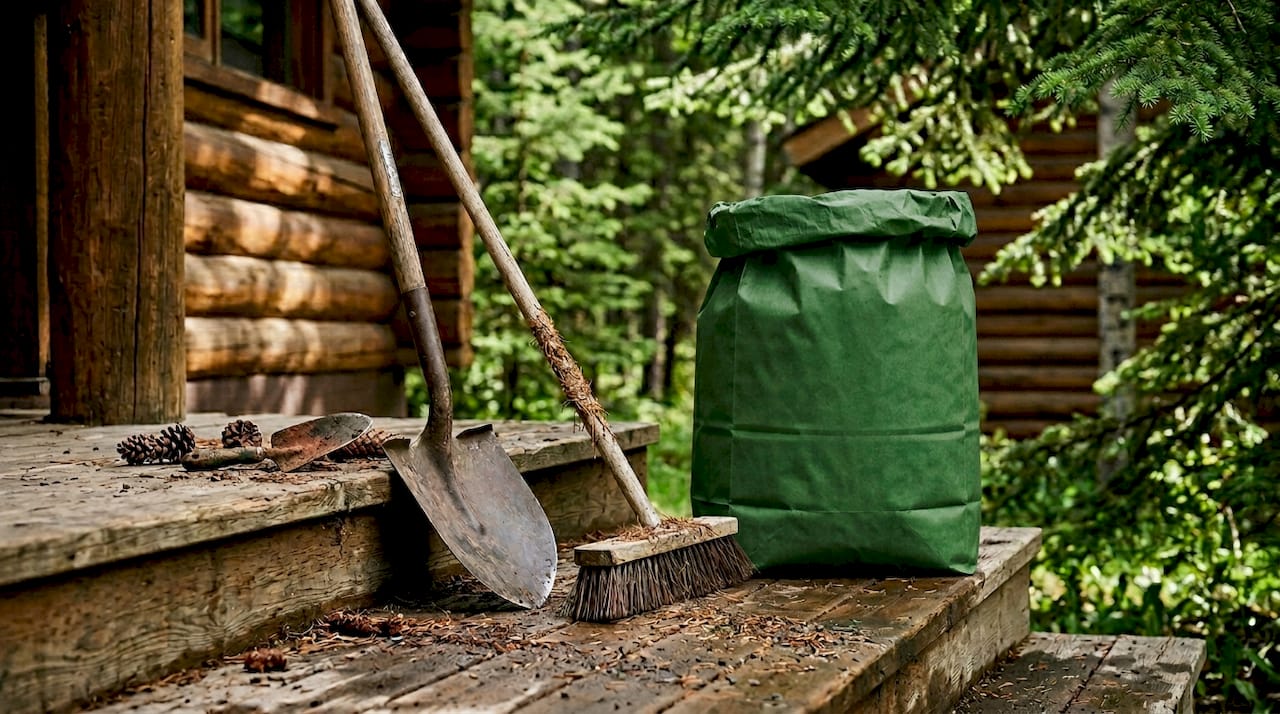
A stiff-bristle outdoor broom is one of the simplest and most reliable outdoor cleaning tools you own. It clears patios, pathways, and garage aprons faster than a leaf blower in tight spaces, and it does not scatter debris into garden beds.
For waste collection, skip plastic bags. Plastic bags contaminate yard waste composting, and paper or biodegradable bags with small holes improve aeration, reduce odours, and keep organic material on track for proper decomposition.
5. Electric dethatchers and scarifiers
Once your yard reaches a certain size, manual dethatching becomes a full-day chore. An electric dethatcher covers ground much faster and extracts thatch more consistently. Thatch buildup over 0.5 inches blocks sunlight, oxygen, and water from reaching grass roots, making this a seasonal priority rather than an optional task.
A scarifier goes a step further by cutting into the soil surface slightly, which improves drainage and encourages new grass growth. Many electric dethatcher models double as scarifiers, which makes them a practical two-in-one purchase for homeowners committed to lawn health.
For a deeper look at the benefits and methods specific to Calgary lawns, Yearlong’s dethatching guide walks through what the process involves and when to schedule it for best results.
Pro Tip: Always bag or rake up the extracted thatch material right after dethatching. Leaving it on the lawn blocks new grass growth and undoes the work you just completed.
6. Pressure washers and soft washing methods
Pressure washing is one of the most satisfying backyard cleanup tasks and one of the easiest to get wrong. High PSI with a narrow nozzle can permanently damage wood fibres, strip paint, and force water behind siding panels. The damage is often invisible until mould or rot appears months later.
The smarter approach is soft washing on delicate surfaces. Detergents combined with low pressure kill algae and mildew at the root rather than simply blasting the surface clean. On concrete, a higher PSI is acceptable, but consistent wand movement prevents streaking and protects mortar joints from erosion.
A few pressure washing basics that save you costly repairs:
- Wood decks: Use a fan-tip nozzle at low pressure and always move with the grain.
- Concrete and pavers: Medium pressure, consistent distance of 20 to 30 centimetres, wider nozzle near edges.
- Siding and painted surfaces: Soft wash method only. Keep the wand moving and work top to bottom.
- Patio furniture: Remove cushions, rinse frames, and let everything dry fully before reassembling.
7. Comparison of key tools and equipment
Deciding between manual and powered tools often comes down to yard size, budget, and how much physical effort you want to put in each season.
| Tool | Cost range | Effort level | Best for | Limitation |
|---|---|---|---|---|
| Dethatching rake | $30 to $70 | High | Small yards, spot treatment | Tiring on large areas |
| Electric dethatcher | $150 to $350 | Low | Medium to large lawns | Requires power source |
| Leaf blower (corded) | $60 to $150 | Low | Open spaces, dry leaves | Less control near beds |
| Pressure washer (electric) | $150 to $400 | Medium | Patios, driveways, siding | Risk of surface damage if misused |
| Stiff broom | $20 to $50 | Medium | Patios, pathways, tight spaces | Slow on larger areas |
| Bypass pruners | $25 to $80 | Low | Shrubs, roses, perennials | Not for branches over 2 cm |
For a typical Calgary lot, an electric dethatcher and a mid-range electric pressure washer give you the most coverage for the investment. Pair those with quality hand tools for fine detail work, and you have a complete toolkit without overspending.
8. Managing yard waste and finishing touches
What you do with the debris after cleanup shapes your yard’s health going forward. Composting is the most useful option for grass clippings, leaves, and soft plant trimmings. Proper moisture and temperature control are key to successful composting. Too wet and decomposition slows, producing foul odours. Too dry and microbial activity stalls. Turn your compost heap every two weeks and keep it as damp as a wrung-out sponge.
A few best practices for yard waste management:
- Compost: Leaves, grass clippings, vegetable trimmings, and soft plant debris all break down well.
- Avoid composting: Meat scraps, pet waste, diseased plant material, and weeds that have gone to seed.
- Mulching: Apply a 5 to 8 centimetre layer around trees and beds to hold moisture and suppress weeds through summer.
- Tool storage: Clean and dry metal tools before putting them away. Oil moving parts on pruners and loppers at the end of the season to prevent seizing.
Sealing concrete patios and pathways after cleaning protects them from Calgary’s freeze-thaw cycles. It is a finishing step most homeowners skip once and then regret the following spring when cracking appears.
Backyard organization ideas like wall-mounted tool holders and waterproof storage boxes in your garage keep gear accessible and in good condition season over season.
My honest take on backyard cleanup
I have watched a lot of homeowners approach their spring or fall cleanup the same way every year: they grab whatever is closest, rush through it, and then wonder why their lawn looks worse by mid-summer. The mistake is almost never the effort. It is skipping the diagnostic step.
In my experience, the homeowners who get the best results spend 20 minutes walking their property before they pick up a single tool. They check whether their thatch layer is actually thick enough to warrant dethatching, whether their patio surface can handle pressure washing, and where debris has settled after winter. That 20 minutes changes every decision they make for the next three hours.
I also think people dramatically overvalue pressure washers as a cure-all. A high-powered blast feels satisfying in the moment. But I have seen wooden decks stripped down to raw fibre, paint pulled from fences, and mortar washed out from between pavers by homeowners who cranked the PSI too high. The right tool used correctly is almost always less dramatic than it looks, and that is a good thing.
The bigger investment I recommend is dethatching and proper compost management. Both are low-glamour tasks that pay back better than almost any purchase you can make. A healthy lawn going into winter recovers faster in spring, holds moisture better in dry spells, and requires less patching and reseeding over time. That is how you clean your backyard in a way that actually compounds.
— Lewie
Ready to hand the hard work off?
If you have read through this list and realised your backyard is due for a proper seasonal refresh, Yearlong handles every part of it for Calgary homeowners. From lawn care and yard cleanup to power raking, leaf collection, and debris removal, the team brings the right equipment and the local knowledge to get your yard in shape without you lifting a finger.

Yearlong has been servicing Calgary properties since 2017, and their seasonal cleanup services are built around the specific demands of the Calgary climate. Whether you need a one-time spring tidy-up or ongoing year-round maintenance, they offer flexible packages and a satisfaction guarantee. Reach out for a personalised quote and get your yard ready for whatever the next season brings.
FAQ
What are the most important backyard cleanup essentials?
The core essentials include a dethatching rake or electric dethatcher, quality pruning shears, a stiff outdoor broom, a pressure washer or soft washing equipment, and biodegradable yard waste bags. The right combination depends on your yard size and the season.
How often should you dethatch your lawn in Calgary?
Most Calgary lawns benefit from dethatching once a year, typically in spring once the ground has fully thawed. Thatch over 0.5 inches thick blocks water and nutrients from reaching grass roots, so annual removal keeps lawns healthy through the growing season.
Is pressure washing safe for wood decks and fencing?
Pressure washing is safe for wood when you use a fan-tip nozzle, keep pressure low, and move with the grain. High PSI or a narrow nozzle can permanently damage wood fibres. Soft washing with a mild detergent is the safest method for painted or stained surfaces.
Can I compost all my yard waste after cleanup?
Most organic material composts well, including leaves, grass clippings, and soft plant trimmings. Avoid composting diseased plants, weeds that have gone to seed, or any material treated with pesticides. Use paper or biodegradable bags rather than plastic to keep your compost aerated and free of contamination.
When is the best time to do a full backyard cleanup in Calgary?
Spring cleanup is best done once overnight temperatures stay consistently above freezing, typically late April to early May in Calgary. Fall cleanup should happen after most leaves have dropped but before the first hard freeze, usually mid to late October.