

TL;DR:
- Proper annual landscape planning significantly increases a home’s value through consistent maintenance and strategic improvements. It prevents deferred maintenance perceptions and builds a lasting impression of careful ownership that buyers recognize within seconds. Regular, low-cost tasks like mulching and trimming yield high returns and contribute to a well-maintained, attractive outdoor space year-round.
Most homeowners think of landscaping as something you do once, maybe before selling, or when things get embarrassingly overgrown. That thinking costs money. Annual landscape planning is one of the few home maintenance practices where the return consistently exceeds the investment, and the compounding effect over five or ten years is genuinely significant. Professional landscaping can increase home value by 5% to 20%, and the difference between that upper and lower number almost always comes down to whether the upkeep has been consistent or reactive.
Table of Contents
- Key takeaways
- Why annual landscape planning matters for property value
- Smart landscape planning strategies to use every year
- Comparing landscaping investments: where to put your money
- How to build an annual landscape routine that actually works
- Lewie’s take on why most people get this backwards
- Ready to make your annual landscape plan work for you?
- FAQ
Key takeaways
| Point | Details |
|---|---|
| Annual planning beats one-time efforts | Year-round care builds more cumulative value than a single pre-sale landscaping push. |
| Curb appeal has a seven-second window | Buyers form a property impression almost instantly, making consistent maintenance critical. |
| Low-cost maintenance yields the highest ROI | Fresh mulch and trimming often return over 200%, far outperforming expensive renovations. |
| Seasonal strategies protect plant health | Aligning tasks with natural cycles prevents deferred maintenance and costly fixes. |
| Professional input reduces costly mistakes | Expert guidance cuts maintenance demand and supports long-term design goals. |
Why annual landscape planning matters for property value
Here is something most people do not realise: your outdoor space is not just aesthetics. It is a financial asset, and it behaves like one. Buyers form impressions within seven seconds of arriving at a property, and a manicured exterior signals careful ownership throughout. That psychological signal reduces buyer hesitation and negotiating room more than almost any interior upgrade can.
The numbers back this up convincingly. Standard lawn care programmes yield a 217% ROI and landscape maintenance at resale regularly exceeds 100% ROI. These are not marketing figures. They reflect what buyers will actually pay more for, or discount if they do not see it.
Annual planning is what separates properties that hold this value from ones that lose it. A yard that looks great one year and neglected the next reads as deferred maintenance to any experienced buyer or property manager. Consistent, strategic upkeep removes that perception entirely.
“Homes with ‘excellent’ landscaping are valued 6–7% higher than those with merely ‘good’ landscaping, which in turn are valued 4–5% higher than properties with minimal outdoor care.”
Here is what planning yearly actually does for you:
- It prevents expensive corrections by catching small problems before they compound
- It lets you phase improvements intelligently, spreading cost without sacrificing results
- It builds a documented maintenance history, which is a genuine selling asset
- It keeps curb appeal consistent across seasons, not just at peak summer
- It reduces the mental overhead of reacting to whatever went wrong over winter
The importance of landscape planning is not theoretical. It is measurable, and for most Calgary homeowners, it represents one of the strongest financial returns available in routine home maintenance.
Smart landscape planning strategies to use every year
Planning well means thinking ahead, not just about what looks good now but what will work across four seasons, grow without taking over, and stay within a realistic maintenance budget. These are the elements worth building into your annual review.
Start with your soil. Soil testing every year or two tells you what your lawn and beds actually need, rather than what a generic fertiliser schedule assumes. Calgary’s alkaline soil conditions mean many plants underperform not because of sunlight or water but because the pH is working against them. Amending your soil based on real data saves money on inputs and dramatically improves results.
Choose plants for your climate, not your Pinterest board. The annual planning process is a good time to assess which plants are struggling and whether they belong in your yard at all. Replacing high-maintenance specimens with climate-compatible alternatives reduces your ongoing workload and improves plant health over time. Seasonal maintenance aligned with biological cycles protects both curb appeal and resale value.
Plan for colour rotation. Year-round visual interest requires deliberate plant selection, not just summer annuals. Think about what is blooming or showing structure in April, in October, and even in January when evergreens and ornamental grasses carry the composition.
Here is a practical order for building your annual landscape plan:
- Conduct a late-winter walkthrough to assess winter damage, soil compaction, and plant losses
- Schedule soil amendments and pre-emergent weed control for early spring
- Confirm plant selections for the coming season, replacing anything that underperformed
- Plan hardscaping or structural improvements for late spring before the growing season peaks
- Schedule mid-summer assessment for watering efficiency and pest pressure
- Arrange fall cleanup, overseeding, and winterisation tasks before the first frost
- Document what worked and what did not before the season closes
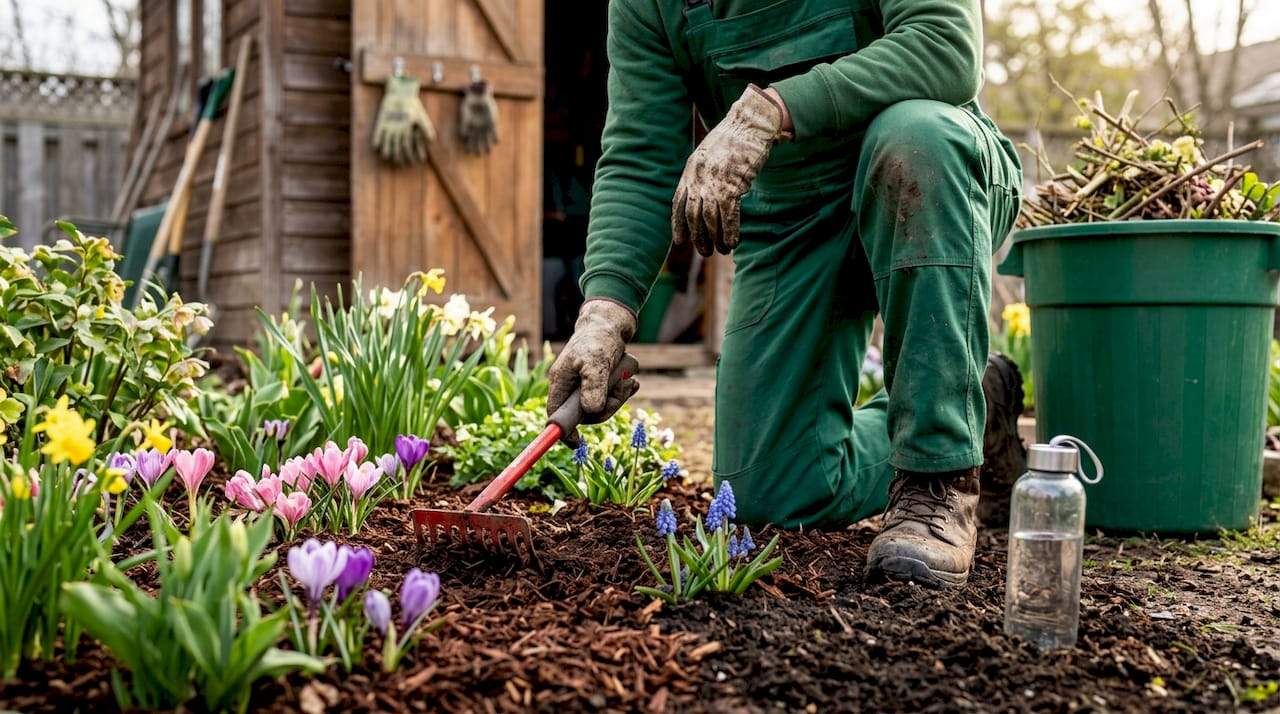
Pro Tip: Time your mulching for mid to late spring after the soil has warmed. Mulching too early traps cold and slows root activation. Done at the right moment, a fresh layer of mulch suppresses weeds for months, retains moisture through dry periods, and gives any bed an immediate visual lift with minimal cost.
Integrating preventative landscaping practices into your annual plan also reduces the risk of deferred maintenance creeping in unnoticed, which is one of the most common ways property value quietly erodes.
Comparing landscaping investments: where to put your money
Not every landscaping dollar returns the same. Understanding which projects deliver genuine value versus which ones satisfy personal taste but limit buyer appeal is one of the more useful things you can do annually.
| Project type | Approx. annual cost | Estimated ROI | Value added |
|---|---|---|---|
| Regular lawn mowing and edging | $800–$1,500 | 150–200% | Strong curb appeal baseline |
| Fresh mulch and bed tidying | $300–$600 | 200%+ | High visual impact, low cost |
| Seasonal cleanup (spring/fall) | $400–$900 | 150–180% | Prevents deferred maintenance perception |
| Shrub trimming and shaping | $200–$500 | 120–150% | Adds structure and tidiness |
| Tree planting (mature specimen) | $1,500–$4,000 | 80–120% over time | Long-term shade and design value |
| Custom water features or elaborate hardscaping | $5,000–$20,000+ | 50–80% | High personal value, lower resale return |
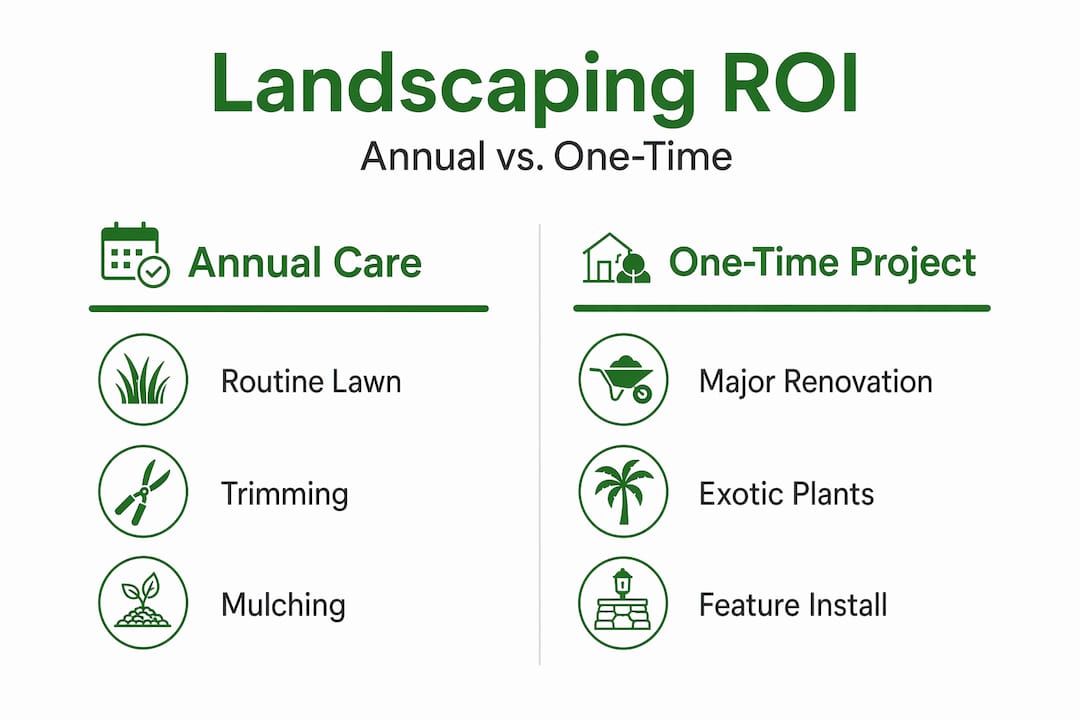
Low-cost, high-visibility maintenance consistently outperforms expensive renovations on a per-dollar basis. Maintenance costs under $500 can prevent thousands of dollars in buyer-negotiated discounts at the time of sale. That is not a small thing.
The risk of over-personalisation is real. A property covered in elaborate themed garden beds, unusual plant species, or high-maintenance water features appeals strongly to one kind of buyer and puts off many others. Annual planning is the right moment to ask honestly whether a new project adds broad value or simply reflects your personal taste.
Spending $1,200 to $2,400 annually on recurring lawn care builds cumulative value that exceeds what a single large investment made just before sale can accomplish. The compounding effect of consistent care is what separates genuinely well-maintained properties from ones that just had a tidy-up.
Pro Tip: Combine one small upgrade with your routine maintenance every year. Replace a tired plant bed edging in spring. Add a new ornamental grass grouping in autumn. These small additions compound visually and financially without requiring a significant budget in any single year.
How to build an annual landscape routine that actually works
Knowing why annual landscape planning matters is straightforward. Building a routine that actually gets done requires a bit more structure. Here is how to approach it practically.
- Spring (April to May): Focus on assessment and activation. Dethatch the lawn, test soil, apply pre-emergent weed control, refresh bed edges, and add mulch once soil temperatures rise. This is also the time to book professional services for the season before schedules fill.
- Early summer (June): Confirm irrigation is running efficiently, address any bare patches with overseeding or sod, and complete any planting of annuals or perennials.
- Mid to late summer (July to August): Monitor for pest pressure and drought stress. Adjust watering schedules based on actual conditions, not just calendar assumptions.
- Fall (September to October): Aerate and overseed, apply fall fertiliser, cut back perennials, and arrange for leaf and debris removal. Fall cleanup directly protects spring lawn health.
- Winter (November to March): Review the season. Document what worked, note what needs replacing, and draft your priorities for the coming year. This is the best time to book professional consultations.
Professional design cuts maintenance demand by up to 60% compared to properties managed without professional input. That figure reflects not just time saved but money not spent correcting mistakes. For property managers overseeing multiple sites, that efficiency compounds fast.
Keep a simple log of what was planted, when, and how it performed. Photographs work well for this. Over three to four years, that record becomes a genuinely useful planning tool and a compelling document when you sell or refinance.
For seasonal landscaping guidance specific to Calgary, the local climate context matters enormously. A plan that works in Vancouver will underperform here without adjustments for freeze-thaw cycles, chinook conditions, and our shorter reliable growing window.
A common pitfall is waiting until spring to plan spring. By the time the ground thaws and nurseries open, the best service slots are gone and reactive decisions replace thoughtful ones. Annual planning that starts in late autumn sets you up to act early and deliberately.
Lewie’s take on why most people get this backwards
I’ve watched homeowners pour significant money into landscaping right before listing a property, and the results are almost always underwhelming compared to what consistent annual care would have produced. The plants have not had time to establish. The lawn has a freshly fed look but no real density. Buyers notice this. They may not articulate it, but it creates a subtle unease.
In my experience, the homeowners who get the best return on their outdoor investment are not the ones who spend the most. They are the ones who plan annually, spend consistently, and treat their yard as a living system that requires steady attention rather than occasional heroics. One well-timed soil amendment and a properly planned planting rotation will outperform a last-minute landscaping blitz almost every time.
The contrarian truth here is that sporadic, reactive landscaping is actually more expensive over time than consistent maintenance. You spend more correcting neglect than you would have spent preventing it. And you do it under pressure, which means poor decisions.
Annual planning is not about creating a perfect yard. It is about building a property that reflects competent, caring ownership, year in and year out. That perception is worth more than any single project you could install.
— Lewie
Ready to make your annual landscape plan work for you?
If this year has taught you anything, it is that good intentions do not maintain themselves. Yearlong brings the kind of structured, seasonal approach to outdoor property care that turns annual planning from a good idea into a working system.
Yearlong’s lawn care and yard cleanup services are built around Calgary’s specific climate demands, from spring activation through fall winterisation. Whether you need recurring bed maintenance and mowing or want to schedule seasonal cleanup services before the rush, Yearlong handles the details so you stay focused on the result. Reliable, local, and straightforward. Contact Yearlong to build a yearly maintenance plan that protects your property value and keeps your yard looking its best, every season.
FAQ
What is annual landscape planning?
Annual landscape planning is the practice of reviewing, scheduling, and budgeting your outdoor maintenance and improvement tasks each year. It covers soil health, plant selection, seasonal cleanup, and long-term design goals in a structured cycle.
How much value does consistent landscaping add to a home?
Professional landscaping adds 5% to 20% to a home’s market value, with homes rated “excellent” in landscape quality sitting 6 to 7% higher than comparable properties with only basic outdoor care.
Why is yearly planning better than a one-time landscaping project?
Annual spending on lawn care builds cumulative property value that consistently exceeds what a single large pre-sale investment produces. Consistent care also prevents the deferred maintenance perception that costs sellers negotiating power.
Which landscaping tasks offer the best return on investment?
Low-cost, high-visibility tasks like fresh mulching and regular trimming return over 200% ROI, making them the smartest annual priorities for homeowners focused on property value.
When should I start planning my landscape for the year?
Late autumn is the ideal time to review the past season, document what worked, and book professional services for the following spring. Planning before the ground thaws keeps your decisions deliberate rather than reactive.