

TL;DR:
- Fall leaf removal in Calgary involves clearing, mulching, or bagging fallen leaves to protect your lawn from disease, smothering, and winter damage. Using a hybrid approach that combines mulching early in the season with raking heavy piles later maximizes soil health and safety. Starting early, planning your tools, and balancing ecological considerations ensure effective yard maintenance before freezing temperatures set in.
Autumn in Calgary arrives fast, and before you know it, your lawn is buried under a thick blanket of leaves. Many homeowners assume that fall leaf removal is just a cosmetic chore, something you do so the neighbours stop giving you looks. But what is fall leaf removal, really? It is the process of clearing, managing, and disposing of fallen leaves to protect your lawn’s health, prevent disease, and set your yard up for a strong spring. The method you choose matters far more than most people realise, and getting it wrong can quietly damage your grass all winter long.
Table of Contents
- Key takeaways
- Why fall leaf removal matters for your lawn
- Leaf removal methods: what works and when
- Step by step fall leaf removal process
- Balancing leaf removal with ecology
- My take on fall leaf removal
- Let Yearlong handle the heavy lifting
- FAQ
Key takeaways
| Point | Details |
|---|---|
| Leaves smother your lawn | Thick leaf layers block sunlight and air, causing grass to weaken and disease to spread. |
| Mulching saves money | Returning leaf matter to your lawn can save up to $100 on fertiliser per season. |
| Timing is critical | Removing leaves before the first frost prevents moisture damage from freeze-thaw cycles. |
| Hybrid methods work best | Combining mulching for light layers and raking for heavy piles delivers the best results. |
| Some leaves can stay | Leaving 5 to 10% leaf coverage in garden beds supports soil health and local wildlife. |
Why fall leaf removal matters for your lawn
A thin scatter of leaves across your lawn looks harmless enough. Give it two weeks of rain and cold temperatures, and that same layer becomes a dense, soggy mat that your grass cannot breathe through. Thick leaf layers block sunlight and air, suffocating grass and increasing the risk of disease and weed infestation. That process starts faster than most homeowners expect.
Calgary’s fall climate adds another layer of urgency. When wet leaves sit on frozen ground, the freeze-thaw cycle traps moisture against your grass crowns. Removing leaves before the first frost reduces grass damage from exactly that kind of winter stress. By the time the snow flies, it is genuinely too late to undo months of smothering.
Here is what a layer of unmanaged leaves actually does beneath the surface:
- Blocks photosynthesis. Grass needs sunlight right through late autumn to build root reserves for winter. A solid leaf canopy cuts off that process entirely.
- Traps moisture. Wet, compacted leaves create the warm, damp conditions that fungal diseases like snow mould love. This is one of the most common lawn problems Calgary homeowners face after a long winter.
- Disrupts soil oxygen. Healthy soil is full of air pockets that support microbial activity. Leaf mats compress and seal the surface, slowing down the nutrient cycles your lawn depends on.
- Provides pest cover. Grubs, slugs, and overwintering insects use thick leaf piles as shelter. Clearing them reduces the pest pressure you will deal with next spring.
The good news is that autumn yard maintenance does not have to be an exhausting, all-weekend ordeal. Knowing why you are doing it makes choosing the right method a lot more straightforward.
Leaf removal methods: what works and when
Not every yard calls for the same approach, and not every homeowner has the same amount of time, equipment, or tolerance for yard work. Understanding your options gives you the ability to choose what actually fits your situation.
| Method | Best for | Key benefit | Main drawback |
|---|---|---|---|
| Mulching mowing | Light to moderate leaf cover | Returns nutrients to soil, saves time | Requires mulching blade; ineffective on wet leaves |
| Raking and bagging | Heavy leaf loads or wet conditions | Clean, manicured look | Labour intensive, no nutrient return |
| Composting | Any volume with space to spare | Builds rich soil amendment over time | Requires time, space, and some effort |
| Hybrid approach | Most residential lawns | Balances appearance and soil health | Requires planning and two tools |
Mulching leaves in place is gaining well-deserved popularity. Mulching can return key nutrients like nitrogen, phosphorus, and potassium to your soil, and save you up to $100 on fertiliser per season. A mulching mower chops leaves into fine particles that break down quickly without smothering the grass underneath. The catch is that standard mower blades are not designed for this. Mulching blades keep leaf particles circulating longer under the deck, producing a finer chop that settles between grass blades rather than sitting on top.
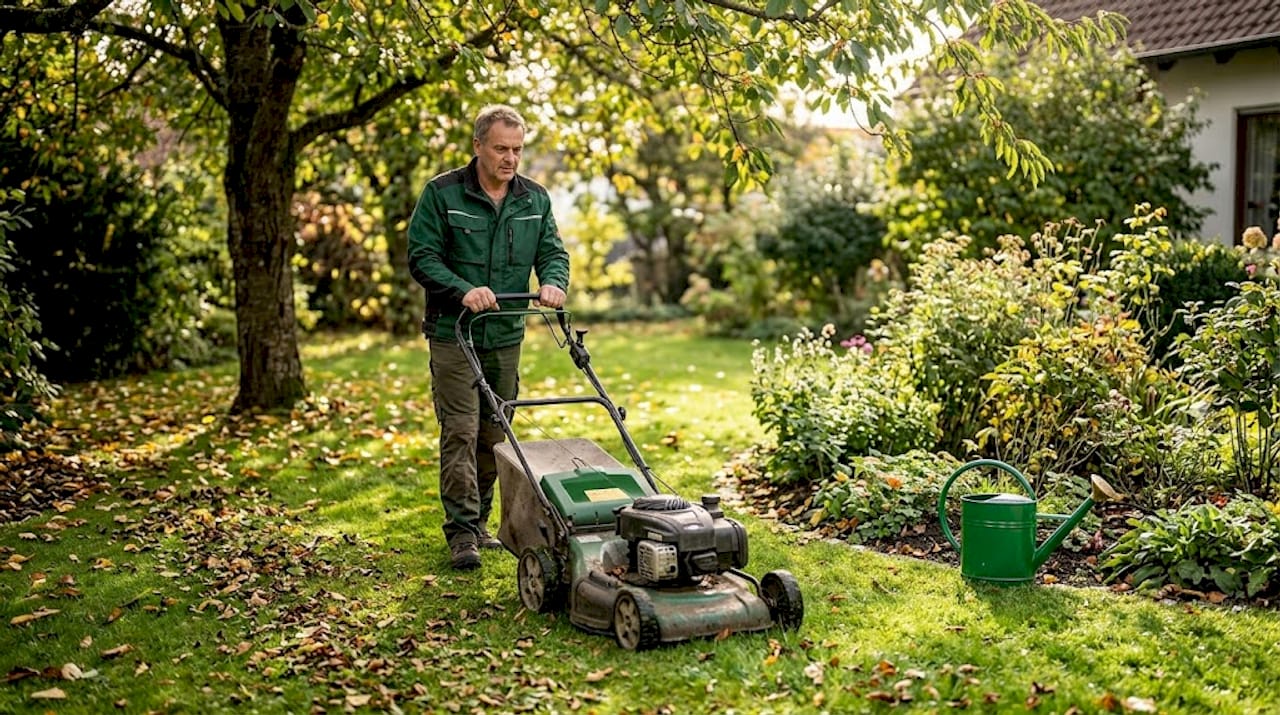
Raking and bagging remains the go-to for heavy accumulations or when leaves are already wet and matted. It is the most labour-intensive option, and you lose all the organic material that could otherwise feed your lawn. That said, when you are dealing with several centimetres of leaves from a large maple, raking may simply be the most practical choice.
Composting takes the organic value of your leaves and concentrates it. Composting leaves creates leaf mold or finished compost that improves soil structure and water retention. Many Calgary communities also have municipal leaf collection programmes, which keeps material out of landfills even when backyard composting is not an option.
The hybrid approach is what professional lawn care experts actually recommend. Combining mulching for light layers and raking for heavy piles balances a manicured look with the natural nutrient recycling your lawn benefits from. You mulch during the early weeks of autumn when leaves are still falling gradually, and you rake or bag when the big drop happens near the end of the season.
Pro Tip: Always mulch on dry days. Wet leaves clump and clog mowers, leaving matted piles that can smother grass and create fungal issues, exactly the outcome you are trying to prevent.
Step by step fall leaf removal process
Knowing your method is one thing. Having a clear workflow is what turns that knowledge into a lawn that actually looks and performs well come spring. These fall leaf removal steps apply whether you are managing a modest city lot or a larger property.
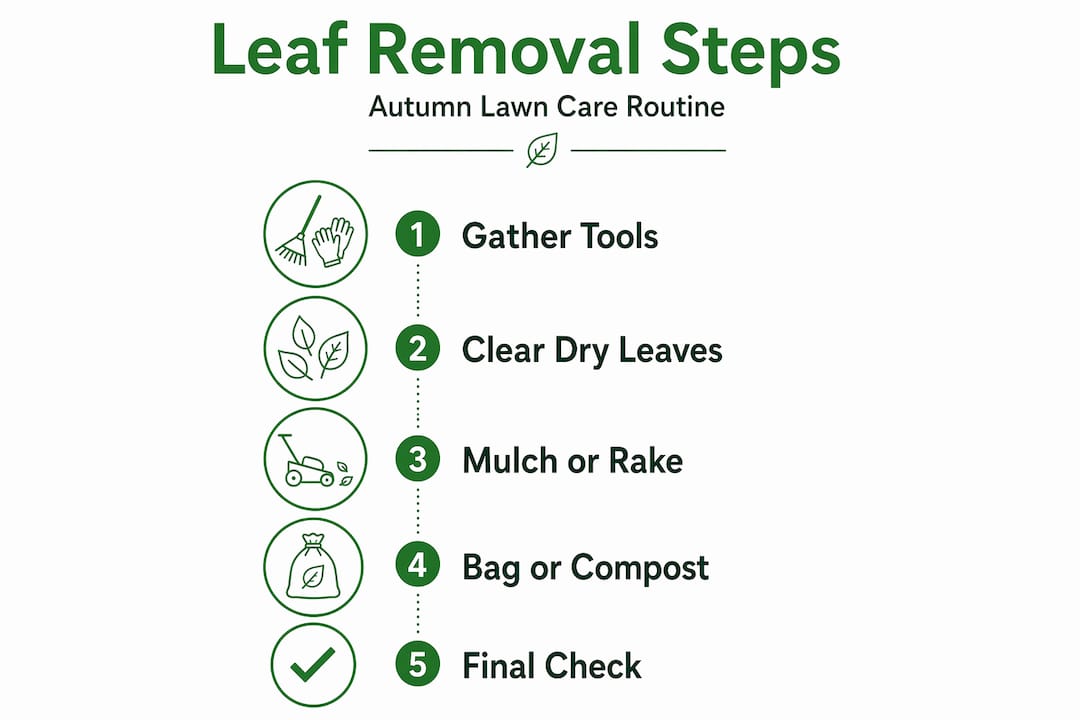
Start early, not late. Begin your fall leaf cleaning as soon as leaves start accumulating. Clearing leaves every 5 to 7 days during peak fall prevents the kind of matting that causes real damage. Waiting until all leaves have fallen means you are already dealing with a problem instead of preventing one.
Gather your tools before you begin. A good mulching blade for your mower, a quality fan rake for corners and beds, heavy-duty compostable bags, and gloves are your core kit. If you are managing a larger yard, a leaf blower saves considerable time pushing leaves into rows before raking or mulching.
Mow before you rake. If you are using a hybrid approach, do your mulching pass first on the open lawn areas. Set your mower to its regular cutting height and use a crisscross mowing pattern for thicker areas. A second pass over heavy spots ensures fine particles rather than chunky piles.
Rake out the edges and beds. Leaves collect along fences, under shrubs, and in garden beds where a mower cannot reach. Rake these areas into a central pile for bagging or add them to your compost bin.
Bag or compost the remainder. Heavy accumulations from raking go into bags for municipal collection or into a backyard compost pile. For a resource on what to do with all that organic matter, Yearlong’s guide on mulching for Calgary lawns covers how leaf material fits into a broader lawn nutrition approach.
Do a final pass before the first frost. Check your lawn after the last major leaf fall and remove anything remaining. Clean hardscapes like driveways and walkways thoroughly, since wet or frozen leaves become slip hazards on concrete and stone.
Pro Tip: Do not wait for all your trees to finish dropping before you start. In Calgary, weather can turn quickly. Getting ahead of the bulk of the fall with two or three removal sessions beats one massive clean-up under time pressure.
Balancing leaf removal with ecology
There is a growing conversation among homeowners about whether removing all leaves is actually the right thing to do. The short answer is: it depends on where those leaves are landing.
On your lawn, thick leaf layers are genuinely harmful and need to go. But in garden beds, along fence lines, or in naturalistic corners of your yard, a modest layer of leaves does real ecological good. Leaving about 5 to 10% leaf coverage is beneficial and protects soil from temperature swings. It also provides overwintering habitat for pollinators, ground-nesting insects, and small beneficial creatures that help your garden in spring.
Here is a practical way to think about where leaves belong and where they do not:
- Lawn areas: Clear thoroughly. No exceptions. Even light coverage competes with grass for light and air.
- Garden beds: Leave a modest layer, roughly 3 to 5 centimetres, to act as insulating mulch. Shred them first if possible so they do not mat and block moisture from reaching plant roots.
- Hardscapes and driveways: Clear completely, and do so promptly. Wet leaves on pavement are a genuine safety concern through November and December in Calgary.
- Naturalistic or wild corners: Let leaves accumulate. These areas support biodiversity and require zero effort on your part.
The fall yard preparation guide from Yearlong covers this balance in more detail, including specific advice for Calgary’s climate zone and typical tree species. Getting this balance right means you are not over-working your yard or removing things that are actually doing some good.
My take on fall leaf removal
I have worked with enough Calgary homeowners to know that leaf removal sits in an odd space. People either ignore it entirely or treat it like a military operation that must be completed in one brutal weekend. In my experience, neither approach serves the lawn well.
What I have found actually works is a consistent, low-pressure routine. Mulch early in the season when leaves are light and dry. Rake and bag when the volume gets heavy or the weather turns wet. And give your garden beds a pass with the rake rather than stripping them bare. That three-part rhythm takes the pressure off any single session and keeps the lawn in genuinely good shape going into winter.
The equipment question is one I hear constantly. Homeowners often ask whether they really need a mulching blade or whether their old mower will do fine. In my opinion, the mulching blade is worth buying. The difference in particle size is significant enough to matter for thatch risk and nutrient release. It is one of those upgrades that pays for itself in fertiliser savings within a season or two.
The ecological side of things is not something to dismiss either. I always encourage clients to pick a corner of the yard to leave intentionally wild through autumn. It costs nothing, supports local insects, and honestly makes the maintained parts of the yard look even better by contrast.
— Lewie
Let Yearlong handle the heavy lifting

Fall leaf cleaning is straightforward when you have the time, the tools, and the right weather. But Calgary’s autumn window is short, and between work, school runs, and everything else on your plate, it is easy to fall behind. Yearlong has been helping Calgary homeowners stay ahead of seasonal yard care since 2017. From professional fall and spring cleanups to full-service lawn care and yard cleanup, the team handles leaf removal, bed clearing, and seasonal prep with local knowledge and reliable results. Whether you need one visit at the end of the season or ongoing autumn yard maintenance through the whole fall, Yearlong offers flexible packages built around your property’s needs. Get in touch to find a plan that works for you.
FAQ
What is fall leaf removal, exactly?
Fall leaf removal is the process of clearing fallen leaves from your lawn and outdoor spaces each autumn to protect grass health, prevent fungal disease, and prepare your yard for winter. It includes mulching, raking, bagging, and composting approaches.
How often should you remove leaves in fall?
Removing leaves every 5 to 7 days during peak leaf fall prevents dangerous matting. Waiting until all leaves have dropped means your lawn has likely already been smothered for weeks.
Is it better to mulch or rake leaves?
A hybrid approach works best for most yards. Mulch light, dry layers directly into the lawn to return nutrients, and rake or bag heavy accumulations to avoid smothering the grass.
Can you leave leaves on garden beds over winter?
Yes. A layer of 3 to 5 centimetres of shredded leaves on garden beds acts as insulating mulch and supports overwintering beneficial insects. Avoid leaving them unshredded, as matted whole leaves can block moisture from plant roots.
When should fall leaf removal be completed in Calgary?
Aim to finish your final lawn clearing before the first hard frost. Removing leaves while they are still dry is easier and more effective, and it prevents the freeze-thaw moisture damage that harms grass crowns through the winter.