

TL;DR:
- Proper seasonal planning and soil awareness enable Christie Park homeowners to maintain healthy lawns.
- Expert services can address serious issues like soil compaction, disease, and persistent weeds better than DIY methods.
- Eco-friendly practices such as drought-resistant grasses and organic fertilisers promote sustainable, low-maintenance lawns.
Calgary’s climate has a reputation for being tough on lawns, and Christie Park homeowners often assume a lush, healthy yard is simply out of reach. That’s not quite right. With the right seasonal approach and an understanding of your local soil and grass conditions, a beautiful lawn is absolutely achievable here. This guide walks you through everything you need to know, from reading your soil to calling in professionals at the right moment, so you can stop guessing and start growing a yard that holds up through Calgary’s unpredictable seasons.
Table of Contents
- Understanding Christie Park’s unique lawn care needs
- Creating a year-round lawn care calendar
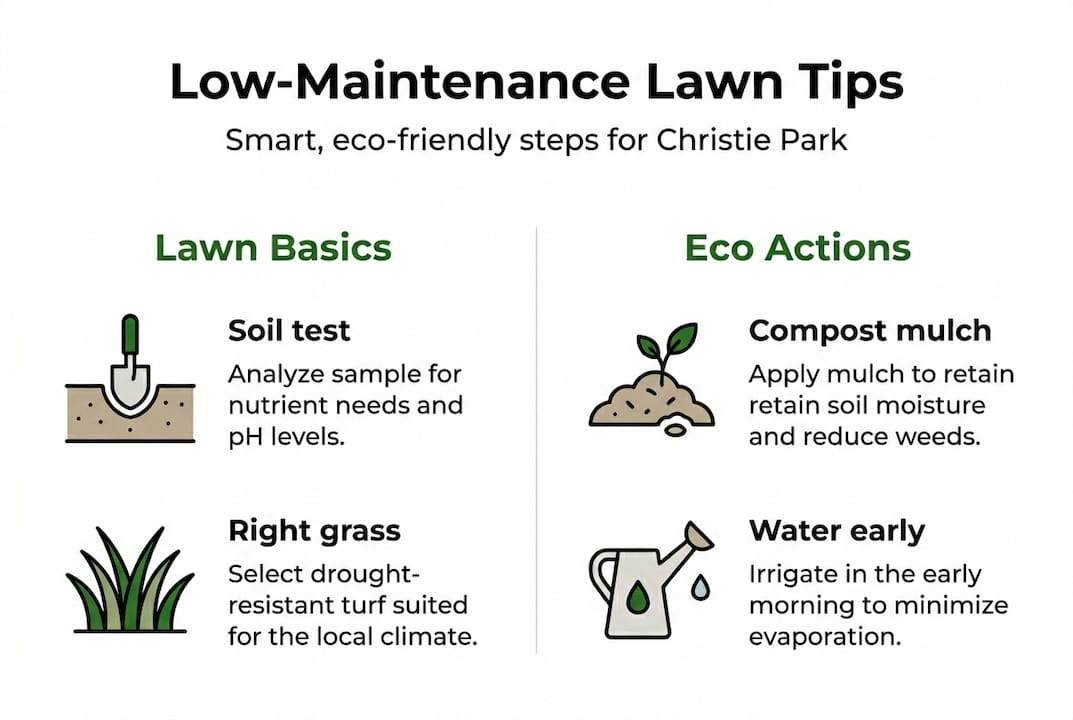
- Essential tips for eco-friendly and low-maintenance lawns
- When to call in the professionals
- What most Christie Park homeowners get wrong about lawn care
- How Yearlong helps Christie Park lawns thrive
- Frequently asked questions
Key Takeaways
| Point | Details |
|---|---|
| Tailor care to local climate | Christie Park lawns thrive when cared for with strategies adapted to Calgary’s challenging weather. |
| Year-round routine is vital | A seasonal approach—from spring cleanup to winter snow management—ensures long-term lawn health. |
| Go eco-friendly for less work | Drought-tolerant grasses and sustainable methods mean lower maintenance and a greener yard. |
| Know when to hire pros | Professional help pays off when faced with serious lawn problems or time constraints. |
Understanding Christie Park’s unique lawn care needs
Christie Park sits in the southwest of Calgary, and its microclimate brings a specific set of challenges that generic lawn care advice simply doesn’t address. Chinook winds can push temperatures from well below freezing to well above zero within a single day, which stresses grass roots and causes cycles of freezing and thawing that damage turf structure. Dry spells during summer can last several weeks, and the variable spring temperatures make it hard to know exactly when to begin seeding or fertilising.
Soil is often the hidden factor that separates a thriving lawn from a struggling one. Christie Park soils lean toward clay-heavy compositions, which creates two common problems: poor drainage after heavy rain, and severe compaction that suffocates grass roots over time. Christie Park’s microclimate influences soil moisture and grass resilience in ways that make local knowledge essential, not optional. If you’ve ever noticed water pooling on your lawn after a moderate rainfall, compacted clay soil is likely the cause.
For Christie Park expert help with choosing the right grass type, the most reliable options for this area include:
- Kentucky bluegrass: Dense, durable, and recovers well after drought periods
- Creeping red fescue: Excellent shade tolerance and handles dry conditions with less water
- Tall fescue blends: Deep root systems that resist compaction stress
- Perennial ryegrass: Fast germination for overseeding bare patches quickly
Common problems you’re likely to face include winterkill (grass that doesn’t survive freeze-thaw cycles), snow mould (a fungal issue that appears after snowmelt), and drought stress during Calgary’s dry summer stretches. Recognising these problems early is half the battle. Investing in efficient garden hose tools makes precise watering far easier throughout the season.
| Lawn issue | Likely cause | Recommended action |
|---|---|---|
| Bare patches in spring | Winterkill or snow mould | Overseed and apply fungicide |
| Water pooling | Clay compaction | Aerate and top-dress with compost |
| Brown tips in summer | Drought stress | Deep watering, raise mowing height |
| Thin, patchy growth | Low soil fertility | Soil test, then fertilise accordingly |
Pro Tip: Test your soil every spring before you apply any fertiliser. A simple soil test from a garden centre reveals your pH and nutrient levels, so you’re feeding your lawn what it actually needs rather than guessing.
Creating a year-round lawn care calendar
Understanding Christie Park’s conditions is just the starting point. A seasonally adapted plan is essential for consistent results, and without one, you’ll always be reacting to problems rather than preventing them.

Calgary’s lawn care routines must adapt for cold springs and rapid temperature changes, which means your calendar should be flexible enough to shift with the weather. A rigid schedule doesn’t work here.
| Season | Key tasks | Goal |
|---|---|---|
| Spring | Rake, aerate, dethatch, fertilise | Wake up dormant grass and address winter damage |
| Summer | Mow regularly, water deeply, control weeds | Maintain density and prevent drought stress |
| Autumn | Overseed, leaf cleanup, final fertilise | Strengthen roots before freeze |
| Winter | Snow management, avoid foot traffic on frozen grass | Protect turf from compaction and ice damage |
Here’s a numbered checklist you can follow season by season:
- Early spring: Rake thoroughly to remove dead material and expose soil to warmth
- Mid-spring: Aerate to relieve compaction, then dethatch if the thatch layer exceeds 1.5 centimetres
- Late spring: Apply a slow-release fertiliser matched to your soil test results
- Summer: Mow at a height of 7 to 9 centimetres to shade roots and suppress weeds
- Summer: Water deeply two to three times per week in the early morning to reduce evaporation
- Early autumn: Overseed thin areas using a grass blend suited to Christie Park’s conditions
- Mid-autumn: Rake fallen leaves promptly to prevent smothering and mould
- Late autumn: Apply a winteriser fertiliser to strengthen grass roots before the ground freezes
- Winter: Keep foot traffic off frozen or snow-covered grass to avoid crushing dormant turf
A good lawn mower care kit keeps your equipment in top condition so your mowing height stays consistent all season. For readers who’d rather let a professional manage the timing, professional help for annual care takes the guesswork entirely off your plate. You can also review eco-friendly lawn care tips to layer in sustainable habits alongside your seasonal schedule.
Essential tips for eco-friendly and low-maintenance lawns
A solid maintenance calendar becomes even more effective when you pair it with responsible, eco-wise practices. The good news is that sustainable lawn care and low-maintenance lawn care are actually the same thing when done correctly.
Eco-friendly methods lower maintenance demands and environmental impact at the same time, which means less work for you and a healthier yard overall. Here’s how to make it happen:
- Switch to drought-resistant grass mixes: These varieties use significantly less water and hold their colour through dry spells
- Use a mulching mower: Finely chopped grass clippings return nitrogen directly to your soil, reducing the need for synthetic fertiliser by up to 25 percent
- Water strategically: Early morning is the best time, before the sun is strong enough to cause rapid evaporation. Water deeply but infrequently, aiming for about 2.5 centimetres per session
- Choose organic fertilisers: Compost-based or slow-release organic options feed your soil’s microbial life, building long-term resilience rather than providing a short-lived nutrient spike
- Plant groundcovers in difficult zones: Areas under large trees or along dry slopes benefit from low-water native shrubs or groundcovers instead of struggling turf
For essential spring lawn clean-up guidance, focusing on removing debris before it smothers emerging grass makes a real difference in early season density. If you want to understand the foundational principles behind all of this, reviewing Calgary lawn care basics is a useful starting point.
For yards where large grass areas have become more trouble than they’re worth, installing artificial grass in high-traffic zones is an increasingly popular option that reduces ongoing maintenance significantly.
Pro Tip: If weeds keep invading no matter what you apply, check your mowing height first. Cutting grass too short removes the leaf blade that naturally shades out weed seeds. Raise your deck and many weed problems reduce on their own within a few weeks.
When to call in the professionals
Eco-friendly and low-maintenance lawn care doesn’t mean you should always go it alone. Some challenges genuinely need expert tools, trained eyes, and products that aren’t available to the average homeowner.
Professional lawn care produces thicker, healthier lawns with fewer pest issues over time, and for many Christie Park homeowners the return on investment is clear once they stop spending money on products that don’t work.
Here are the signs your lawn needs professional attention:
- Persistent bare patches that don’t respond to overseeding after two seasons
- Visible signs of disease such as ring-shaped brown patches or powdery white coating on blades
- Chronic weed problems that keep returning despite regular treatment
- Soil that feels rock-hard underfoot, indicating severe compaction beyond what basic aeration can address
- Sudden yellowing across large sections with no obvious cause
Local professionals offer services beyond what most homeowners can manage independently, including soil pH adjustment, targeted pest management using commercial-grade treatments, and custom fertiliser blends based on lab-tested soil results. These aren’t services you can replicate with a bag from the garden centre.
Hiring a professional lawn care team doesn’t just save you time on weekends. It saves you the cost of replacing dead turf, the frustration of products that don’t deliver, and the guesswork that leads most homeowners in circles for years.
Before hiring, ask these questions: Do they have experience with Christie Park’s soil type? Do they offer a satisfaction guarantee? Will they provide a written care plan? A good provider will answer all three without hesitation. For professional lawn cleanup services that include debris removal, mowing, and seasonal prep, the value becomes obvious after the first visit.
What most Christie Park homeowners get wrong about lawn care
After years of working on Calgary lawns, we’ve noticed a consistent pattern. Homeowners reach for fertiliser bags and weed sprays at the first sign of trouble, when the real issue is almost always below the surface. Compacted soil, poor drainage, and incorrect mowing habits create the conditions that allow weeds and disease to move in. Chemicals treat the symptom, not the cause.
The most successful lawns we see in Christie Park belong to homeowners who understand that turf health is built slowly. A lawn that looks good in spring didn’t get there from one application in April. It got there because someone aerated in autumn, watered correctly all summer, and overseeded consistently for two or three seasons. Patience is genuinely the most powerful lawn care tool available.
Following sustainable lawn advice that focuses on soil biology rather than chemical quick-fixes will outperform any miracle product every single time. Build your soil, maintain your mowing height, and the lawn follows. It really is that straightforward once you stop chasing shortcuts.
How Yearlong helps Christie Park lawns thrive
If you’re ready to upgrade your lawn, here’s how Yearlong makes it easier for Christie Park homeowners.

At Yearlong Property Maintenance, we’ve been serving Calgary homeowners since 2017 with lawn and yard services that are built around the local climate, not copied from a generic playbook. Our Christie Park lawn care services include everything from seasonal mowing and fertilising to full-season maintenance packages that take the entire calendar off your hands. We also offer bed maintenance and mowing to keep your property looking polished at every edge, and our seasonal clean-up services handle both spring and autumn transitions so your lawn moves into each season in the best possible condition. Getting a quote is simple and scheduling is fast.
Frequently asked questions
What grass type is best for lawns in Christie Park?
Kentucky bluegrass and fescue blends thrive in Christie Park due to their tolerance for Calgary’s temperature swings. These varieties handle Chinook conditions and dry summers better than most other options, as confirmed by common grass types suited to Calgary’s variable climate.
How often should I water my Christie Park lawn during summer?
Water deeply once or twice a week, focusing on early morning applications to reduce evaporation. A proper watering strategy for Calgary’s dry spells prioritises depth over frequency, encouraging roots to grow downward.
Is professional lawn aeration really necessary in Calgary?
Annual aeration helps manage soil compaction and is highly recommended for Calgary lawns, especially in clay-heavy soils. The benefits of aeration for Calgary-area lawns include better water absorption and faster recovery from seasonal stress.
Can I have a low-maintenance lawn that’s also eco-friendly?
Yes, by using drought-resistant grasses, proper mowing, and organic fertilisers, Christie Park lawns can be both low-maintenance and sustainable. Eco-friendly methods lower maintenance demands and environmental impact simultaneously, making this a genuinely practical goal for most homeowners.