

Most Calgary homeowners think of mulch as a finishing touch, something to make garden beds look tidy before guests arrive. The reality is quite different. Mulch is one of the most practical tools you have for keeping your lawn and beds healthy through Calgary’s punishing freeze-thaw cycles, dry spells, and clay-heavy soils. Mulch affects more than just appearance; it directly shapes how much time and money you spend on outdoor upkeep every single season. This guide covers what mulching actually does, why it matters specifically in Calgary, and how to do it correctly.
Table of Contents
- What is mulching and how does it work?
- Why mulching matters in Calgary’s climate
- The science-backed benefits of mulching for your lawn
- How to mulch lawns and garden beds in Calgary
- Mistakes to avoid and troubleshooting common mulching issues
- Professional mulching and year-round yard care in Calgary
- Frequently asked questions
Key Takeaways
| Point | Details |
|---|---|
| Mulch boosts health | Proper mulching conserves water, suppresses weeds, and enriches soil in Calgary yards. |
| Local climate matters | Use thin, coarse layers for clay-heavy soils to avoid compaction and poor aeration. |
| Avoid nitrogen loss | Always supplement woody mulches with nitrogen to prevent deficiencies in your lawn. |
| Check annually | Inspect and replenish mulch each year to maintain its benefits and lawn appearance. |
| Professionals save time | Hiring experts for mulch and seasonal care ensures reliable, beautiful results with less effort. |
What is mulching and how does it work?
Mulching is the practice of spreading a layer of material over the soil surface around plants, trees, and lawn beds. The materials vary widely. You can use organic options like bark chips, straw, wood shavings, or shredded leaves, or inorganic options like gravel, river rock, or rubber chips. Each type behaves differently, but they all share the same core purpose.
At its most basic, mulch works by creating a physical barrier between the soil and the open air. That barrier does several things at once. Mulch regulates soil moisture, temperature, and suppresses weeds, which means fewer watering sessions, less fertiliser, and far less time pulling weeds by hand. For Calgary homeowners trying to keep up with lawn maintenance through the season, that combination of benefits is genuinely significant.
Think of mulch as a simple, low-effort preventive strategy. Instead of reacting to dry patches, weed explosions, or compacted soil after the fact, a proper mulch layer stops those problems before they start. It is one of the few yard investments that pays off immediately and keeps paying off all season long.
- Moisture retention: Slows evaporation so soil stays damp longer between waterings
- Temperature regulation: Insulates roots from extreme heat in summer and frost in early spring or fall
- Weed suppression: Blocks sunlight so weed seeds cannot germinate
- Soil improvement: Organic mulches break down over time, feeding beneficial microbes and improving soil structure
- Erosion control: Holds soil in place during heavy rain or wind
Why mulching matters in Calgary’s climate
Calgary’s weather is not gentle on lawns. You get late spring frosts, sudden summer heat, dry stretches that can last weeks, and then freeze-thaw cycles in fall that stress roots repeatedly. On top of that, much of Calgary sits on clay-heavy soil, which compacts easily, drains poorly, and swings between rock-hard in dry weather and waterlogged after rain.
Clay-heavy Calgary soils can easily suffer poor aeration under the wrong mulch. Fine, dense mulch materials applied too thickly can seal the surface, trapping moisture at the top while starving roots of oxygen below. This is why the type and depth of mulch you choose matters as much as the act of mulching itself.
For Calgary conditions, coarse mulch applied in thin layers is almost always the right call. Bark chips, coarse wood shavings, or gravel allow air and water to move through freely while still providing insulation and weed suppression. Fine mulches like sawdust or very finely shredded material tend to mat together, creating a crust that repels water rather than absorbing it.
Pairing good mulch choices with solid bed maintenance practices and a proper spring lawn clean-up each year sets your yard up for a much easier growing season.
Expert note: Woody mulches can draw nitrogen away from the soil as they decompose. If you notice yellowing grass or sluggish plant growth near freshly mulched areas, nitrogen drawdown is likely the cause. Supplement with a balanced fertiliser to compensate.
| Factor | Mulched lawn | Unmulched lawn |
|---|---|---|
| Weed suppression | High (blocks light to seeds) | Low (open soil invites weeds) |
| Water conservation | Retains moisture significantly longer | Loses moisture quickly to evaporation |
| Soil temperature stability | Insulated from extremes | Exposed to full temperature swings |
| Soil structure over time | Improves with organic breakdown | Degrades with compaction and erosion |
| Maintenance workload | Reduced across the season | Higher ongoing effort required |
The science-backed benefits of mulching for your lawn
The advantages of mulching are not just anecdotal. Research consistently shows that mulched beds and lawns outperform unmulched ones across nearly every measurable category. For Calgary homeowners, the practical payoff shows up in your water bill, your weekend schedule, and the long-term condition of your soil.
One of the most important findings for anyone using wood-based mulch: woody mulches can reduce available soil nitrogen by 15% without supplementation. That is a meaningful drop, especially for lawns that are already working hard to recover from a long Calgary winter. Pairing woody mulch with a proper lawn fertilisation plan is not optional; it is essential.
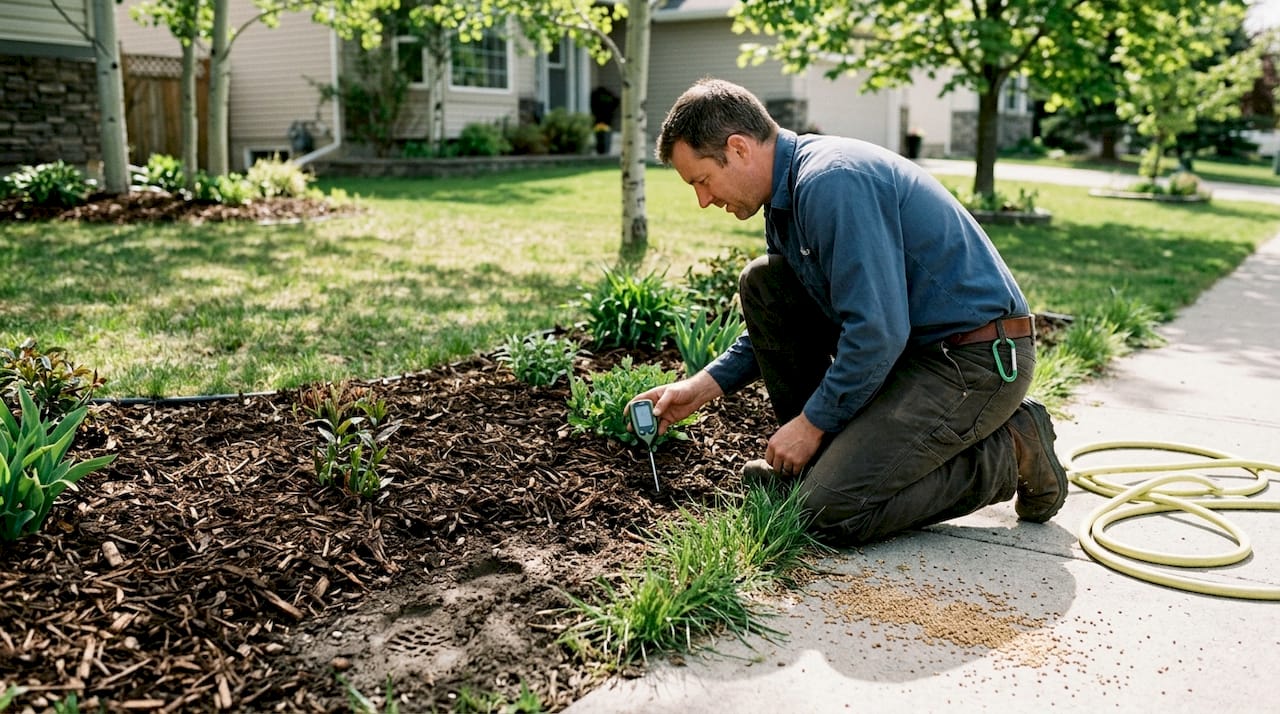
Beyond nitrogen, mulch reduces maintenance by blocking the light that weed seeds need to germinate. Fewer weeds means less time on your knees and less herbicide use, which aligns well with sustainable lawn care goals. Mulch also minimises water loss through evaporation, which matters enormously during Calgary’s dry summer stretches.
Statistic to know: A properly mulched lawn can require up to 50% less watering than an unmulched one during peak summer heat. That is a significant saving on both time and your water bill.
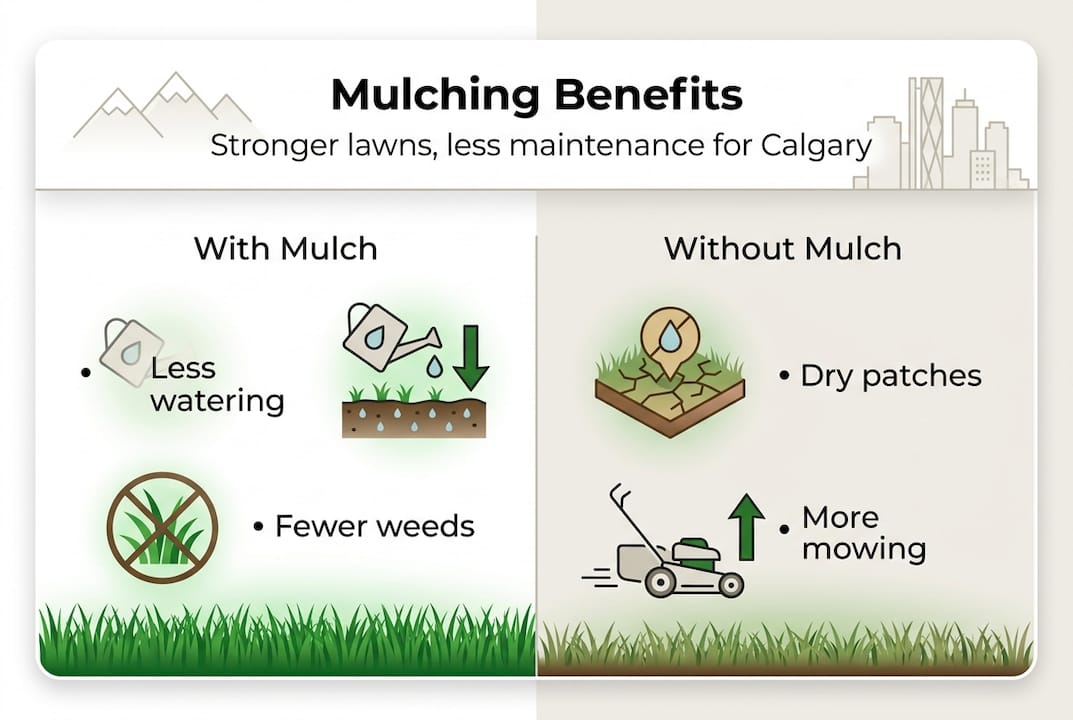
| Metric | Properly mulched | Unmulched |
|---|---|---|
| Weed count per season | Significantly lower | High, requires regular removal |
| Soil moisture retention | Extended between waterings | Rapid loss, frequent watering needed |
| Fertiliser use | Moderate (supplement for woody mulch) | Higher overall need |
| Lawn recovery after winter | Faster, roots better protected | Slower, more frost damage risk |
For fall yard preparation, applying a fresh layer of mulch before the ground freezes gives your lawn a head start on spring recovery. Roots stay insulated, soil structure is preserved, and you spend less time repairing damage when the snow finally melts.
How to mulch lawns and garden beds in Calgary
Getting mulching right is straightforward once you know the steps. The most common errors come from skipping preparation or applying too much material. Here is a practical guide built for Calgary’s specific conditions.
- Clear the area first. Remove existing weeds, dead plant material, and debris. Mulching over weeds does not kill established ones; it only suppresses new seedlings. Pull or treat existing weeds before you lay anything down.
- Choose the right mulch for the site. Coarse bark chips or wood shavings work well for most Calgary beds. Use gravel or river rock in areas with poor drainage or full sun exposure. Avoid fine sawdust or very finely shredded material on clay soils.
- Apply at the correct depth. Aim for 5 to 8 cm in garden beds and 2 to 3 cm around lawn edges and in areas with clay soil. Thicker is not better. Thin layers of coarse mulch prevent compaction in Calgary’s clay-heavy soils.
- Keep mulch away from plant stems and tree trunks. Leave a clear gap of at least 5 cm around the base of any plant. Mulch piled against stems traps moisture and invites rot and disease.
- Water the mulch in after application. A light watering helps settle the material and activates the moisture-retention benefits immediately.
Pro Tip: If you are using woody mulch like bark chips or shredded wood, add a nitrogen-rich fertiliser at the same time. This offsets the nitrogen drawdown that occurs as the wood breaks down, keeping your lawn and plants from going yellow.
For lawn bed mulching and preventing weeds with mulch, the preparation step is the one most homeowners skip. Taking an extra 20 minutes to clear the area properly makes the mulch far more effective for the entire season.
Mistakes to avoid and troubleshooting common mulching issues
Even with good intentions, mulching errors can happen. The good news is that most problems are easy to spot and fix once you know what to look for.
The most common mistake is the “mulch volcano,” where material is piled high against tree trunks or shrub stems in a cone shape. This looks tidy but causes serious damage over time, trapping moisture against bark and creating a habitat for insects and fungal disease. Always keep mulch flat and away from stems.
Coarse, thin mulch is safer for clay-heavy soils to prevent aeration issues. If you notice water pooling on top of your mulch rather than soaking through, the material has likely compacted or matted. That is your signal to fluff or replace it.
- Poor drainage or pooling water: Mulch has compacted or is too fine. Rake it up, break up any matted layers, and consider switching to a coarser material.
- Yellowing grass or plants near mulched areas: Likely nitrogen drawdown from woody mulch. Apply a nitrogen fertiliser and monitor over two to three weeks.
- Pest activity under mulch: Mulch applied too thickly or too close to structures can harbour slugs, earwigs, or rodents. Reduce depth and pull mulch back from foundations and plant bases.
- Weeds growing through mulch: Either the layer is too thin or established weeds were not removed before application. Pull new weeds promptly and top up the mulch depth.
Pro Tip: Check your mulch once a year, ideally in early spring as part of your seasonal yard review. Look for compaction, matting, or areas where the layer has thinned below 2 cm. A quick top-up or fluffing takes very little time and keeps the benefits working all season. Pairing this check with lawn care solutions and a seasonal lawn care schedule keeps your whole yard on track.
Professional mulching and year-round yard care in Calgary
For those who prefer expert help, professional lawn teams can handle mulching and more efficiently, saving you time and guesswork.

At YearLong Property Maintenance, we know Calgary’s soils and climate well. We have been working with local homeowners since 2017, and we understand exactly which mulch types perform best in different yard conditions across the city. Our bed maintenance services include proper preparation, the right material selection, and correct application depth so you get the full benefit without the common mistakes. Whether you need a one-time mulching job or want to roll it into a full lawn care package, we make it easy. Explore all of our Calgary yard maintenance options and get in touch to find the right fit for your property. Your lawn will thank you for it.
Frequently asked questions
How thick should mulch be applied in Calgary’s clay soils?
Apply 2 to 3 cm of coarse mulch to ensure moisture retention without causing aeration issues. Thin, coarse mulch layers are best suited to Calgary’s clay-heavy soil conditions.
Can mulch attract pests to my lawn?
Mulch can harbour pests if applied too thick or placed directly against plant stems and structures. Use thin layers and keep mulch pulled back from stems to reduce the risk, as improper mulch thickness is a common cause of pest problems.
Do I need to add fertiliser when I use woody mulch?
Yes, supplement woody mulch with a nitrogen source to compensate for a potential 15% reduction in soil nitrogen that occurs as the wood breaks down. Without it, you may notice yellowing grass or sluggish plant growth.
How often should I top up or replace my mulch?
Check your mulch annually and top up or fluff as needed to maintain a 2 to 3 cm thickness. Mulch layers should be checked each spring for compaction and replenished where the depth has dropped below the recommended level.
2 Responses