

Many Calgary homeowners believe that achieving a lush, green lawn requires harsh chemicals and excessive water use, but this misconception overlooks the environmental toll of traditional lawn care methods. Conventional practices often contribute to soil degradation, water pollution, and harm to beneficial insects that support local ecosystems. Eco-friendly lawn care offers a sustainable alternative that maintains beautiful outdoor spaces while protecting Calgary’s unique environment. This guide explores practical, science-backed strategies that help you cultivate a healthy lawn without compromising the health of your soil, water, or local wildlife. You’ll discover organic fertilisation techniques, water-efficient irrigation methods, and actionable steps tailored specifically for Calgary’s climate and conditions.
Table of Contents
- Understanding Eco-Friendly Lawn Care Basics
- Organic Fertilisation Versus Synthetic Chemicals: What Calgary Homeowners Need To Know
- Water-Efficient Irrigation Methods For Greener Calgary Lawns
- Practical Steps To Adopt Eco-Friendly Lawn Care In Calgary
- Explore Sustainable Lawn Care Services In Calgary
- Frequently Asked Questions
Key takeaways
| Point | Details |
|---|---|
| Organic fertilisers improve soil health | They release nutrients slowly, enriching soil structure and reducing chemical runoff into Calgary waterways. |
| Efficient irrigation conserves water | Drip systems and smart scheduling cut water waste by up to 50% compared to traditional sprinklers. |
| Avoiding synthetic pesticides protects pollinators | Eliminating harsh chemicals safeguards bees, butterflies, and other beneficial insects vital to local biodiversity. |
| Sustainable practices benefit Calgary ecosystems | Eco-friendly lawn care reduces pollution, preserves soil quality, and supports the health of urban green spaces. |
Understanding eco-friendly lawn care basics
Eco-friendly lawn care minimises environmental harm while maintaining vibrant, healthy lawns through natural processes and resource conservation. This approach prioritises soil health, biodiversity, and pollution reduction over quick fixes that damage ecosystems. For Calgary homeowners, adopting these practices means working with the local climate rather than against it, creating outdoor spaces that thrive without depleting natural resources.
Core principles include organic fertilisation, minimal chemical use, water efficiency, and promoting biodiversity. Using organic fertilisers and avoiding synthetic pesticides improves soil health, reduces chemical runoff, and supports local biodiversity in Calgary lawns. These practices preserve the complex microbial communities in soil that help plants absorb nutrients naturally. When you eliminate synthetic chemicals, you protect beneficial insects like ground beetles and ladybirds that control pests naturally.
The benefits extend beyond your property line. Sustainable lawn care reduces the amount of nitrogen and phosphorus entering Calgary’s waterways, preventing algae blooms that harm aquatic life. Healthy soil acts like a sponge, absorbing rainwater and reducing runoff that carries pollutants into storm drains. Professional lawn services in Calgary increasingly recognise these advantages and incorporate eco-friendly methods into their maintenance programmes.
Key sustainable practices for Calgary lawns include:
- Testing soil before applying any amendments to understand existing nutrient levels
- Choosing native or adapted grass varieties that require less water and maintenance
- Maintaining grass height at 7 to 8 centimetres to promote deeper root growth
- Leaving grass clippings on the lawn to return nutrients to the soil naturally
- Aerating compacted soil annually to improve water and nutrient absorption
These foundational concepts form the basis for all subsequent sustainable lawn care decisions, helping you create an outdoor space that looks beautiful while supporting Calgary’s environmental health.
Organic fertilisation versus synthetic chemicals: what Calgary homeowners need to know
The choice between organic and synthetic lawn products fundamentally shapes your lawn’s long-term health and environmental impact. Synthetic fertilisers deliver nutrients rapidly but often leach into groundwater, contributing to pollution. They also kill beneficial soil organisms that naturally break down organic matter and make nutrients available to grass roots. Organic fertilisers release nutrients slowly, improving soil structure and reducing water contamination risk while building a thriving ecosystem beneath your lawn.
Organic options include compost, aged manure, bone meal, and seaweed extracts that feed soil microbes as well as plants. These materials improve soil texture over time, increasing its ability to retain moisture and resist compaction. Calgary’s clay-heavy soils particularly benefit from organic matter that breaks up dense particles and creates air pockets for root growth. The gradual nutrient release prevents the feast-or-famine cycle that synthetic products create, where grass grows rapidly then crashes when nutrients wash away.
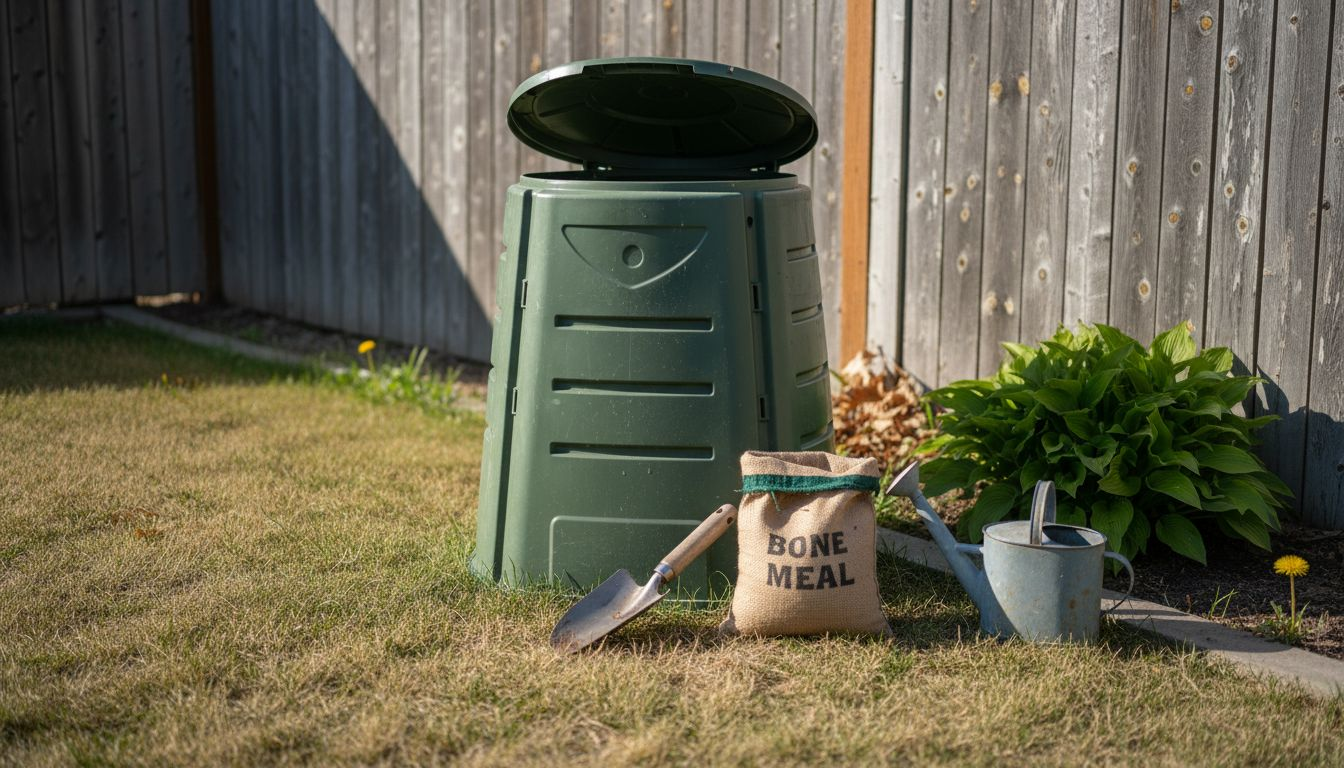
Synthetic pesticides pose even greater risks than chemical fertilisers. They kill indiscriminately, eliminating beneficial insects like pollinators alongside target pests. Bees and butterflies face enough challenges from habitat loss without homeowners adding pesticide exposure to the mix. When you spray synthetic chemicals, residues persist on grass blades and in soil, entering the food chain through insects, birds, and small mammals. These compounds accumulate over time, creating long-term environmental damage that extends far beyond your property.
Pro Tip: Always test your soil before fertilising to determine which nutrients your lawn actually needs, preventing waste and over-application that harms the environment.
| Feature | Organic fertilisers | Synthetic chemicals |
|---|---|---|
| Nutrient release | Slow and steady over weeks or months | Rapid burst followed by depletion |
| Soil health impact | Improves structure and microbial activity | Degrades soil life and structure |
| Environmental risk | Minimal runoff and pollution | High risk of water contamination |
| Cost over time | Lower due to soil improvement | Higher due to repeated applications |
| Effect on beneficial insects | Supports pollinators and predators | Kills indiscriminately |
Master lawn fertilisation techniques help you apply organic products effectively, timing applications to match grass growth cycles and Calgary’s weather patterns. Spring and autumn represent ideal windows when grass actively absorbs nutrients, making your efforts more efficient and reducing waste.
Water-efficient irrigation methods for greener Calgary lawns
Calgary’s semi-arid climate and periodic water restrictions make efficient irrigation essential for sustainable lawn care. Traditional sprinkler systems waste enormous amounts of water through evaporation, wind drift, and overwatering areas that don’t need it. Smart irrigation technologies and strategic watering practices can dramatically reduce consumption while actually improving lawn health. Drip irrigation reduces water use by 30 to 50% compared to traditional sprinklers, delivering moisture directly to root zones where plants need it most.
Drip systems consist of porous hoses or emitters placed at soil level, releasing water slowly over extended periods. This method minimises evaporation loss and prevents the runoff that occurs when sprinklers apply water faster than soil can absorb it. For lawns, soaker hoses work similarly, weeping moisture along their entire length. These systems keep foliage dry, reducing fungal disease risk while ensuring roots receive consistent hydration. Installation costs more upfront than conventional sprinklers but pays back through lower water bills and healthier plants.
Smart controllers represent another breakthrough for water conservation. These devices adjust watering schedules based on weather data, soil moisture sensors, and plant needs. When rain falls or humidity rises, the system automatically skips irrigation cycles. Some models connect to local weather stations, using real-time data to optimise watering. This prevents the common scenario where sprinklers run during rainstorms because homeowners forgot to adjust timers. Over a Calgary growing season, smart controllers typically reduce water use by 20 to 40%.
Best watering practices for Calgary lawns include:
- Water deeply but infrequently, encouraging roots to grow deeper and become more drought-resistant
- Schedule irrigation for early morning between 4am and 8am when evaporation rates are lowest
- Apply 2.5 to 4 centimetres of water weekly, including rainfall, adjusting for temperature and wind
- Avoid evening watering that leaves grass wet overnight, promoting fungal diseases
- Check sprinkler coverage patterns monthly to ensure even distribution without overspray onto pavement
- Adjust watering zones based on sun exposure, with shaded areas needing less frequent irrigation
Combining efficient irrigation with proper seasonal lawn mowing in Calgary creates a comprehensive approach to lawn health. Taller grass shades soil, reducing evaporation and helping your irrigation efforts go further. This synergy between practices demonstrates how sustainable lawn care methods reinforce each other, creating resilient outdoor spaces that require fewer inputs over time.
Practical steps to adopt eco-friendly lawn care in Calgary
Transitioning to sustainable lawn care doesn’t require abandoning your yard for a season while you rebuild soil health. You can implement changes gradually, starting with high-impact practices and adding others as you see results. The key is understanding which steps deliver the most benefit for Calgary’s specific conditions and your lawn’s current state. Organic fertilisation and efficient irrigation support local biodiversity and reduce environmental impact in Calgary lawns when applied systematically.
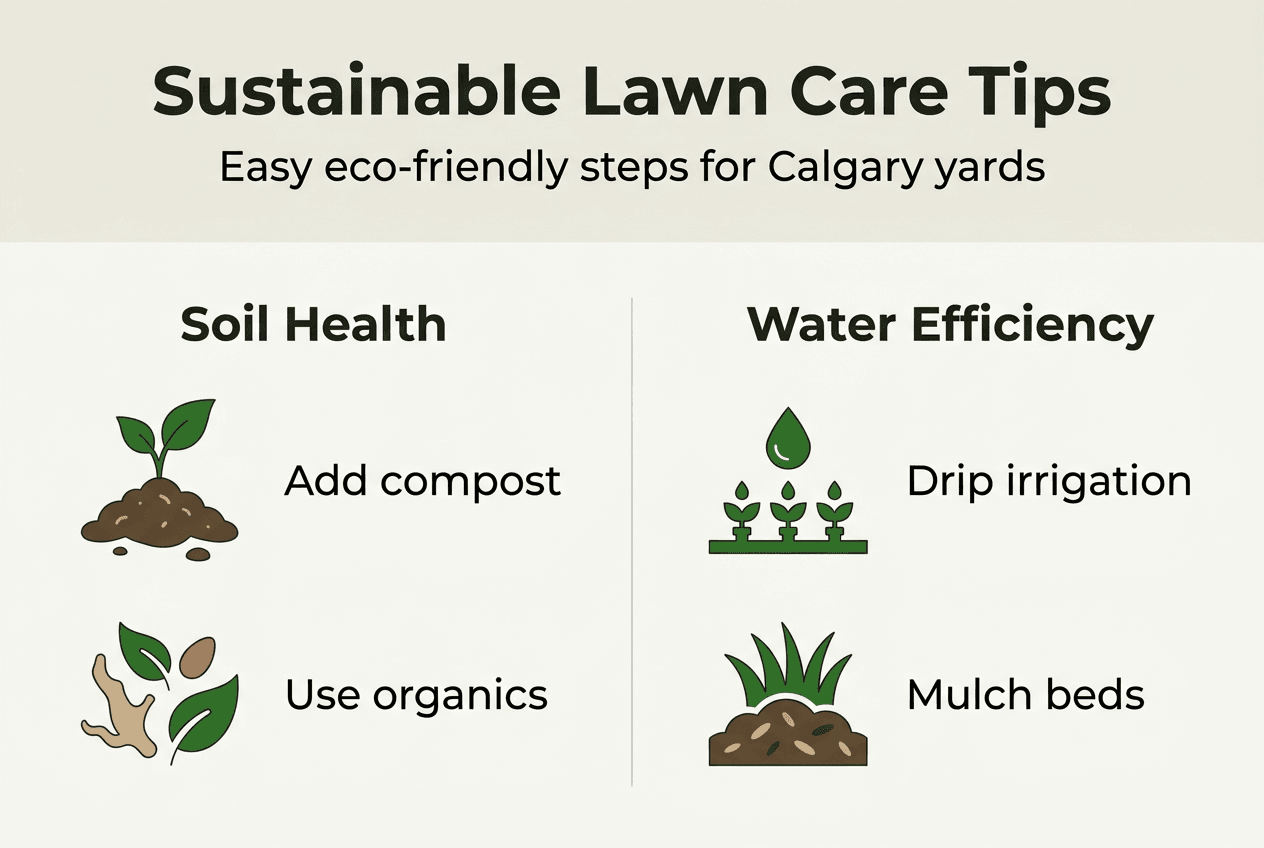
Begin with a professional soil test from a local garden centre or agricultural extension service. Results reveal pH levels, nutrient deficiencies, and organic matter content, eliminating guesswork about what your lawn needs. Calgary soils tend toward alkaline, often requiring sulphur amendments to lower pH for optimal grass growth. Testing costs between $20 and $50 but prevents hundreds of dollars in wasted products applied based on assumptions rather than facts.
Once you understand your soil composition, select organic fertilisers that address specific deficiencies. Apply these products according to package directions, typically in spring and autumn when grass actively grows. Spread compost as a topdressing annually, using 0.5 to 1 centimetre across the entire lawn. This simple practice improves soil structure, adds beneficial microbes, and provides slow-release nutrients throughout the growing season.
Install water-efficient irrigation equipment suited to your yard’s layout and plant types. For established lawns, retrofitting existing sprinkler systems with high-efficiency nozzles offers a cost-effective upgrade. These nozzles produce larger water droplets that resist wind drift and reduce evaporation. Add a rain sensor or smart controller to prevent watering during precipitation. For new installations or renovations, consider drip irrigation for garden beds and high-efficiency rotary nozzles for turf areas.
Pro Tip: Time fertilisation and watering for early morning or late evening to optimise absorption and reduce evaporation, making your sustainable practices even more effective.
Reduce chemical use by adopting integrated pest management principles. Monitor your lawn regularly for pest damage, identifying specific problems before taking action. Many perceived pest issues resolve naturally when beneficial insects are present. Hand-pull weeds when populations are small, preventing them from setting seed. For persistent problems, spot-treat affected areas with organic solutions rather than broadcasting chemicals across the entire lawn. This targeted approach protects beneficial organisms while addressing genuine threats.
Regular maintenance practices that support sustainability include:
- Aerate compacted soil each spring or autumn using a core aerator that removes soil plugs
- Overseed thin areas with drought-tolerant grass varieties adapted to Calgary’s climate
- Mulch garden beds with 5 to 8 centimetres of organic material to suppress weeds and retain moisture
- Sharpen mower blades monthly during growing season for clean cuts that reduce disease risk
- Leave grass clippings on the lawn unless they form thick mats, returning nitrogen to the soil
- Remove thatch buildup exceeding 1.5 centimetres by dethatching in spring or autumn
Consider hiring local eco-friendly lawn care services that specialise in sustainable practices if time or physical limitations make DIY maintenance challenging. Professional lawn bed maintenance services understand Calgary’s unique growing conditions and can implement organic programmes more efficiently than homeowners working alone. They also have access to commercial-grade organic products and equipment that deliver superior results.
Explore sustainable lawn care services in Calgary
Transitioning to eco-friendly lawn care becomes simpler when you partner with professionals who share your environmental values. Yearlong Property Maintenance offers comprehensive lawn care in Calgary using sustainable practices that protect your outdoor space and the broader ecosystem. Their team understands local soil conditions, climate challenges, and the specific grass varieties that thrive here with minimal environmental impact.

Yearlong’s bed maintenance services incorporate organic mulching, efficient irrigation, and integrated pest management to keep your garden beds healthy without synthetic chemicals. They tailor maintenance schedules to Calgary’s growing season, ensuring your property receives appropriate care when it matters most. Their approach aligns with the essential Calgary lawn maintenance tips that prioritise long-term lawn health over quick fixes. Professional assistance makes adopting sustainable practices easier while delivering results that enhance your property value and environmental stewardship.
Frequently asked questions
What is eco-friendly lawn care?
Eco-friendly lawn care uses natural methods and organic products to maintain healthy lawns while minimising environmental harm. This approach avoids synthetic pesticides and fertilisers, conserves water through efficient irrigation, and promotes biodiversity by protecting beneficial insects and soil organisms. It focuses on building healthy soil that naturally supports vigorous grass growth without chemical inputs.
Why is sustainable lawn care important for Calgary’s environment?
Calgary’s semi-arid climate and urban ecosystem face unique environmental pressures that sustainable lawn care helps address. Reducing chemical runoff protects the Bow and Elbow Rivers from nutrient pollution that causes algae blooms and harms aquatic life. Water-efficient irrigation conserves a precious resource during drought periods. Supporting pollinators and beneficial insects maintains biodiversity essential for healthy urban green spaces and food production.
Can organic lawn care methods really work in Calgary’s climate?
Organic methods work exceptionally well in Calgary when tailored to local conditions. Native and adapted grass varieties thrive with minimal inputs once established. Organic fertilisers build soil health over time, creating lawns that resist drought and disease better than chemically maintained turf. Many Calgary homeowners and professional services successfully use sustainable practices, proving that environmental responsibility and beautiful lawns aren’t mutually exclusive.
How much does eco-friendly lawn care cost compared to conventional methods?
Initial costs for organic products and efficient irrigation equipment often exceed conventional alternatives, but long-term expenses typically decrease. Improved soil health reduces fertiliser needs over time. Water-efficient systems lower utility bills. Eliminating pesticides removes recurring chemical costs. Most homeowners find that sustainable lawn care costs roughly the same or less than conventional methods after the first two to three years, while delivering superior environmental and health benefits.
What are the quickest ways to make my Calgary lawn more sustainable?
Start by adjusting your mowing height to 7 to 8 centimetres, which immediately improves drought resistance and reduces watering needs. Switch to organic fertiliser for your next application, beginning the soil health improvement process. Install a rain sensor on your irrigation system to prevent watering during precipitation. Leave grass clippings on the lawn to return nutrients naturally. These simple changes require minimal investment but deliver measurable environmental benefits within weeks.